Department of Paediatric Endocrinology, Royal Manchester Children's Hospital, Manchester, UK.
Faculty of Biology, Medicine and Health, University of Manchester, Manchester, UK.
Calcif Tissue Int. 2021 May;108(5):622-633. doi: 10.1007/s00223-020-00797-x. Epub 2021 Jan 23.
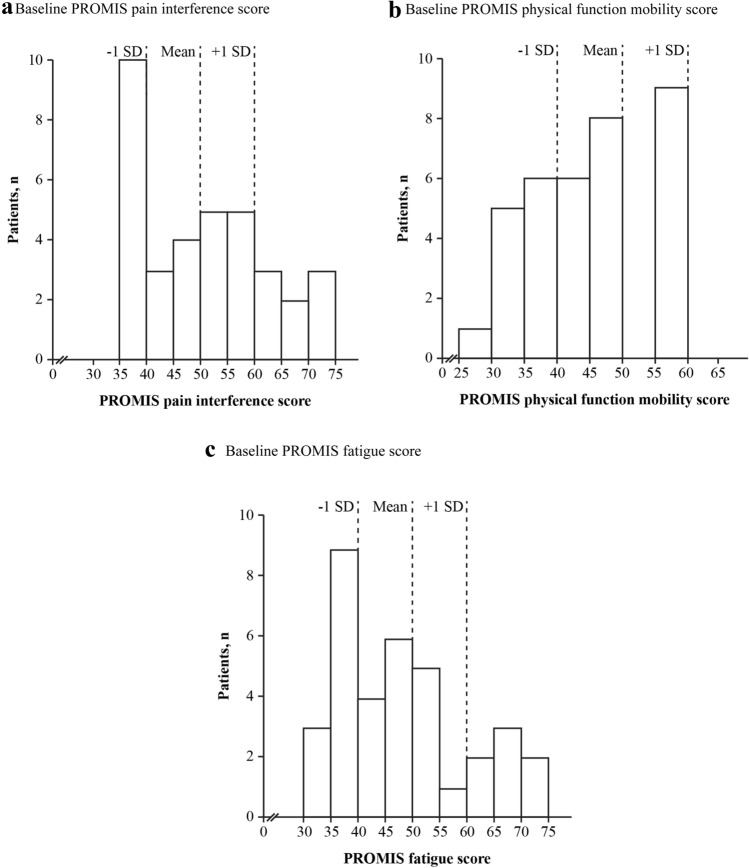
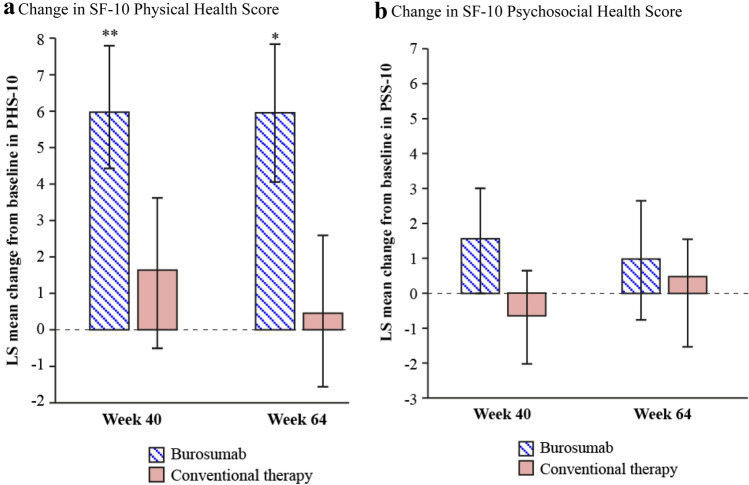
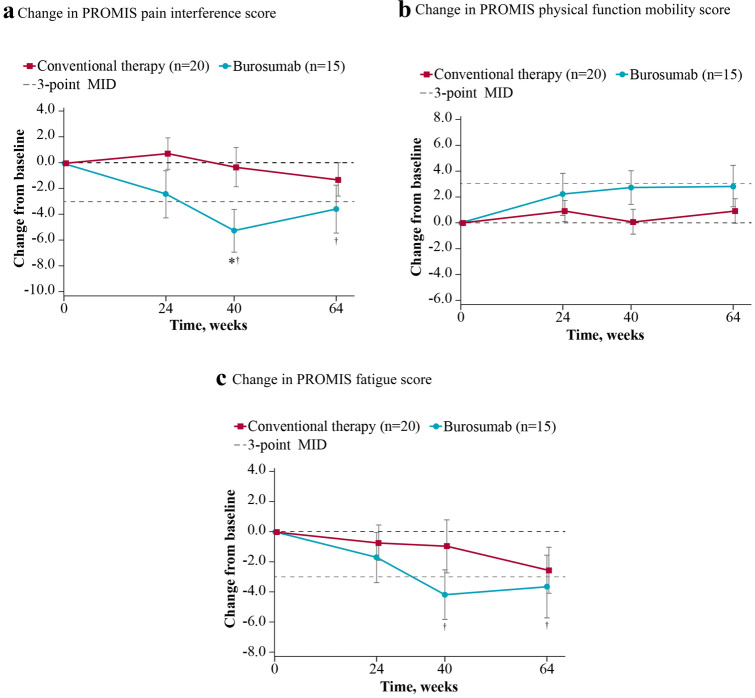
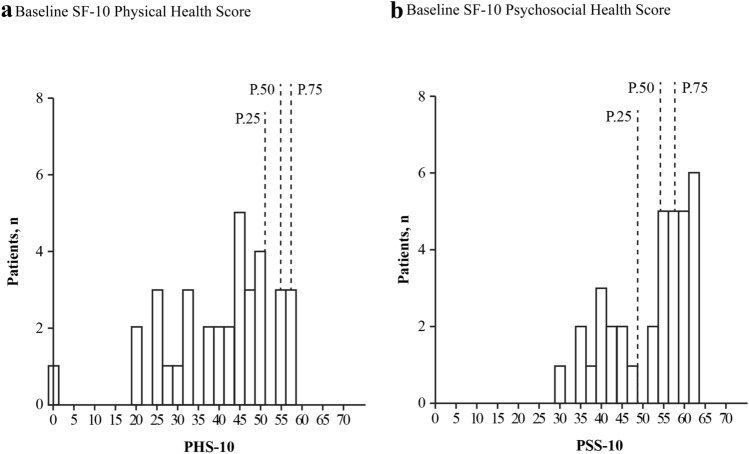
Changing to burosumab, a monoclonal antibody targeting fibroblast growth factor 23, significantly improved phosphorus homeostasis, rickets, lower-extremity deformities, mobility, and growth versus continuing oral phosphate and active vitamin D (conventional therapy) in a randomized, open-label, phase 3 trial involving children aged 1-12 years with X-linked hypophosphatemia. Patients were randomized (1:1) to subcutaneous burosumab or to continue conventional therapy. We present patient-reported outcomes (PROs) from this trial for children aged ≥ 5 years at screening (n = 35), using a Patient-Reported Outcomes Measurement Information System (PROMIS) questionnaire and SF-10 Health Survey for Children. PROMIS pain interference, physical function mobility, and fatigue scores improved from baseline with burosumab at weeks 40 and 64, but changed little with continued conventional therapy. Pain interference scores differed significantly between groups at week 40 (- 5.02, 95% CI - 9.29 to - 0.75; p = 0.0212) but not at week 64. Between-group differences were not significant at either week for physical function mobility or fatigue. Reductions in PROMIS pain interference and fatigue scores from baseline were clinically meaningful with burosumab at weeks 40 and 64 but not with conventional therapy. SF-10 physical health scores (PHS-10) improved significantly with burosumab at week 40 (least-squares mean [standard error] + 5.98 [1.79]; p = 0.0008) and week 64 (+ 5.93 [1.88]; p = 0.0016) but not with conventional therapy (between-treatment differences were nonsignificant). In conclusion, changing to burosumab improved PRO measures, with statistically significant differences in PROMIS pain interference at week 40 versus continuing with conventional therapy and in PHS-10 at weeks 40 and 64 versus baseline.Trial registration: ClinicalTrials.gov NCT02915705.
在一项涉及 1-12 岁 X 连锁低磷血症儿童的随机、开放标签、3 期试验中,与继续口服磷酸盐和活性维生素 D(常规治疗)相比,使用针对成纤维细胞生长因子 23 的单克隆抗体布罗索尤单抗(burosumab)可显著改善磷稳态、佝偻病、下肢畸形、活动能力和生长。患者按 1:1 随机分配至皮下注射布罗索尤单抗或继续接受常规治疗。我们报告了该试验中筛选时年龄≥5 岁的儿童的患者报告结局(PROs)(n=35),使用患者报告结局测量信息系统(PROMIS)问卷和儿童健康 SF-10 调查。与继续常规治疗相比,在第 40 周和第 64 周时,布罗索尤单抗治疗可改善 PROMIS 疼痛干扰、身体功能移动性和疲劳评分,但基线变化不大。第 40 周时,两组之间的疼痛干扰评分差异具有统计学意义(-5.02,95%CI-9.29 至-0.75;p=0.0212),但第 64 周时差异不显著。在第 40 周和第 64 周时,两组之间的身体功能移动性和疲劳评分差异均无统计学意义。在第 40 周和第 64 周时,与常规治疗相比,布罗索尤单抗可显著降低 PROMIS 疼痛干扰和疲劳评分,且降幅具有临床意义。在第 40 周(最小二乘均值[标准误差]±5.98[1.79];p=0.0008)和第 64 周(最小二乘均值[标准误差]±5.93[1.88];p=0.0016)时,布罗索尤单抗可显著改善 SF-10 生理健康评分(PHS-10),而常规治疗差异无统计学意义(治疗间差异无统计学意义)。总之,改用布罗索尤单抗可改善 PRO 测量结果,与继续常规治疗相比,第 40 周时 PROMIS 疼痛干扰具有统计学显著差异,与基线相比,第 40 周和第 64 周时 PHS-10 具有统计学显著差异。试验注册:ClinicalTrials.gov NCT02915705。