Hosseininezhad Behnam, Berizi Enayat, Nader Marzieh, Mazloomi Seyed Mohammad, Hosseinzadeh Saeid, Ebrahimi Laya, Zare Morteza
Nutrition Research Center, Department of Food Hygiene and Quality Control, School of Nutrition and Food Sciences, Shiraz University of Medical Sciences, Shiraz, Iran.
Department of Food Hygiene and Public Health, School of Veterinary Medicine, Shiraz University, Shiraz, Iran.
Vet World. 2020 Dec;13(12):2743-2751. doi: 10.14202/vetworld.2020.2743-2751. Epub 2020 Dec 22.
Food poisoning caused by is among the most common gastrointestinal discomfort resulted from egg consumption which can produce various syndromes. The present study is a systematic review and meta-analysis investigation on the published studies about the prevalence of contamination in the consumed eggs in Iran.
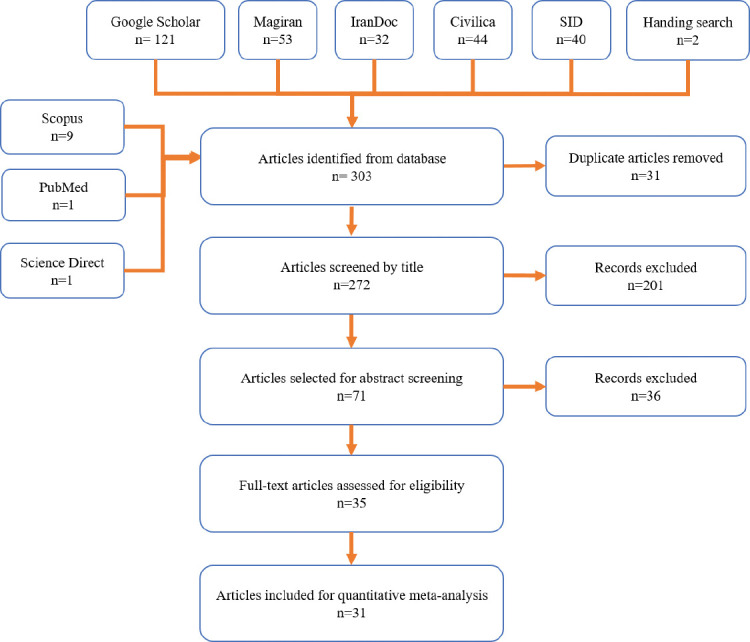
The data were collected and analyzed from four international search databases, including PubMed, Scopus, Science Direct, and Google Scholar and four Iranian databases comprising SID, MagIran, Civilica, and IranDoc. After searching all the databases, 303 articles were found, from which 31 articles were included in the final analysis.
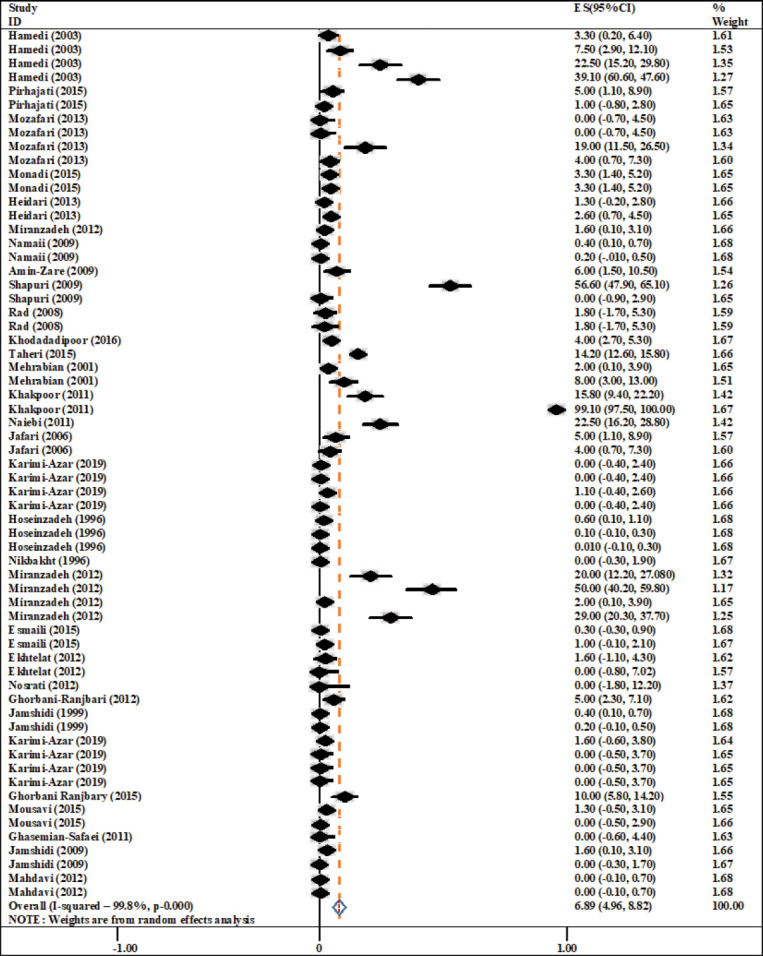
According to the data analysis, the highest rate of contamination was belonged to the industrial eggs (7.49%), however, the prevalence rate was reported 13.61% in the eggshell part. The overall prevalence of contamination in consumed eggs of Iran using culture of microbial, molecular, molecular-serological, culture-molecular, culture-serological, and culture -molecular-serological methods was obtained 11.33%, 5.52%, 0.37%, 1.91%, 5.52%, and 0.73%, respectively. Prevalence in the 21 geographical areas, where studies have been conducted, ranged from 0% (Zahedan) to 29.06% (Tabriz). The studies have also showed that eight different serotypes were among the major cause of contamination in eggs. The most common serotype was Enteritidis and the highest diversity in contaminant serotypes was recorded in Talesh (including . Enteritidis, Gallinarum, Vircho, and Newport).
Results of this study revealed the high prevalence of contamination in eggs, in Iran. Therefore, disinfection and cleaning bed, cleaning of equipment and supplies, and proper maintenance temperature and humidity of the eggs are recommended. In addition, proper personal hygiene and prohibition of consuming raw egg products are essential.
由[具体病原体名称未给出]引起的食物中毒是食用鸡蛋导致的最常见胃肠道不适之一,可引发多种症状。本研究是一项关于伊朗食用鸡蛋中[具体病原体名称未给出]污染发生率的已发表研究的系统评价和荟萃分析调查。
数据收集自四个国际检索数据库,包括PubMed、Scopus、Science Direct和Google Scholar,以及四个伊朗数据库,即SID、MagIran、Civilica和IranDoc。在搜索所有数据库后,共找到303篇文章,其中31篇文章纳入最终分析。
根据数据分析,污染率最高的是工业鸡蛋(7.49%),然而,蛋壳部分的污染率报告为13.61%。使用微生物培养、分子、分子血清学、培养 - 分子、培养 - 血清学和培养 - 分子 - 血清学方法,伊朗食用鸡蛋中[具体病原体名称未给出]污染的总体发生率分别为11.33%、5.52%、0.37%、1.91%、5.52%和0.73%。在进行研究的21个地理区域中,污染发生率从0%(扎黑丹)到29.06%(大不里士)不等。研究还表明,八种不同血清型是鸡蛋中[具体病原体名称未给出]污染的主要原因。最常见的[具体病原体名称未给出]血清型是肠炎沙门氏菌,污染血清型多样性最高的记录在塔勒什(包括肠炎沙门氏菌、鸡沙门氏菌、维尔乔沙门氏菌和纽波特沙门氏菌)。
本研究结果显示伊朗鸡蛋中[具体病原体名称未给出]污染发生率较高。因此,建议对鸡舍进行消毒和清洁、对设备和用品进行清洁,并适当保持鸡蛋的温度和湿度。此外,保持良好的个人卫生和禁止食用生鸡蛋制品至关重要。