Wu Jingkui, Lin Qisheng, Li Shu, Shao Xinghua, Zhu Xuying, Zhang Minfang, Zhou Wenyan, Ni Zhaohui
Department of Nephrology, School of Medicine, Renji Hospital, Shanghai Jiao Tong University, Shanghai, China.
Front Genet. 2021 Jan 7;11:595757. doi: 10.3389/fgene.2020.595757. eCollection 2020.
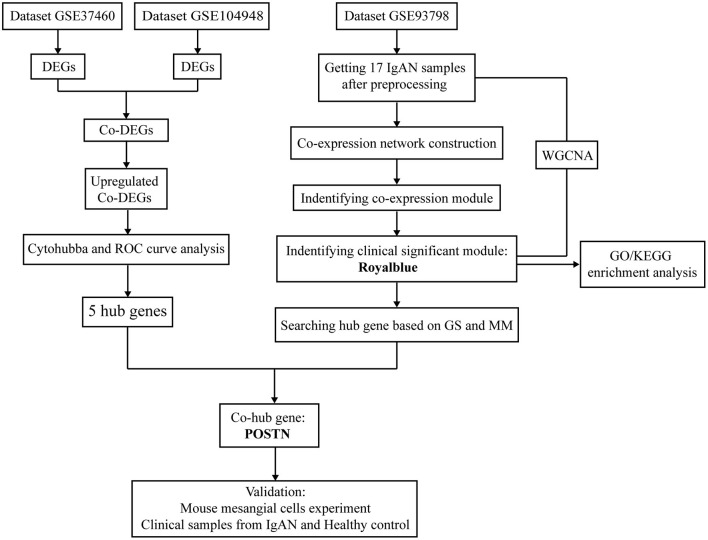
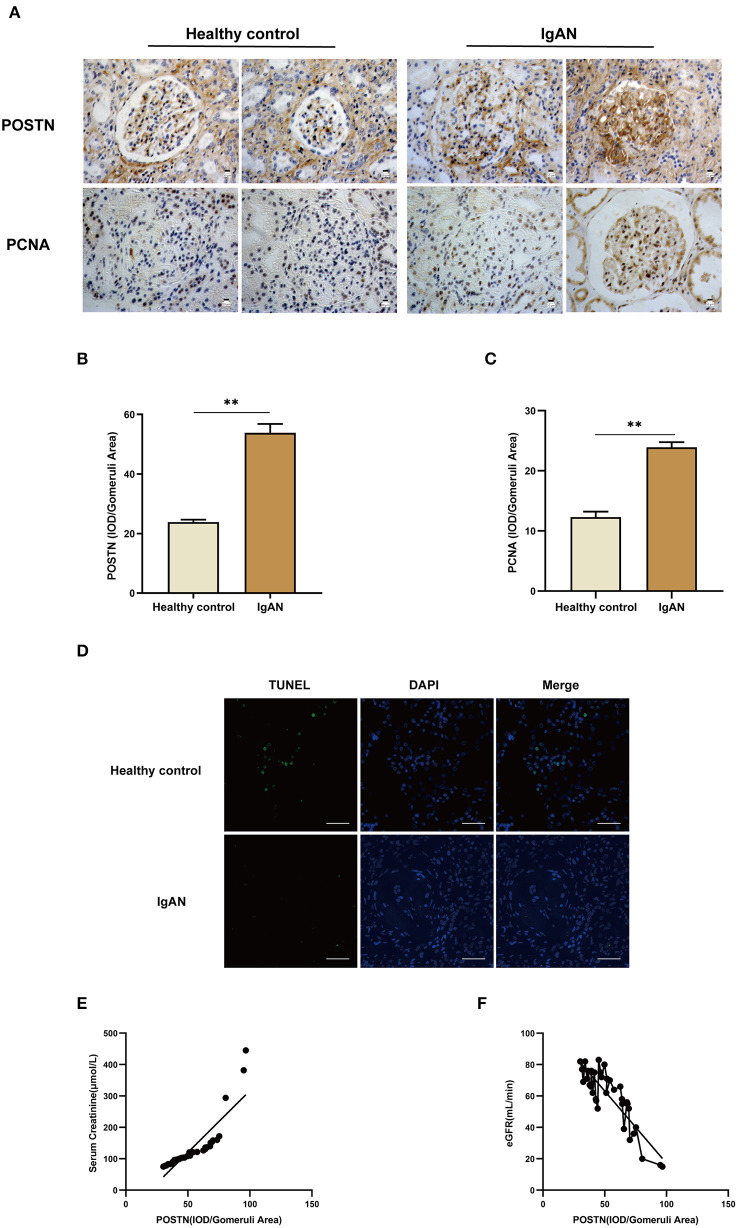
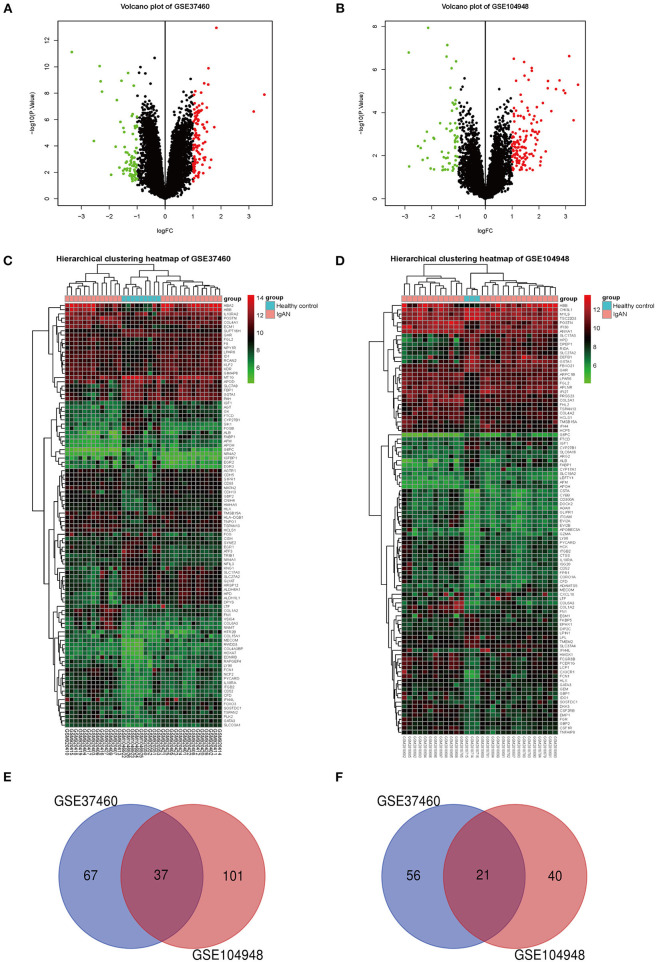
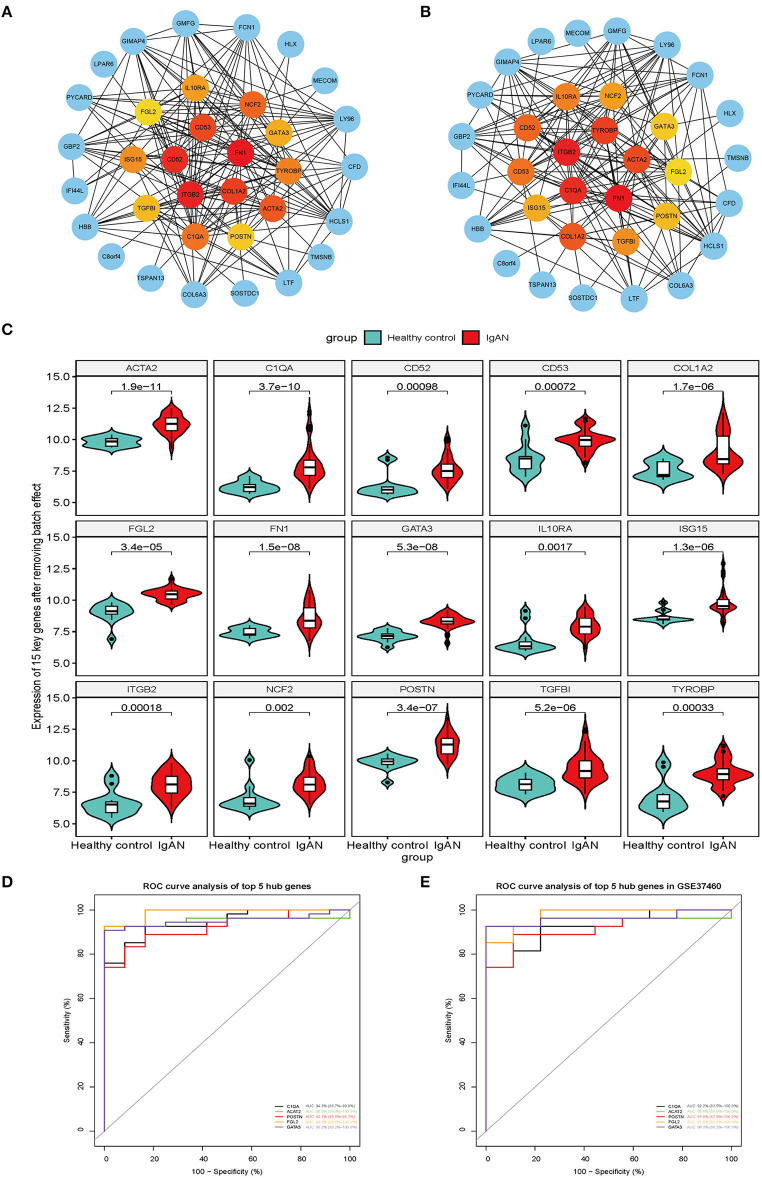
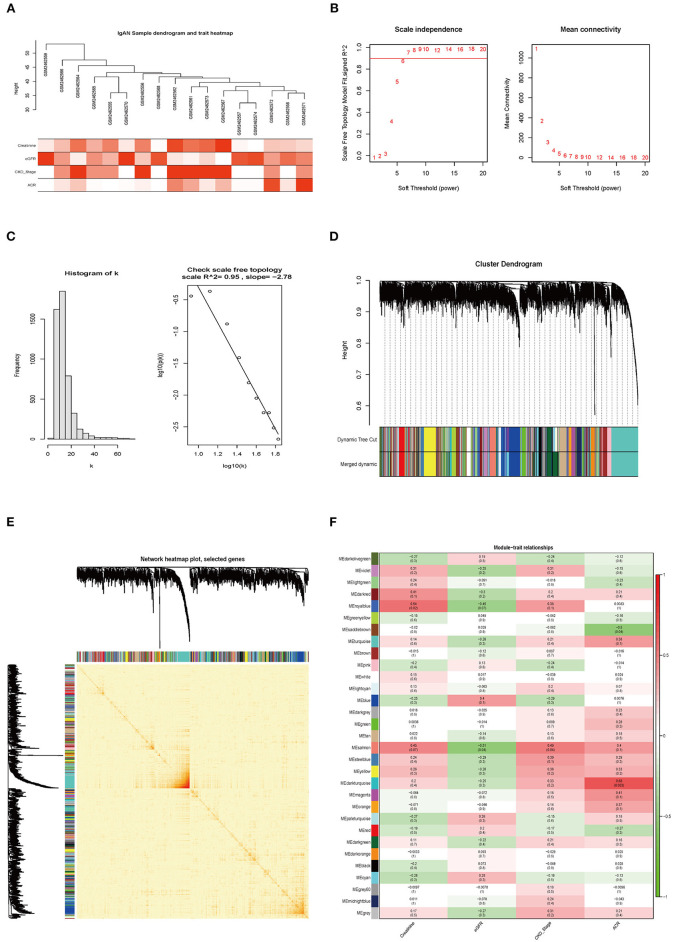
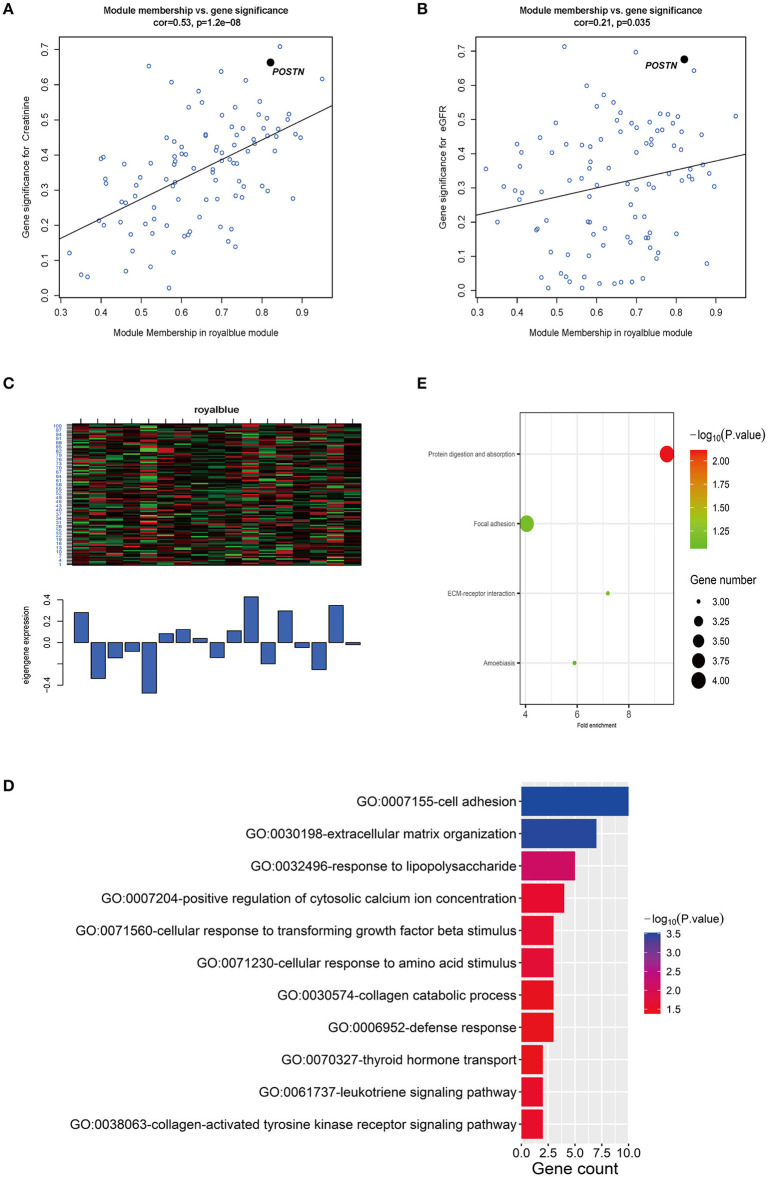
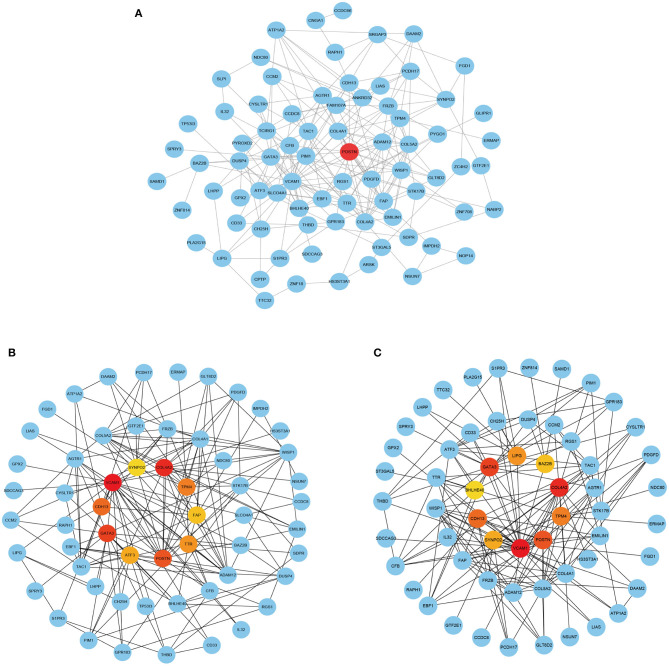
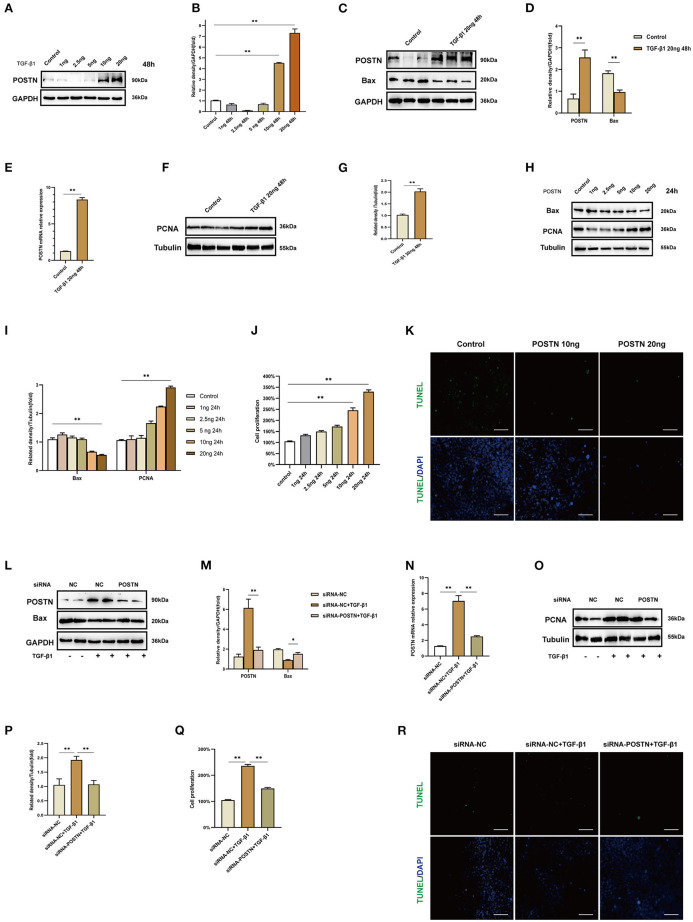
Immunoglobulin A nephropathy (IgAN) is a known cause of end-stage kidney disease, but the pathogenesis and factors affecting prognosis are not fully understood. In the present study, we carried out weighted gene correlation network analysis (WGCNA) to identify hub genes related to the occurrence of IgAN and validated candidate genes in experiments using mouse mesangial cells (MMCs) and clinical specimens (kidney tissue from IgAN patients and healthy controls). We screened the GSE37460 and GSE104948 differentially expressed genes common to both datasets and identified periostin () as one of the five key genes using the cytoHubba plugin of Cytoscape software and by receiver-operating characteristic curve analysis. The top 25% of genes in the GSE93798 dataset showing variable expression between IgAN and healthy tissue were assessed by WGCNA. The royalblue module in WGCNA was closely related to creatinine and estimated glomerular filtration rate (eGFR) in IgAN patients. had very high module membership and gene significance values for creatinine (0.82 and 0.66, respectively) and eGFR (0.82 and -0.67, respectively), indicating that it is a co-hub gene. In MMCs, was upregulated by transforming growth factor β1, and stimulation of MMCs with recombinant POSTN protein resulted in an increase in the level of proliferating cell nuclear antigen (PCNA) and a decrease in that of B cell lymphoma-associated X protein, which were accompanied by enhanced MMC proliferation. gene knockdown had the opposite effects. Immunohistochemical analysis of kidney tissue specimens showed that POSTN and PCNA levels were elevated, whereas the rate of apoptosis was reduced in IgAN patients relative to healthy controls. POSTN level in the kidney tissue of IgAN patients was positively correlated with creatinine level and negatively correlated with eGFR. Thus, POSTN promotes the proliferation of MCs to promote renal dysfunction in IgAN.
免疫球蛋白A肾病(IgAN)是终末期肾病的已知病因,但发病机制及影响预后的因素尚未完全明确。在本研究中,我们进行了加权基因共表达网络分析(WGCNA)以鉴定与IgAN发生相关的枢纽基因,并在实验中使用小鼠系膜细胞(MMCs)和临床标本(IgAN患者及健康对照者的肾组织)对候选基因进行验证。我们筛选了两个数据集共有的GSE37460和GSE104948差异表达基因,并使用Cytoscape软件的cytoHubba插件及通过受试者工作特征曲线分析,将骨膜蛋白(POSTN)鉴定为五个关键基因之一。通过WGCNA评估了GSE93798数据集中在IgAN和健康组织之间表现出可变表达的前25%的基因。WGCNA中的皇家蓝模块与IgAN患者的肌酐及估计肾小球滤过率(eGFR)密切相关。POSTN对肌酐(分别为0.82和0.66)和eGFR(分别为0.82和 -0.67)具有非常高的模块隶属度和基因显著性值,表明它是一个共同枢纽基因。在MMCs中,POSTN被转化生长因子β1上调,用重组POSTN蛋白刺激MMCs导致增殖细胞核抗原(PCNA)水平升高,而B细胞淋巴瘤相关X蛋白水平降低,同时伴有MMCs增殖增强。POSTN基因敲低则产生相反的效果。肾组织标本的免疫组化分析显示,与健康对照相比,IgAN患者的POSTN和PCNA水平升高,而凋亡率降低。IgAN患者肾组织中的POSTN水平与肌酐水平呈正相关,与eGFR呈负相关。因此,POSTN促进系膜细胞增殖,从而促进IgAN中的肾功能障碍。