Manasa Pacharla, Sidhanth Chirukandath, Krishnapriya Syama, Vasudevan Sekar, Ganesan Trivadi S
Laboratory for Cancer Biology, Department of Medical Oncology and Clinical Research Cancer Institute (WIA), Chennai, India.
Genes Cancer. 2020 Nov 11;11(3-4):122-136. doi: 10.18632/genesandcancer.206. eCollection 2020 Dec 31.
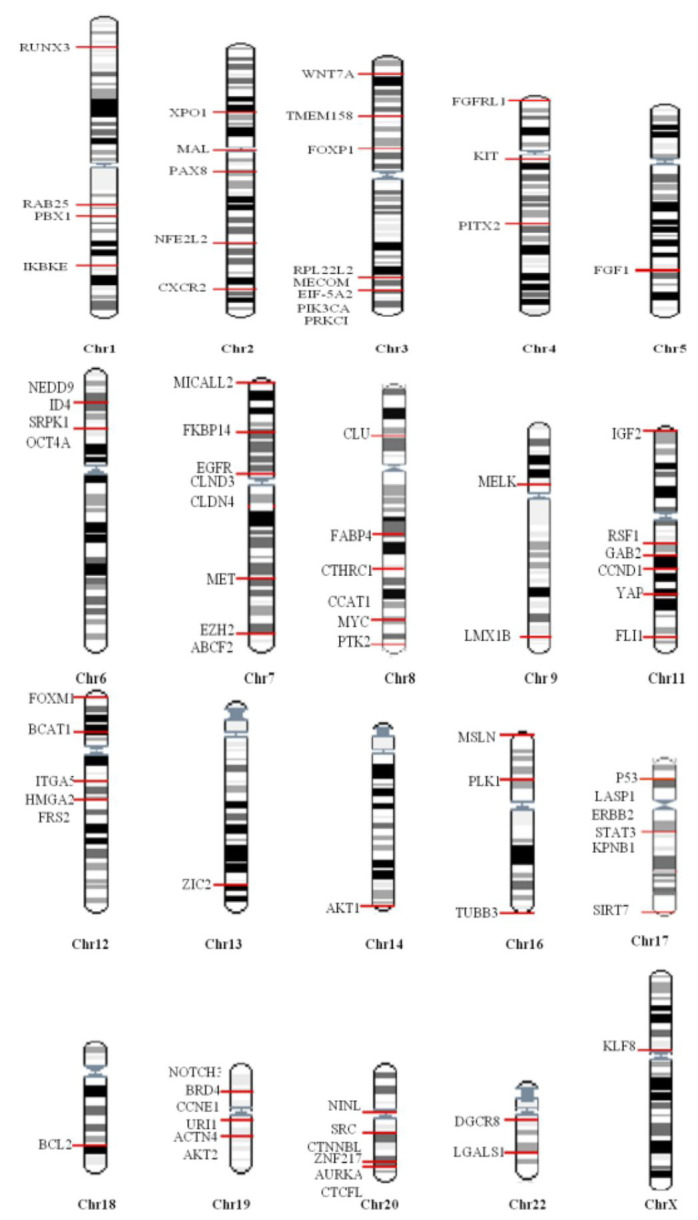
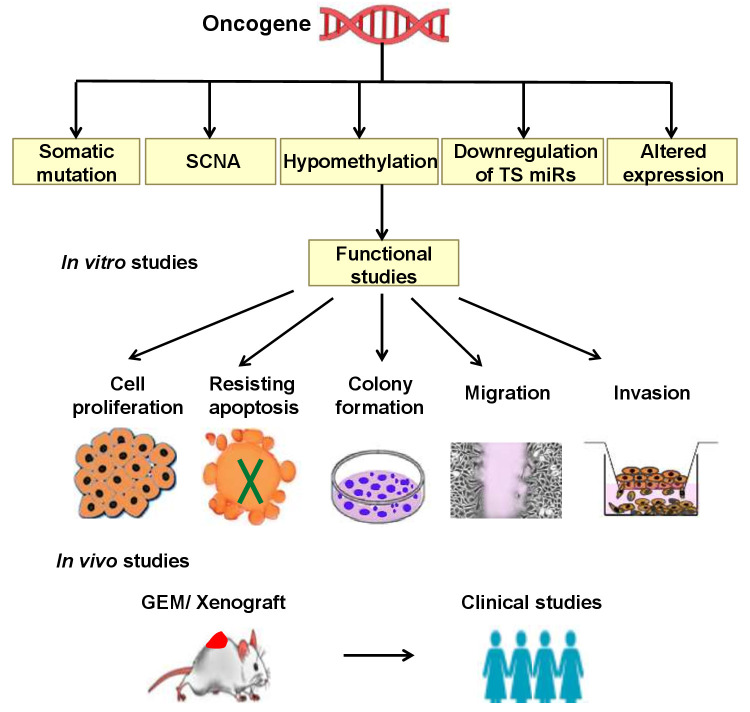
High grade serous ovarian cancer is characterized by relatively few mutations occurring at low frequency, except in TP53. However other genetic aberrations such as copy number variation alter numerous oncogenes and tumor suppressor genes. Oncogenes are positive regulators of tumorigenesis and play a critical role in cancer cell growth, proliferation, and survival. Accumulating evidence suggests that they are crucial for the development and the progression of high grade serous ovarian carcinoma (HGSOC). Though many oncogenes have been identified, no successful inhibitors targeting these molecules and their associated pathways are available. This review discusses oncogenes that have been identified recently in HGSOC using different screening strategies. All the genes discussed in this review have been functionally characterized both and and some of them are able to transform immortalized ovarian surface epithelial and fallopian tube cells upon overexpression. However, it is necessary to delineate the molecular pathways affected by these oncogenes for the development of therapeutic strategies.
高级别浆液性卵巢癌的特征是除TP53外,发生频率较低的突变相对较少。然而,其他遗传畸变,如拷贝数变异,会改变众多癌基因和肿瘤抑制基因。癌基因是肿瘤发生的正调控因子,在癌细胞的生长、增殖和存活中起关键作用。越来越多的证据表明,它们对高级别浆液性卵巢癌(HGSOC)的发生和发展至关重要。尽管已经鉴定出许多癌基因,但目前尚无针对这些分子及其相关途径的成功抑制剂。本综述讨论了最近在HGSOC中使用不同筛选策略鉴定出的癌基因。本综述中讨论的所有基因均已在功能上得到表征,其中一些基因在过表达时能够转化永生化的卵巢表面上皮细胞和输卵管细胞。然而,有必要描绘出这些癌基因影响的分子途径,以便制定治疗策略。