Yap Yu Anne, McLeod Keiran H, McKenzie Craig I, Gavin Patrick G, Davalos-Salas Mercedes, Richards James L, Moore Robert J, Lockett Trevor J, Clarke Julie M, Eng Vik Ven, Pearson Jaclyn S, Hamilton-Williams Emma E, Mackay Charles R, Mariño Eliana
Department of Biochemistry and Molecular Biology Infection and Immunity Program Biomedicine Discovery Institute Monash University Clayton, Melbourne VIC Australia.
The University of Queensland Diamantina Institute The University of Queensland Brisbane QLD Australia.
Clin Transl Immunology. 2021 Jan 15;10(1):e1233. doi: 10.1002/cti2.1233. eCollection 2021.
During gastrointestinal infection, dysbiosis can result in decreased production of microbially derived short-chain fatty acids (SCFAs). In response to the presence of intestinal pathogens, we examined whether an engineered acetate- or butyrate-releasing diet can rectify the deficiency of SCFAs and lead to the resolution of enteric infection.
We tested whether a high acetate- or butyrate-producing diet (HAMSA or HAMSB, respectively) condition infection in mice and assess its impact on host-microbiota interactions. We analysed the adaptive and innate immune responses, changes in gut microbiome function, epithelial barrier function and the molecular mechanism via metabolite sensing G protein-coupled receptor 43 (GPR43) and IL-22 expression.
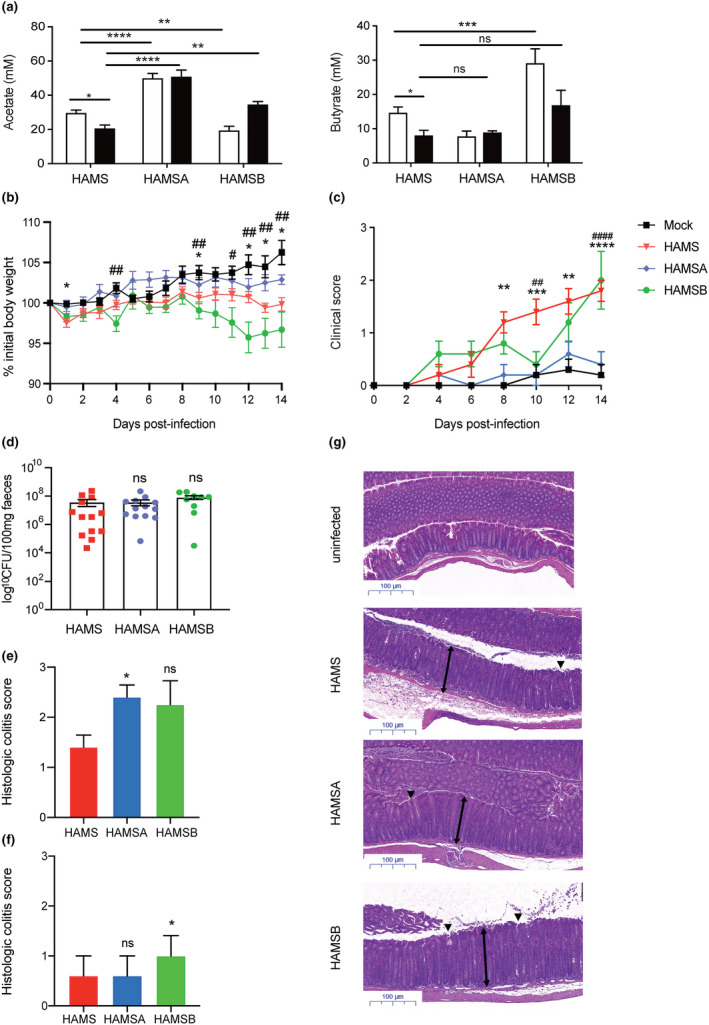
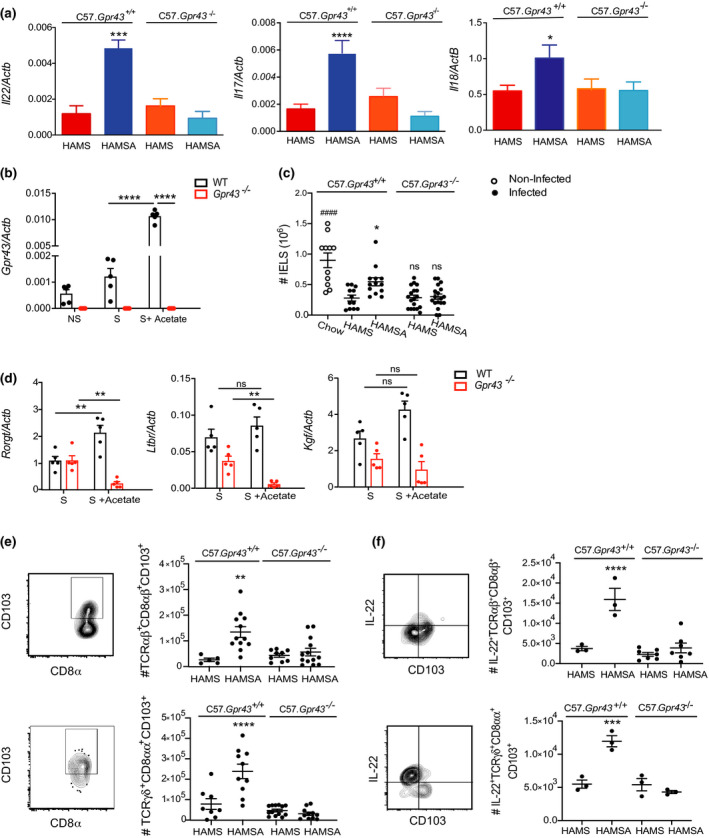
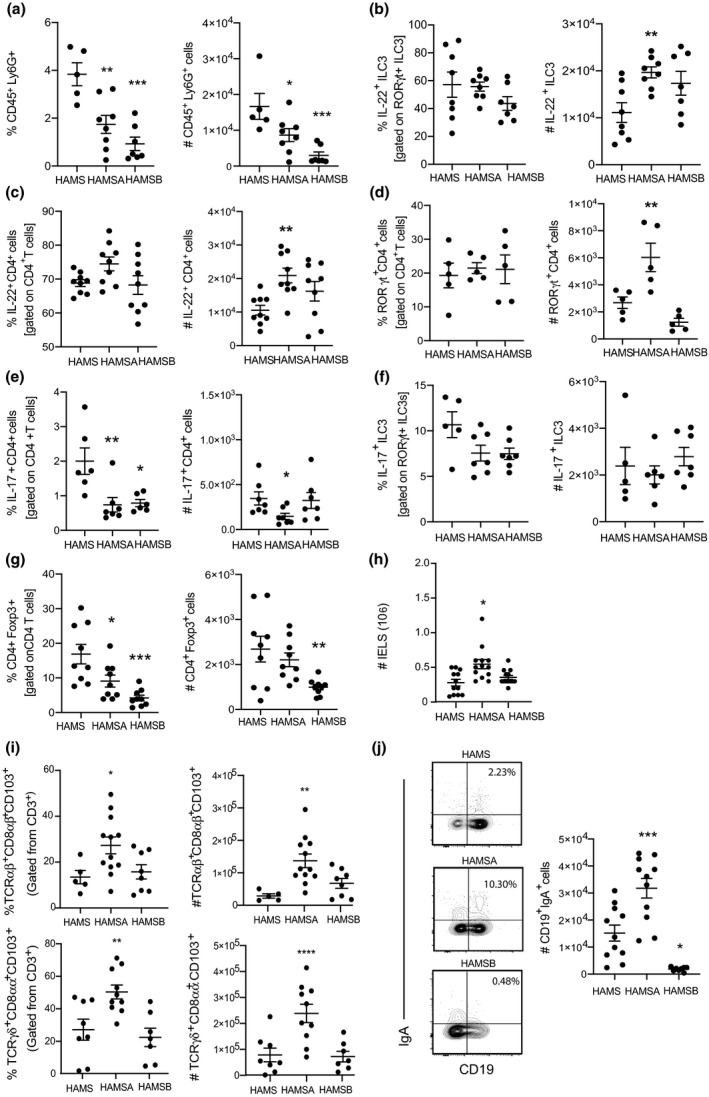
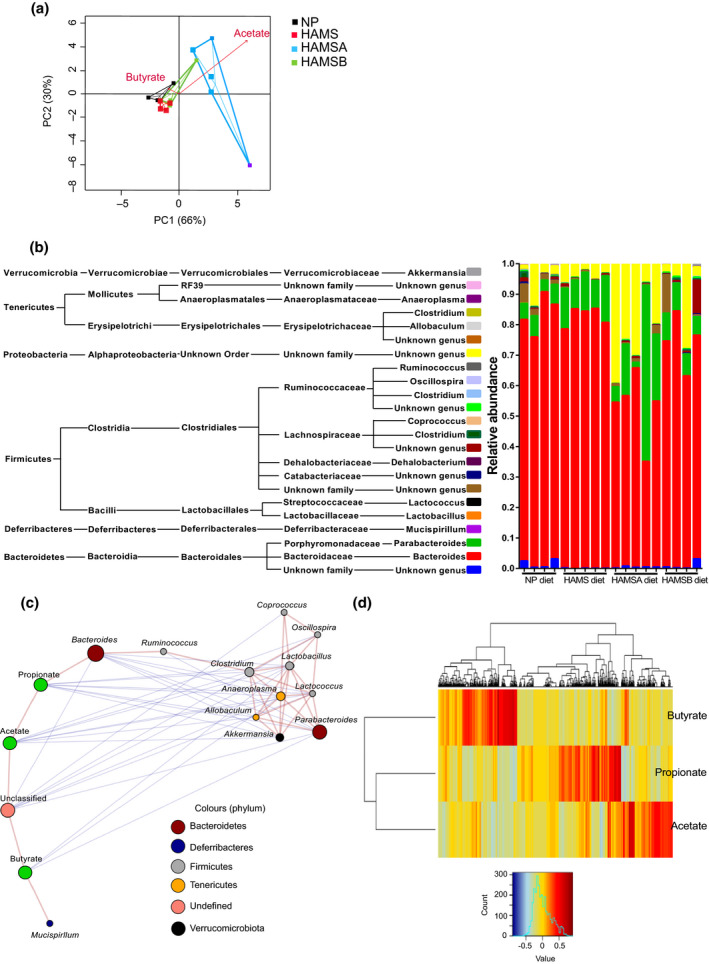
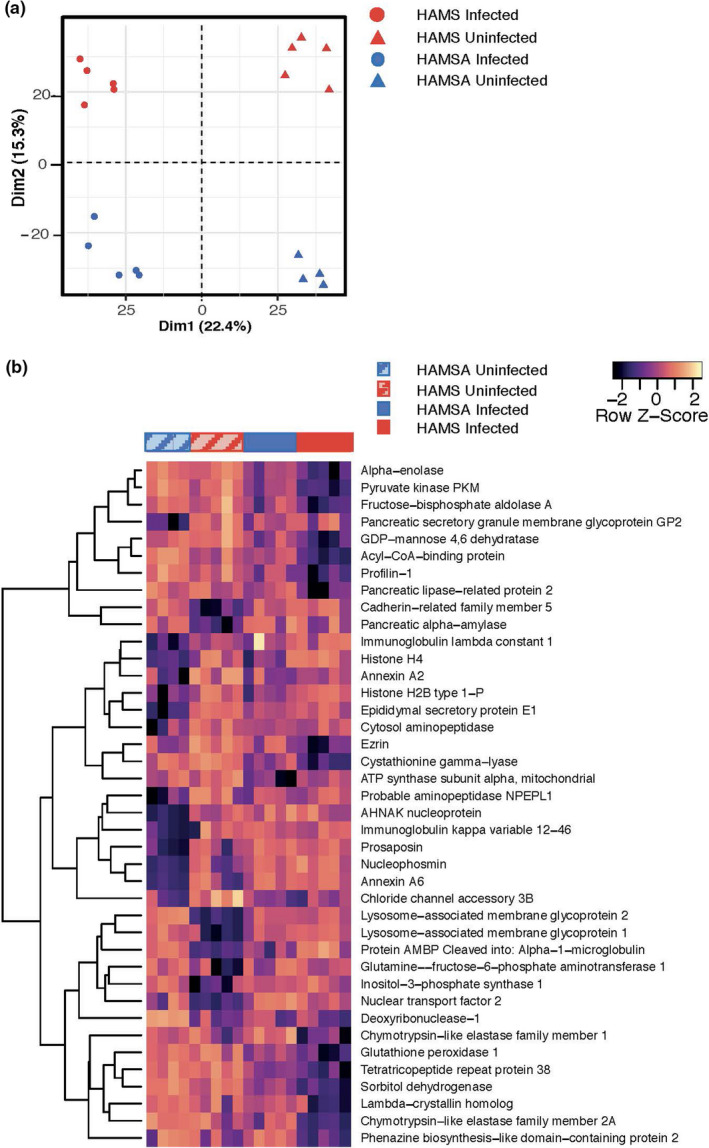
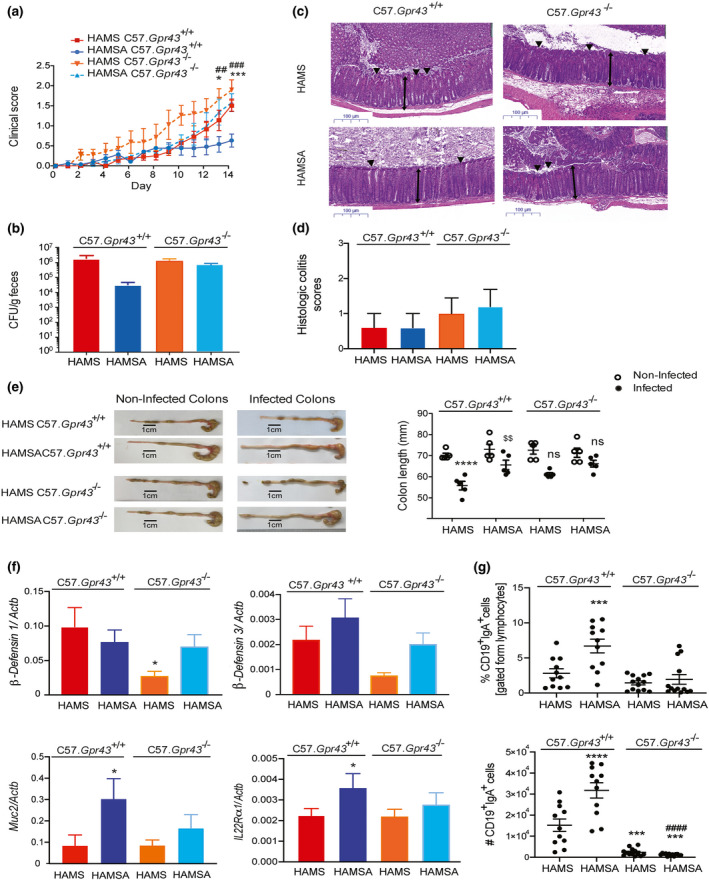
HAMSA diet rectified the deficiency in acetate production and protected against enteric infection. Increased SCFAs affect the expression of pathogen virulence genes. HAMSA diet promoted compositional and functional changes in the gut microbiota during infection similar to healthy microbiota from non-infected mice. Bacterial changes were evidenced by the production of proteins involved in acetate utilisation, starch and sugar degradation, amino acid biosynthesis, carbohydrate transport and metabolism. HAMSA diet also induced changes in host proteins critical in glycolysis, wound healing such as GPX1 and epithelial architecture such as EZR1 and PFN1. Dietary acetate assisted in rapid epithelial repair, as shown by increased colonic , , and anti-microbial peptides. We found that acetate increased numbers of colonic IL-22 producing TCRαβCD8αβ and TCRγδCD8αα intraepithelial lymphocytes expressing GPR43.
HAMSA diet may be an effective therapeutic approach for fighting inflammation and enteric infections and offer a safe alternative that may impact on human health.
在胃肠道感染期间,微生物群失调可导致微生物衍生的短链脂肪酸(SCFAs)生成减少。针对肠道病原体的存在,我们研究了一种经设计的释放乙酸盐或丁酸盐的饮食是否能够纠正SCFAs缺乏并促使肠道感染得到缓解。
我们测试了高乙酸盐或丁酸盐生成饮食(分别为HAMSA或HAMSB)是否会影响小鼠感染情况,并评估其对宿主-微生物群相互作用的影响。我们通过代谢物感应G蛋白偶联受体43(GPR43)和白细胞介素-22(IL-22)表达,分析了适应性和先天性免疫反应、肠道微生物组功能变化、上皮屏障功能及分子机制。
HAMSA饮食纠正了乙酸盐生成不足的情况,并预防了肠道感染。SCFAs增加会影响病原体毒力基因的表达。HAMSA饮食在感染期间促进了肠道微生物群的组成和功能变化,类似于未感染小鼠的健康微生物群。参与乙酸盐利用、淀粉和糖降解、氨基酸生物合成、碳水化合物转运和代谢的蛋白质生成证明了细菌的变化。HAMSA饮食还诱导了宿主蛋白质的变化,这些蛋白质在糖酵解、伤口愈合(如GPX1)以及上皮结构(如EZR1和PFN1)中至关重要。膳食乙酸盐有助于上皮快速修复,结肠中、和抗菌肽增加就表明了这一点。我们发现乙酸盐增加了表达GPR43的结肠产生IL-22的TCRαβCD8αβ和TCRγδCD8αα上皮内淋巴细胞的数量。
HAMSA饮食可能是对抗炎症和肠道感染的一种有效治疗方法,并提供一种可能影响人类健康的安全替代方案。