Li Zhaoxi, Wang Danfeng, Fei Chunlong, Qiu Zhihai, Hou Chenxue, Wu Runcong, Li Di, Zhang Qidong, Chen Dongdong, Chen Zeyu, Feng Wei, Yang Yintang
School of Microelectronics, Xidian University, Xi'an, China.
School of Mechanical and Electrical Engineering, Central South University, Changsha, China.
iScience. 2020 Dec 26;24(1):101988. doi: 10.1016/j.isci.2020.101988. eCollection 2021 Jan 22.
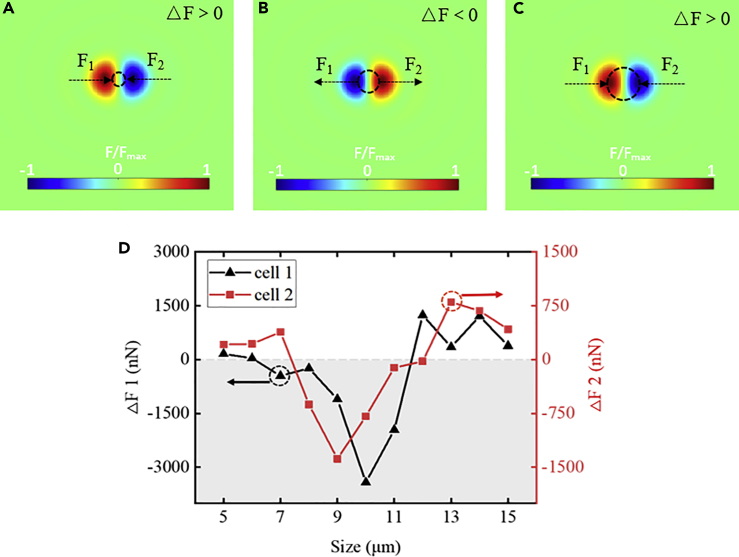
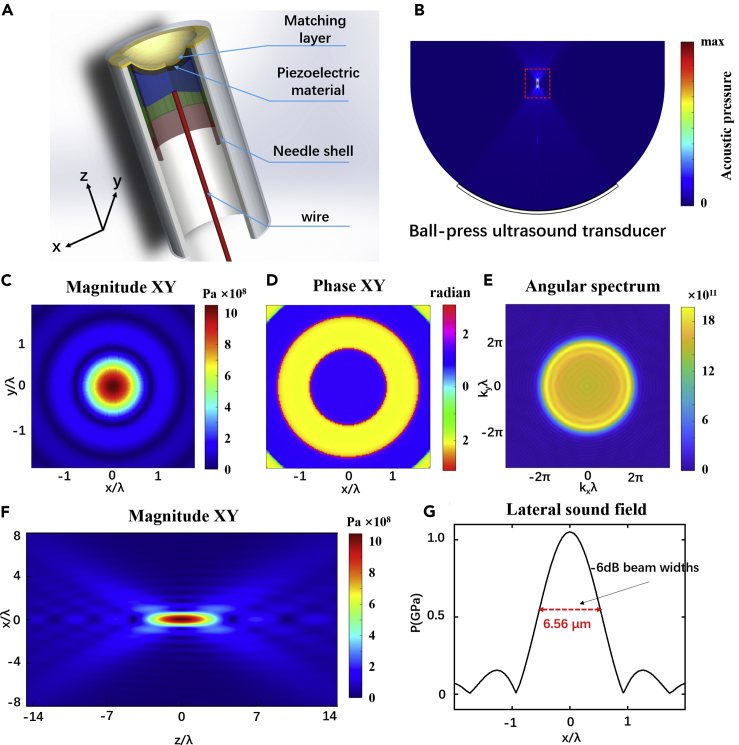
Acoustic micro-beams produced by highly focused ultrasound transducer have been investigated for micro-particle and cell manipulation. Here we report the selective trapping of microspheres via the acoustic force using the single acoustical beam. The forbidden band theory of acoustic radiation force trapping is proposed, which indicates that the trapping of particles via the acoustic beam is directly related to the particle diameter-to-beam wavelength ratio as well as excitation frequency of the ultrasonic acoustic tweezers. Three tightly focused LiNbO transducers with different center frequencies were fabricated for use as selective single beam acoustic tweezers (SBATs). These SBATs were capable of selectively manipulating microspheres of sizes 5-45 μm by adjusting the wavelength of acoustic beam. Our observations could introduce new avenues for research in biology and biophysics by promoting the development of a tool for selectively manipulating microspheres or cells of certain selected sizes, by carefully setting the acoustic beam shape and wavelength.
由高聚焦超声换能器产生的声学微束已被用于微粒子和细胞操纵的研究。在此,我们报告了利用单声束通过声学力对微球进行选择性捕获。提出了声辐射力捕获的禁带理论,该理论表明,通过声束对粒子的捕获与粒子直径与声束波长之比以及超声声镊的激发频率直接相关。制作了三个具有不同中心频率的紧密聚焦的铌酸锂换能器,用作选择性单束声镊(SBAT)。这些SBAT能够通过调节声束波长来选择性地操纵尺寸为5 - 45μm的微球。我们的观察结果可以通过开发一种工具来为生物学和生物物理学的研究引入新的途径,该工具通过仔细设置声束形状和波长来选择性地操纵某些选定尺寸的微球或细胞。