National Health Commission Key Laboratory of Birth Defects Research, Prevention, and Treatment, Hunan Provincial Maternal and Child Health Care Hospital, Changsha 410008, Hunan, P.R. China.
Key Laboratory of Protein Chemistry and Developmental Biology of Ministry of Education, College of Life Sciences, Hunan Normal University, Changsha 410081, Hunan, P.R. China.
Aging (Albany NY). 2021 Jan 20;13(3):4335-4356. doi: 10.18632/aging.202394.
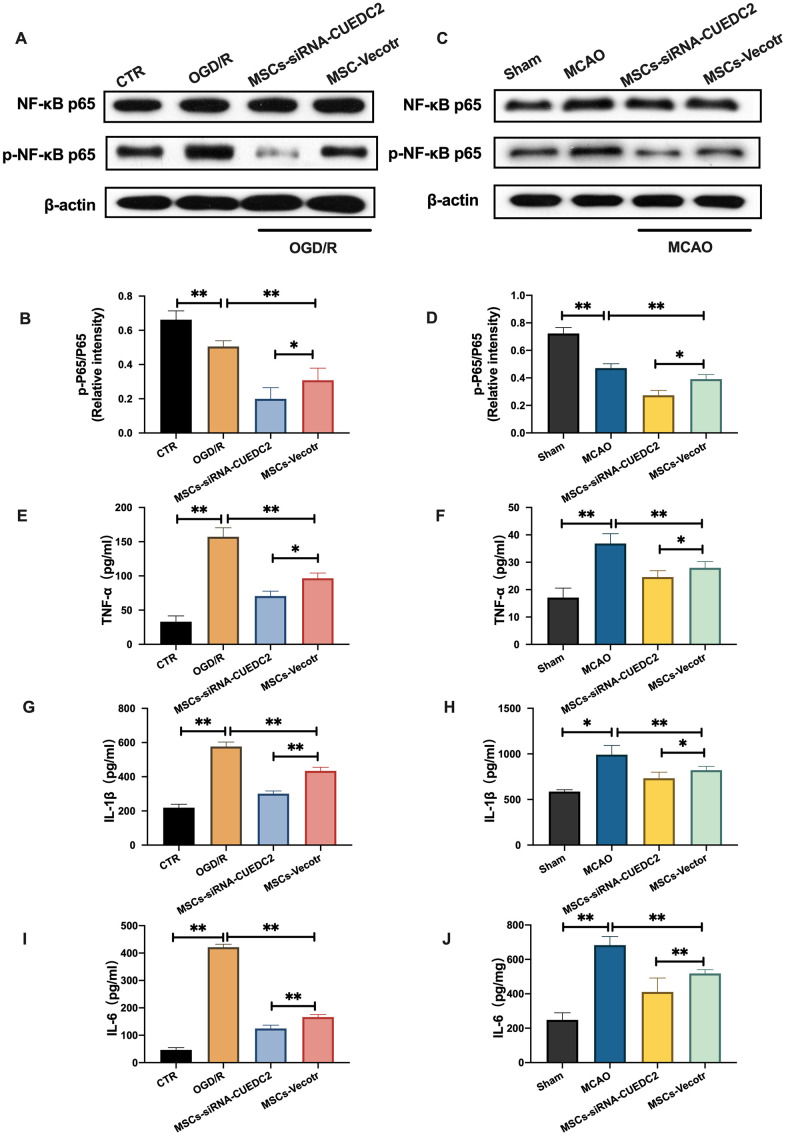
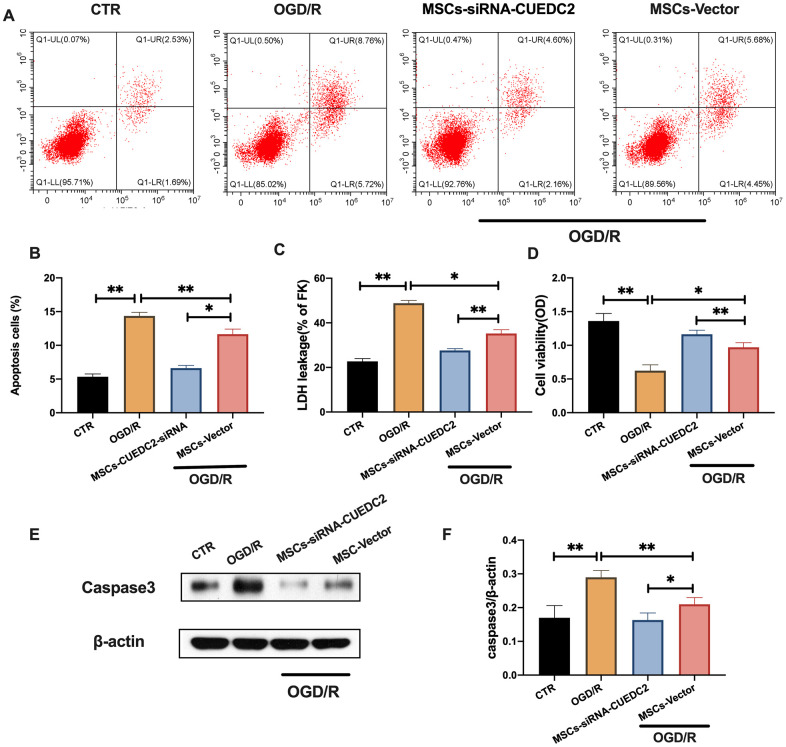
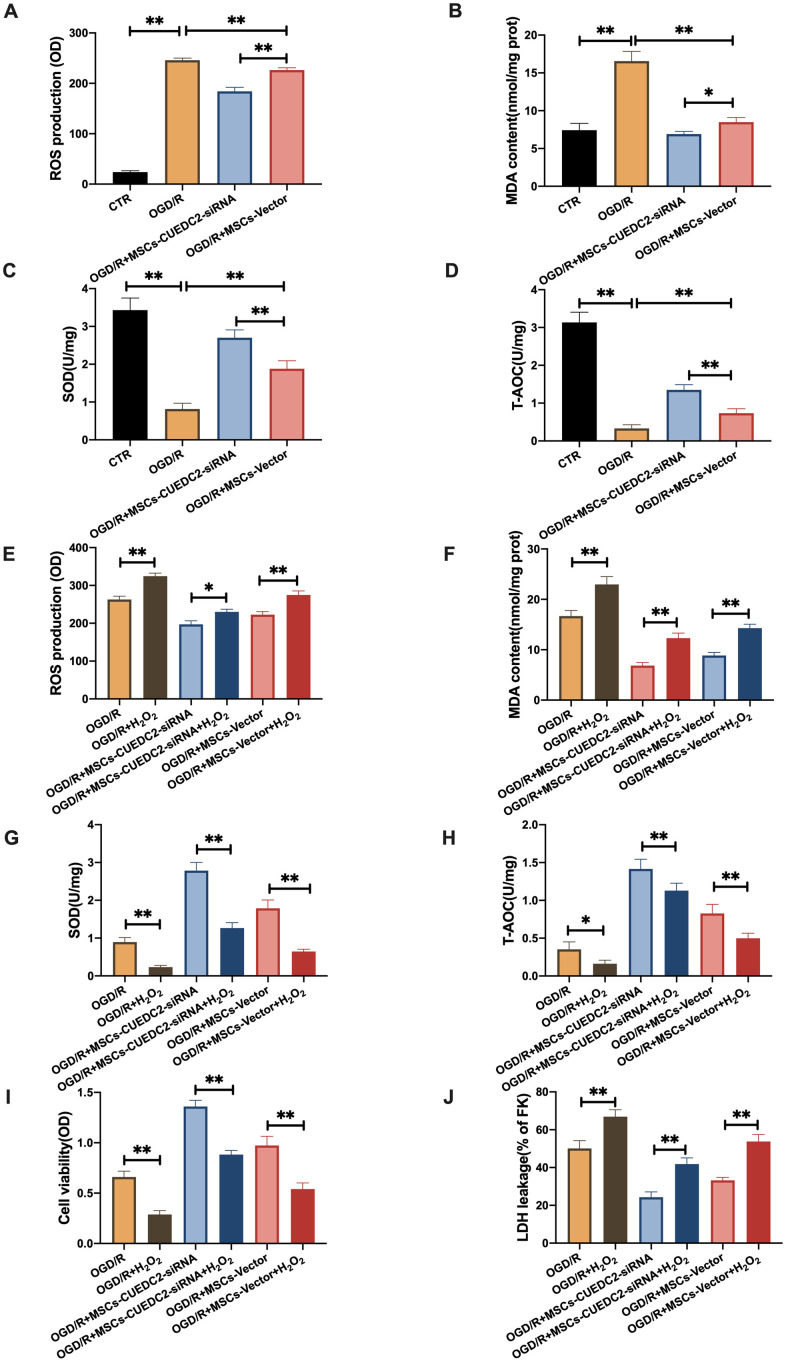
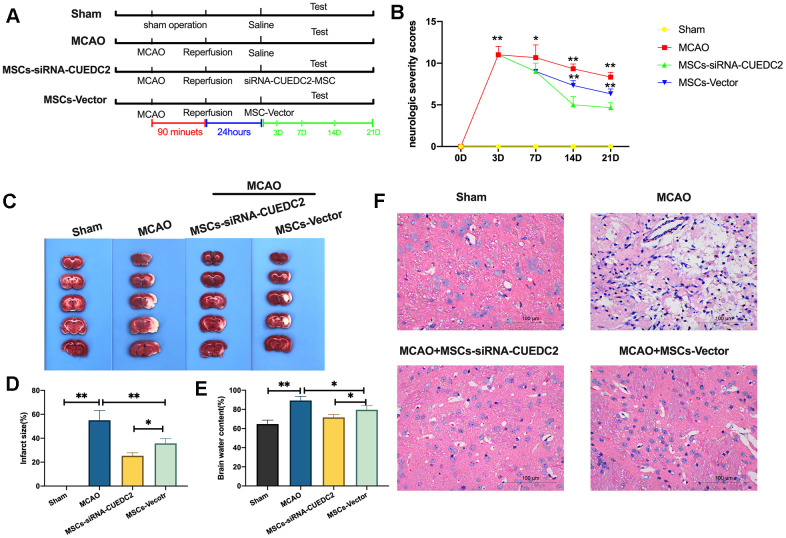
Mesenchymal stem cell (MSC) therapy has been reported to be a promising therapeutic option for cerebral ischemia/reperfusion (I/R) insult. However, the poor survival rate of engrafted MSCs under unfavorable cerebral I/R-induced microenvironment inhibits their efficiency during clinical application. CUE domain-containing 2(CUECD2) exhibits its protective role on cardiomyocytes by mediating the antioxidant capacity. Our study explored the functional role of CUEDC2 in cerebral I/R challenge and determined whether CUECD2-modified MSCs could improve the efficacy of treatment of the insulted neurons. We also evaluated the possible mechanisms involved in cerebral I/R condition. Cerebral I/R stimulation suppressed CUEDC2 levels in brain tissues and neurons. siRNA-CUEDC2 in neurons significantly inhibited cerebral I/R-induced apoptosis and oxidative stress levels . Moreover, siRNA-CUEDC2 in the MSCs group remarkably enhanced the therapeutic efficacies in cerebral I/R-induced neuron injury and brain tissue impairment when compared to the non-genetic MSCs treatment group. At the molecular level, siRNA-CUEDC2 in MSCs markedly enhanced its antioxidant and anti-inflammatory effect in co-cultured neurons by upregulating glutathione peroxidase 1 (GPX1) expression levels while suppressing NF-kB activation. These findings provide a novel strategy for the utilization of MSCs to promote cerebral ischemic stroke outcomes.
间充质干细胞(MSC)治疗已被报道为脑缺血/再灌注(I/R)损伤的一种有前途的治疗选择。然而,在不利于脑 I/R 诱导的微环境下,植入的 MSC 的存活率低,抑制了它们在临床应用中的效率。CUE 结构域包含 2(CUEDC2)通过介导抗氧化能力在心肌细胞中表现出其保护作用。我们的研究探讨了 CUEDC2 在脑 I/R 挑战中的功能作用,并确定了 CUEDC2 修饰的 MSC 是否可以提高对损伤神经元的治疗效果。我们还评估了脑 I/R 条件下涉及的可能机制。脑 I/R 刺激抑制了脑组织和神经元中的 CUEDC2 水平。神经元中的 siRNA-CUEDC2 显著抑制了脑 I/R 诱导的细胞凋亡和氧化应激水平。此外,与非遗传 MSC 治疗组相比,MSC 组中的 siRNA-CUEDC2 在脑 I/R 诱导的神经元损伤和脑组织损伤中的治疗效果显著增强。在分子水平上,siRNA-CUEDC2 在 MSC 中通过上调谷胱甘肽过氧化物酶 1(GPX1)表达水平,同时抑制 NF-kB 激活,显著增强了共培养神经元中的抗氧化和抗炎作用。这些发现为利用 MSC 促进脑缺血性中风结果提供了一种新策略。