Institute of Traditional Chinese Medicine Resources, College of Pharmaceutical Science, Zhejiang Chinese Medical University, Hangzhou, Zhejiang 311400, P.R. China.
Mol Med Rep. 2020 Jan;21(1):131-140. doi: 10.3892/mmr.2019.10833. Epub 2019 Nov 20.
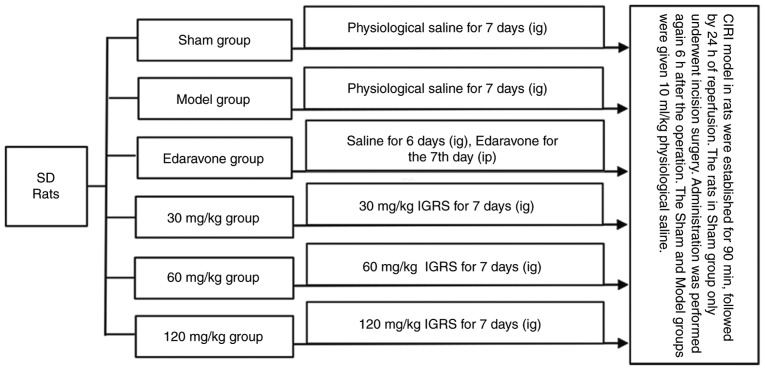
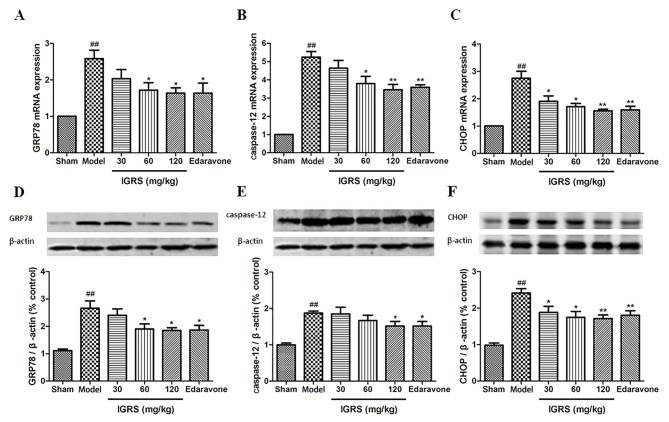
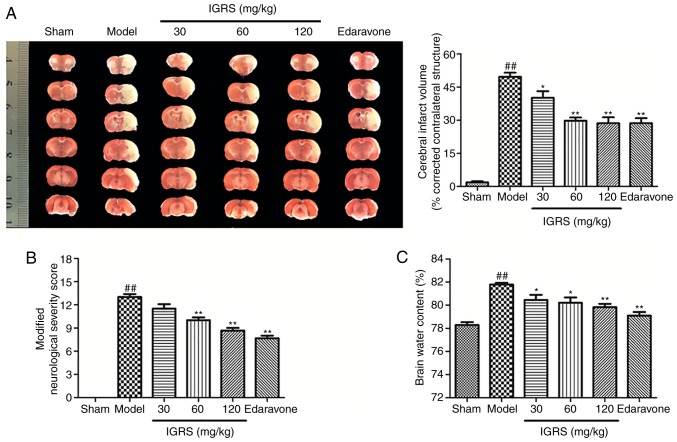
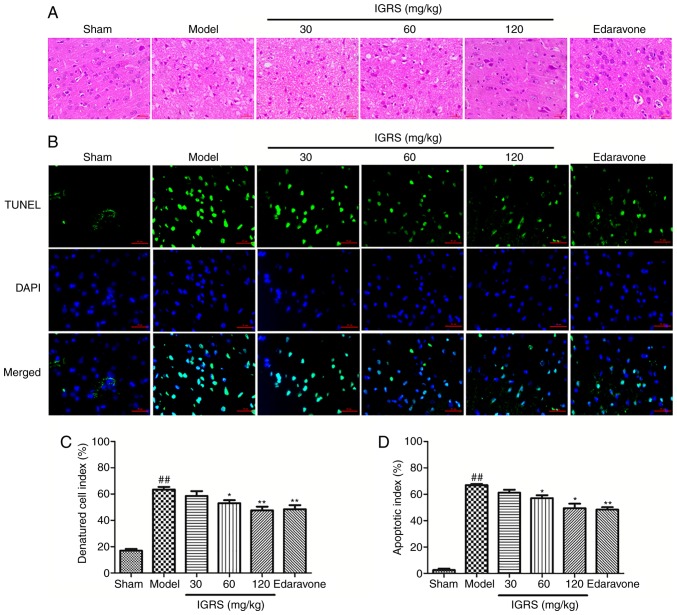
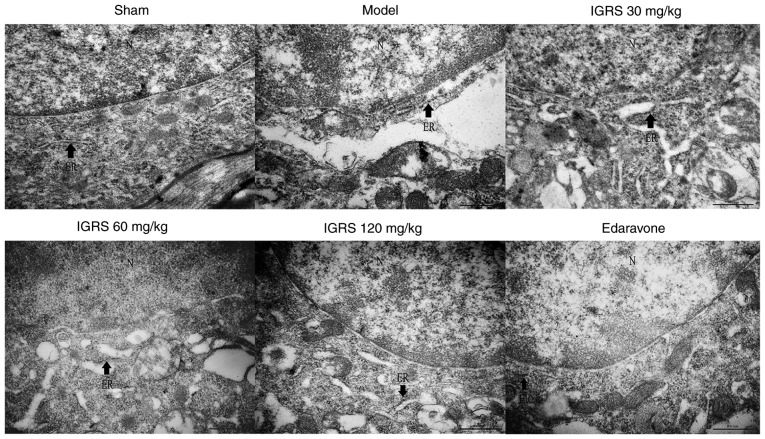
Iridoid glycosides of Radix Scrophulariae (IGRS) are a group of the major bioactive components from Radix Scrophulariae with extensive pharmacological activities. The present study investigated the effects of IGRS on cerebral ischemia‑reperfusion injury (CIRI) and explored its potential mechanisms of action. A CIRI model in rats was established by occlusion of the right middle cerebral artery for 90 min, followed by 24 h of reperfusion. Prior to surgery, 30, 60 or 120 mg/kg IGRS was administered to the rats once a day for 7 days. Then, the neurological scores, brain edema and volume of the cerebral infarction were measured. The apoptosis index was determined by terminal deoxynucleotidyl transferase mediated dUTP nick end labeling. The effects of IGRS on the histopathology of the cortex in brain tissues and the endoplasmic reticulum ultrastructure in the hippocampus were analyzed. Finally, the expression of endoplasmic reticulum stress (ERS)‑regulating mediators, endoplasmic reticulum chaperone BiP (GRP78), DNA damage‑inducible transcript 3 protein (CHOP) and caspase‑12, were detected by reverse transcription quantitative polymerase chain reaction (RT‑qPCR) and western blot analysis. The volume of cerebral infarction and brain water content in the IGRS‑treated groups treated at doses of 60 and 120 mg/kg were decreased significantly compared with the Model group. The neurological scores were also significantly decreased in the IGRS‑treated groups. IGRS treatment effectively decreased neuronal apoptosis resulting from CIRI‑induced neuron injury. In addition, the histopathological damage and the endoplasmic reticulum ultrastructure injury were partially improved in CIRI rats following IGRS treatment. RT‑qPCR and western blot analysis data indicated that IGRS significantly decreased the expression levels of GRP78, CHOP and caspase‑12 at both mRNA and protein levels. The results of the present study demonstrated that IGRS exerted a protective effect against CIRI in brain tissue via the inhibition of apoptosis and ERS.
地黄中环烯醚萜苷(IGRS)是玄参科植物的主要生物活性成分之一,具有广泛的药理活性。本研究探讨了 IGRS 对脑缺血再灌注损伤(CIRI)的影响,并探讨了其潜在的作用机制。通过阻断右侧大脑中动脉 90min 再灌注 24h 建立大鼠 CIRI 模型。手术前,IGRS 以 30、60 或 120mg/kg 剂量每天给药 1 次,共 7d。然后测量神经功能评分、脑水肿和脑梗死体积。末端脱氧核苷酸转移酶介导的 dUTP 缺口末端标记法测定细胞凋亡指数。分析 IGRS 对脑皮质组织病理学和海马内质网超微结构的影响。最后,通过逆转录定量聚合酶链反应(RT-qPCR)和 Western blot 分析检测内质网应激(ERS)调节介质内质网伴侣 BiP(GRP78)、DNA 损伤诱导转录 3 蛋白(CHOP)和半胱天冬酶-12 的表达。与模型组相比,IGRS 治疗组中 60 和 120mg/kg 剂量的脑梗死体积和脑水含量显著降低。IGRS 治疗组的神经功能评分也显著降低。IGRS 治疗可有效减少 CIRI 诱导的神经元损伤引起的神经元凋亡。此外,IGRS 治疗可部分改善 CIRI 大鼠的组织病理学损伤和内质网超微结构损伤。RT-qPCR 和 Western blot 分析数据表明,IGRS 可显著降低 GRP78、CHOP 和半胱天冬酶-12 的 mRNA 和蛋白水平表达。本研究结果表明,IGRS 通过抑制细胞凋亡和 ERS 对脑组织的 CIRI 发挥保护作用。