Chan Chee-Hong, Wu Sheng-Nan, Bao Bo-Ying, Li Houng-Wei, Lu Te-Ling
Department of Nephrology, Chang Bing Show Chwan Memorial Hospital, Lukang 505, Changhua, Taiwan.
Department of Physiology, National Cheng Kung University Medical College, Tainan 70101, Taiwan.
Int J Mol Sci. 2021 Jan 20;22(3):999. doi: 10.3390/ijms22030999.
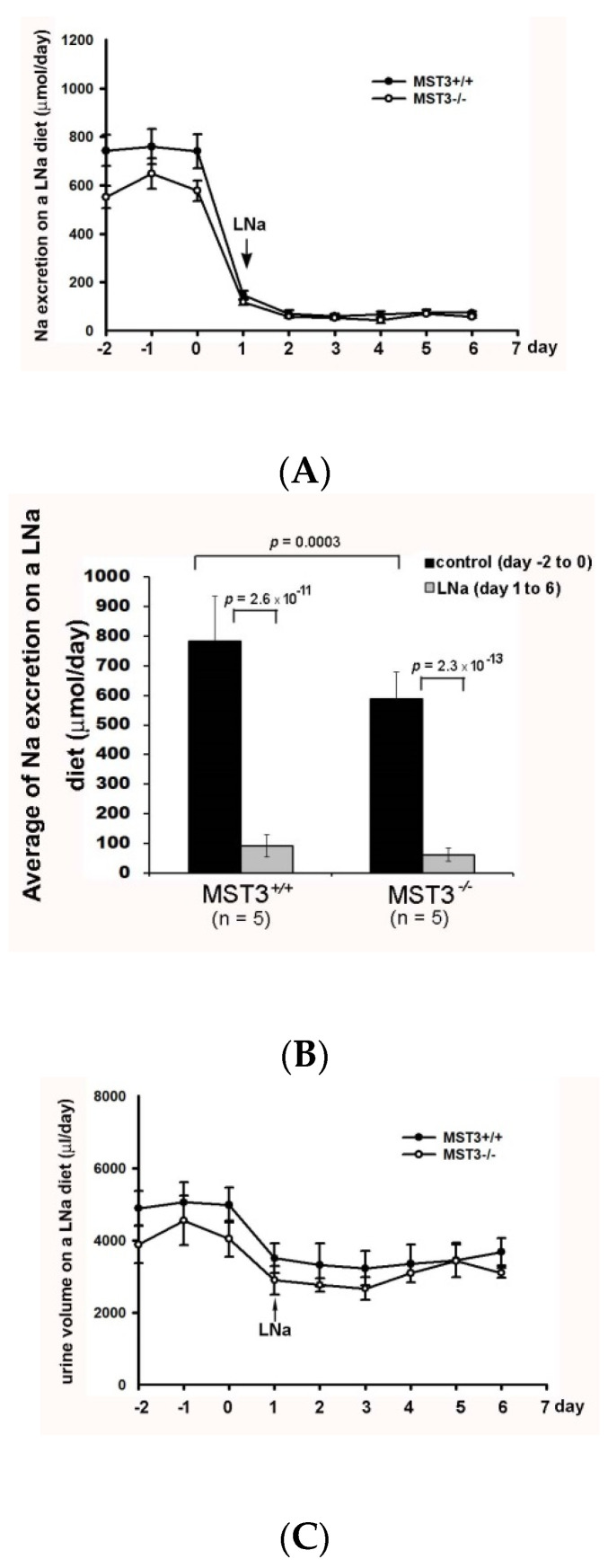
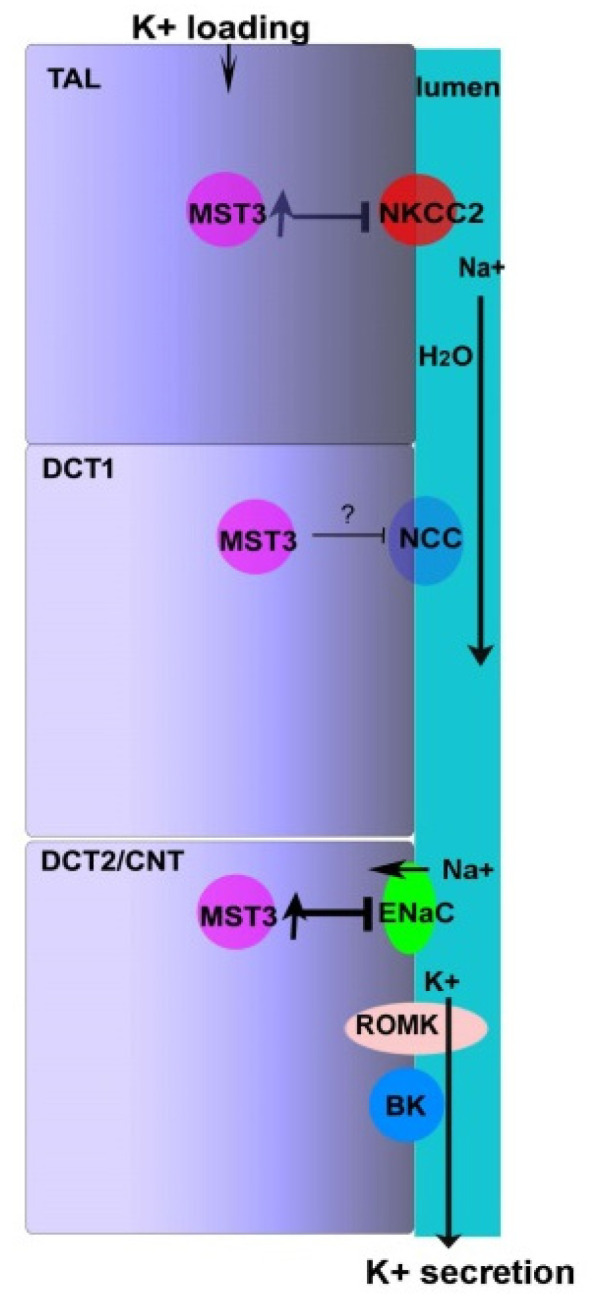
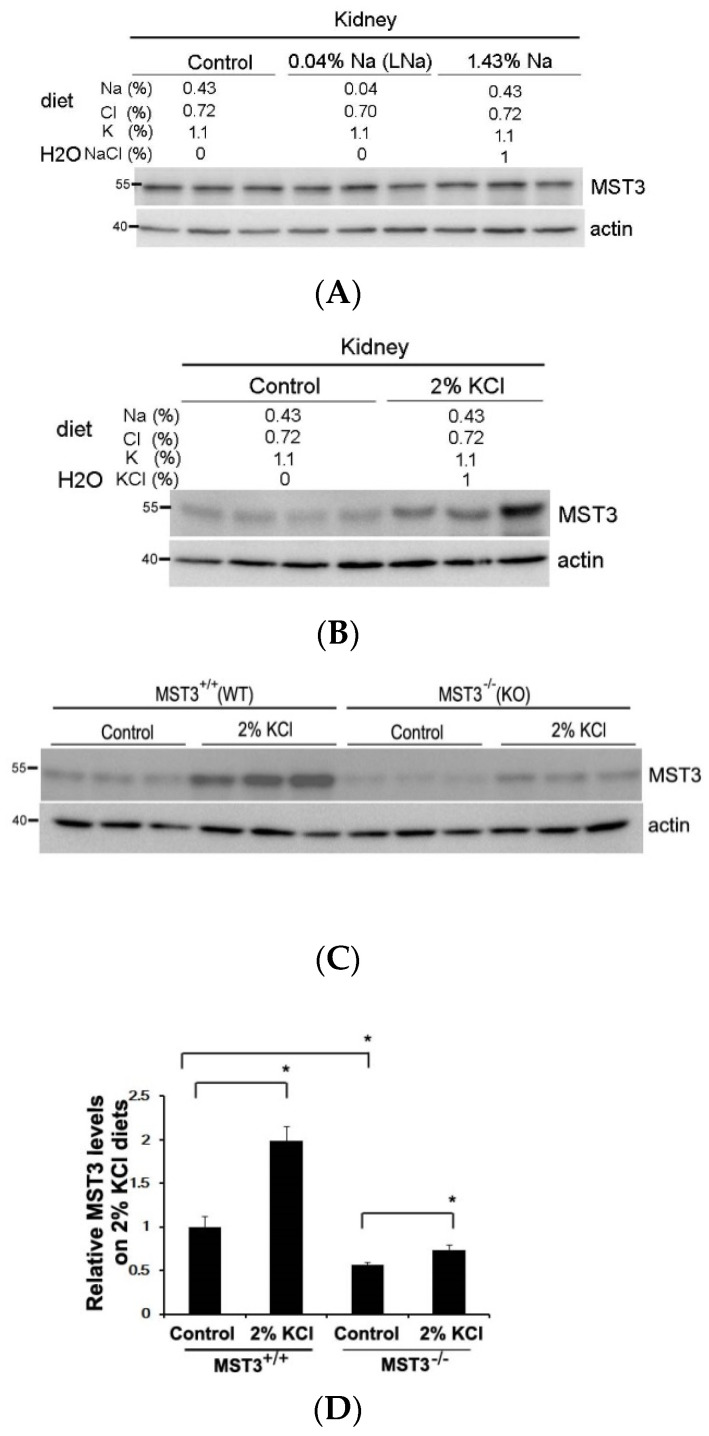
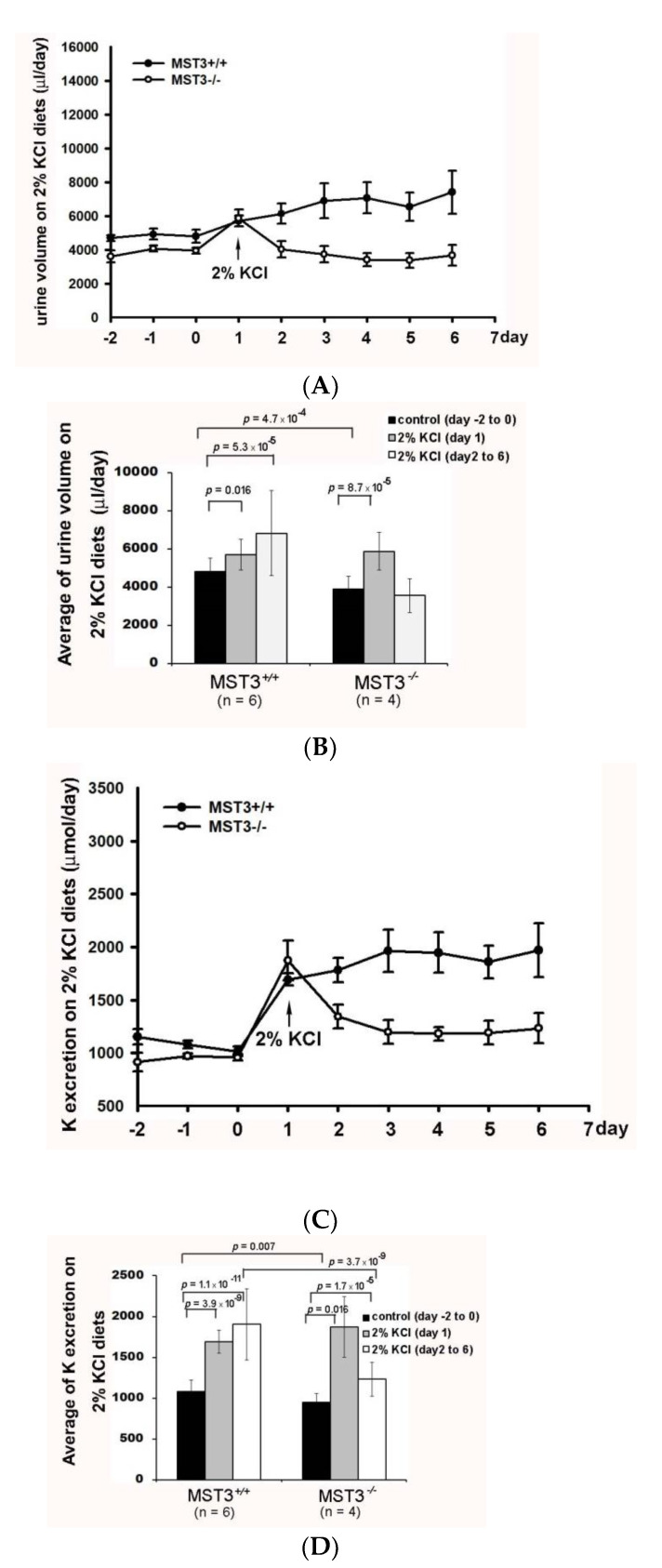
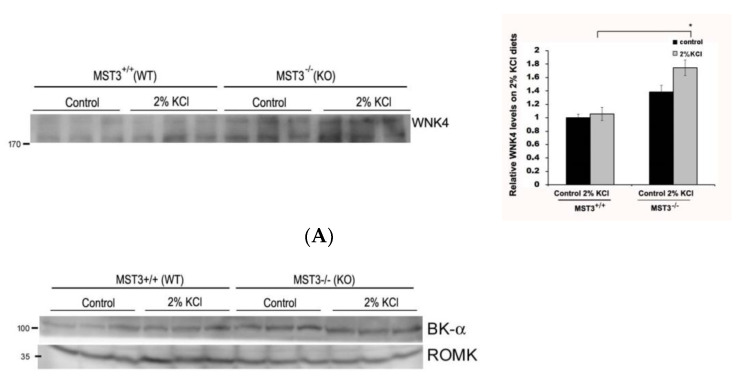
K loading inhibits NKCC2 (Na-K-Cl cotransporter) and NCC (Na-Cl cotransporter) in the early distal tubules, resulting in Na delivery to the late distal convoluted tubules (DCTs). In the DCTs, Na entry through ENaC (epithelial Na channel) drives K secretion through ROMK (renal outer medullary potassium channel). WNK4 (with-no-lysine 4) regulates the NCC/NKCC2 through SAPK (Ste20-related proline-alanine-rich kinase)/OSR1 (oxidative stress responsive). K loading increases intracellular Cl, which binds to the WNK4, thereby inhibiting autophosphorylation and downstream signals. Acute K loading-deactivated NCC was not observed in Cl-insensitive WNK4 mice, indicating that WNK4 was involved in K loading-inhibited NCC activity. However, chronic K loading deactivated NCC in Cl-insensitive WNK4 mice, indicating that other mechanisms may be involved. We previously reported that mammalian Ste20-like protein kinase 3 (MST3/STK24) was expressed mainly in the medullary TAL (thick ascending tubule) and at lower levels in the DCTs. MST3 mice exhibited higher ENaC activity, causing hypernatremia and hypertension. To investigate MST3 function in maintaining Na/K homeostasis in kidneys, mice were fed diets containing various concentrations of Na and K. The 2% KCl diets induced less MST3 expression in MST3 mice than that in wild-type (WT) mice. The MST3 mice had higher WNK4, NKCC2-S130 phosphorylation, and ENaC expression, resulting in lower urinary Na and K excretion than those of WT mice. Lower urinary Na excretion was associated with elevated plasma [Na] and hypertension. These results suggest that MST3 maintains Na/K homeostasis in response to K loading by regulation of WNK4 expression and NKCC2 and ENaC activity.
钾负荷抑制早期远曲小管中的NKCC2(钠-钾-氯共转运体)和NCC(钠-氯共转运体),导致钠输送至远端曲管(DCT)的后期。在DCT中,通过ENaC(上皮钠通道)进入的钠驱动通过ROMK(肾外髓质钾通道)的钾分泌。WNK4(无赖氨酸4)通过SAPK(与Ste20相关的富含脯氨酸-丙氨酸的激酶)/OSR1(氧化应激反应蛋白)调节NCC/NKCC2。钾负荷增加细胞内氯离子,其与WNK4结合,从而抑制自磷酸化和下游信号。在氯离子不敏感的WNK4小鼠中未观察到急性钾负荷使NCC失活,表明WNK4参与钾负荷抑制的NCC活性。然而,慢性钾负荷使氯离子不敏感的WNK4小鼠中的NCC失活,表明可能涉及其他机制。我们之前报道过哺乳动物Ste20样蛋白激酶3(MST3/STK24)主要在髓质升支粗段(TAL)表达,在DCT中表达水平较低。MST3小鼠表现出较高的ENaC活性,导致高钠血症和高血压。为了研究MST3在维持肾脏钠/钾稳态中的功能,给小鼠喂食含有不同浓度钠和钾的饮食。2%氯化钾饮食诱导MST3小鼠中MST3的表达低于野生型(WT)小鼠。MST3小鼠具有更高的WNK4、NKCC2-S130磷酸化和ENaC表达,导致尿钠和钾排泄低于WT小鼠。较低的尿钠排泄与血浆[Na]升高和高血压有关。这些结果表明,MST3通过调节WNK4表达以及NKCC2和ENaC活性来响应钾负荷维持钠/钾稳态。