State Key Laboratory of Bioelectronics, School of Biological Science and Medical Engineering, Southeast University, Nanjing 210096, China.
Int J Mol Sci. 2021 Jan 20;22(3):1017. doi: 10.3390/ijms22031017.
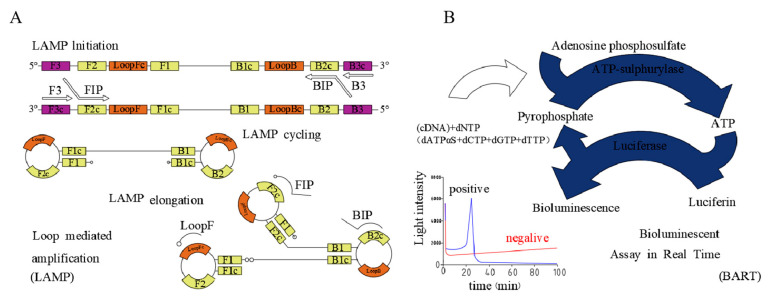
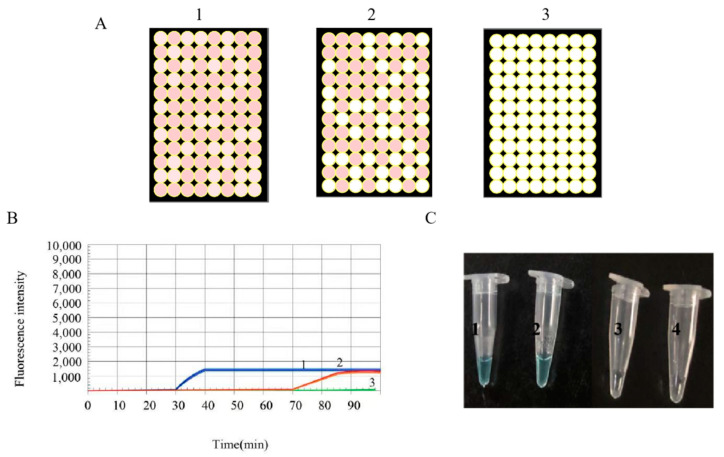
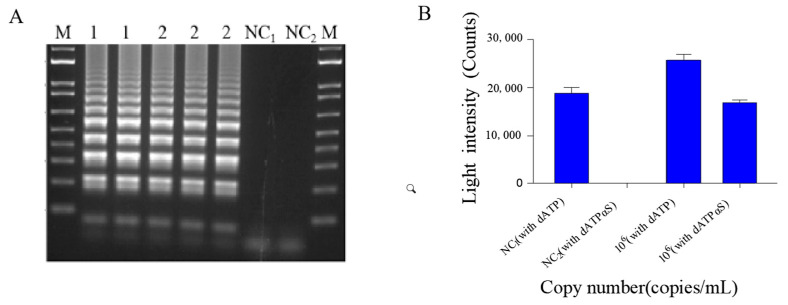
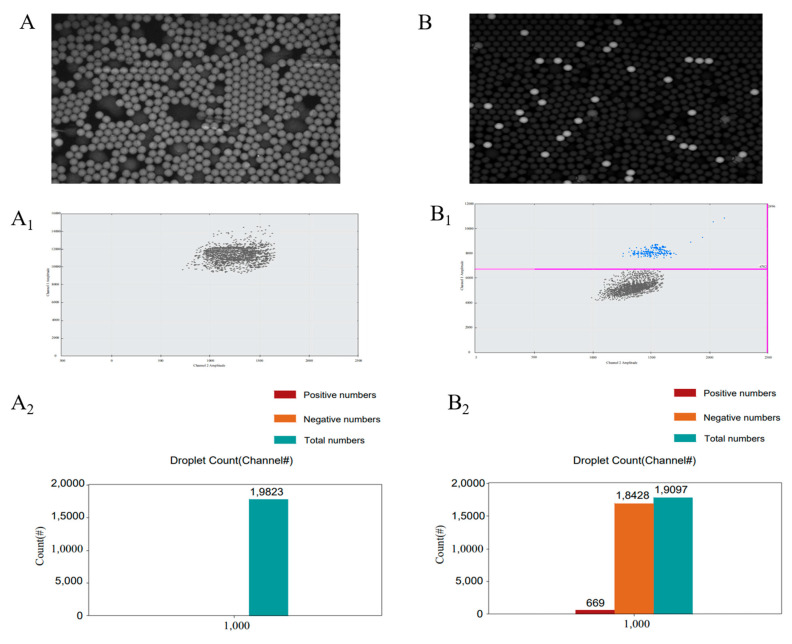
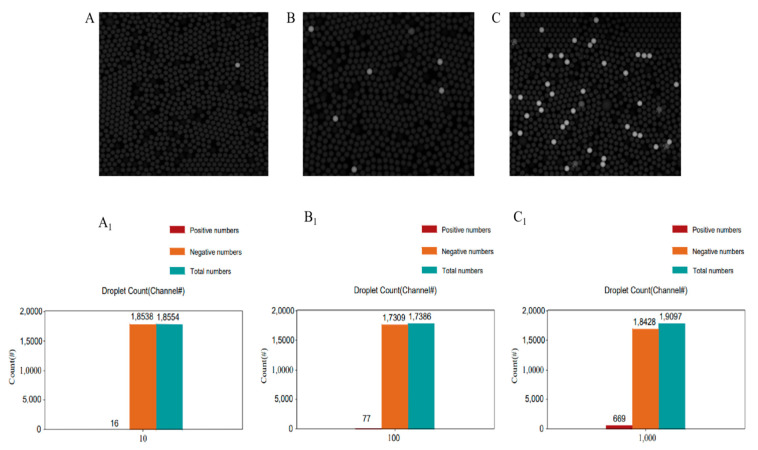
The COVID-19 pandemic caused by the SARS-CoV-2 virus, which first emerged in December 2019, represents an ongoing global public health emergency. Here, we developed an improved and highly sensitive approach to SARS-CoV-2 detection via coupling bioluminescence in real-time (BART) and reverse-transcriptase loop-mediated amplification (RT-LAMP) protocols (RT-LAMP-BART) and was also compatible with a digital LAMP system (Rainsuit), which did not allow for real-time quantification but did, nonetheless, facilitate absolute quantification with a comparable detection limit of 10 copies/mL. Through improving RNA availability in samples to ensure the target RNA present in reaction, we additionally developed a simulated digital RT-LAMP approach using this same principle to enlarge the overall reaction volume and to achieve real-time detection with a limit of detection of 10 copies/mL, and with further improvements in the overall dynamic range of this assay system being achieved through additional optimization.
由 SARS-CoV-2 病毒引起的 COVID-19 大流行是一场持续的全球公共卫生紧急事件。在这里,我们通过实时生物发光(BART)和逆转录环介导扩增(RT-LAMP)协议(RT-LAMP-BART)相结合,开发了一种改进的、高灵敏度的 SARS-CoV-2 检测方法,并且还与数字 LAMP 系统(Rainsuit)兼容,该系统不允许实时定量,但确实可以通过可比的检测限 10 拷贝/ml 进行绝对定量。通过改进样品中 RNA 的可用性,以确保反应中存在目标 RNA,我们还开发了一种模拟数字 RT-LAMP 方法,使用相同的原理来扩大总体反应体积,并实现 10 拷贝/ml 的检测限的实时检测,并通过进一步优化,提高了该检测系统的整体动态范围。