Gałecka Małgorzata, Bliźniewska-Kowalska Katarzyna, Orzechowska Agata, Szemraj Janusz, Maes Michael, Berk Michael, Su Kuan-Pin, Gałecki Piotr
Department of Psychotherapy, Medical University of Lodz, 91-229 Lodz, Poland.
Department of Adult Psychiatry, Medical University of Lodz, 91-229 Lodz, Poland.
J Pers Med. 2021 Jan 23;11(2):66. doi: 10.3390/jpm11020066.
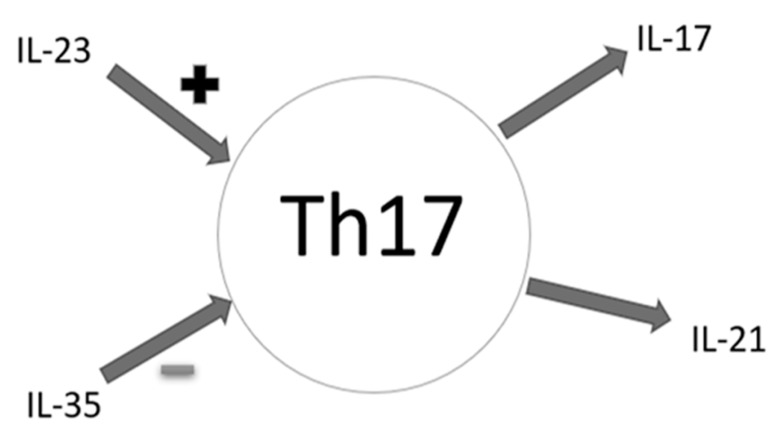
The authors of this research study intended to verify whether there are any changes in gene expression in depressed patients without coexisting inflammatory diseases for selected immune-inflammatory factors that are particularly important in autoimmune disease pathogenesis (IL-17, IL-21, IL-23, IL-35, Foxp3).
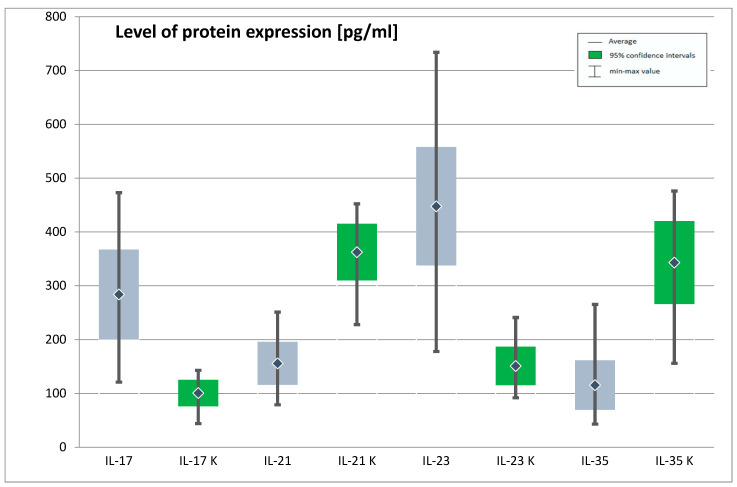
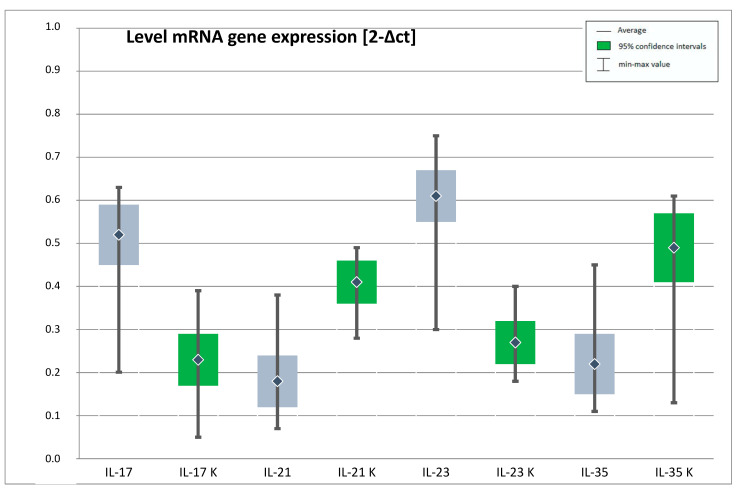
The study was carried out on a group of 190 patients with depression and 100 healthy volunteers. The severity of depressive symptoms was assessed using the Hamilton Depression Scale. RT-PCR was used to evaluate mRNA expression and ELISA was used to measure protein expression of these genes.
The level of gene expression for IL-17, IL-21, IL-23, and IL-35 was substantially higher in the group of patients with depression compared to the control group. The mean mRNA expression of Foxp3 was considerably reduced in patients suffering from depressive disorders. There was a statistically significant correlation between the number of hospitalizations and the expression of specific inflammatory factors.
Expression of specific inflammatory genes may be a factor in the etiopathogenesis of depressive disorders. The duration of the disease seems to be more important for the expression of the genes in question than the severity of depression. These cytokines may affect the metabolism of neurotransmitters and neuroendocrine functions in the brain as well as be a marker and a new potential therapeutic target for recurrent depressive disorders.
本研究的作者旨在验证,对于自身免疫性疾病发病机制中特别重要的选定免疫炎症因子(白细胞介素-17、白细胞介素-21、白细胞介素-23、白细胞介素-35、叉头框蛋白3),无并存炎症性疾病的抑郁症患者的基因表达是否存在任何变化。
该研究对190名抑郁症患者和100名健康志愿者进行。使用汉密尔顿抑郁量表评估抑郁症状的严重程度。采用逆转录聚合酶链反应(RT-PCR)评估这些基因的mRNA表达,并采用酶联免疫吸附测定(ELISA)测量这些基因的蛋白质表达。
与对照组相比,抑郁症患者组中白细胞介素-17、白细胞介素-21、白细胞介素-23和白细胞介素-35的基因表达水平显著更高。抑郁症患者中叉头框蛋白3的平均mRNA表达明显降低。住院次数与特定炎症因子的表达之间存在统计学上的显著相关性。
特定炎症基因的表达可能是抑郁症发病机制中的一个因素。疾病持续时间似乎比抑郁严重程度对相关基因的表达更为重要。这些细胞因子可能影响大脑中神经递质的代谢和神经内分泌功能,并且可能是复发性抑郁症的一个标志物和新的潜在治疗靶点。