Department of Animal Physiology, Biochemistry and Biostructure, Poznan University of Life Sciences, 60-637 Poznan, Poland.
Department of Histology and Embryology, Poznan University of Medical Sciences, 60-781 Poznan, Poland.
Int J Mol Sci. 2021 Jan 24;22(3):1148. doi: 10.3390/ijms22031148.
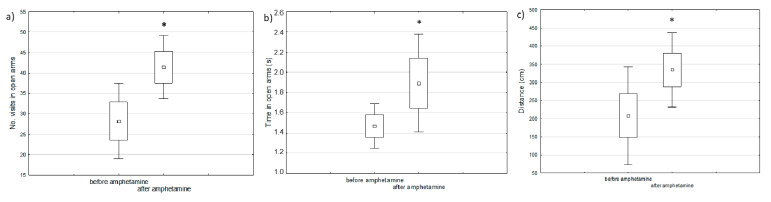
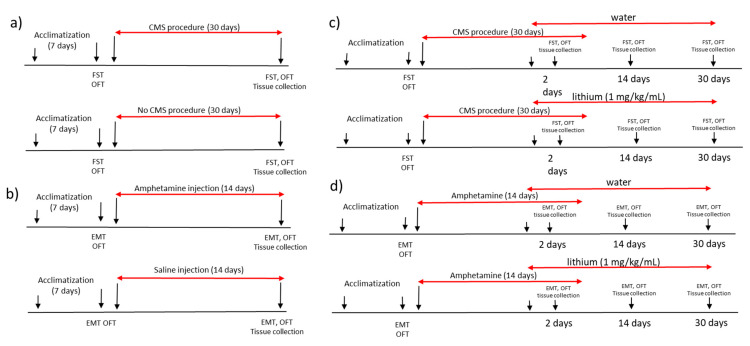
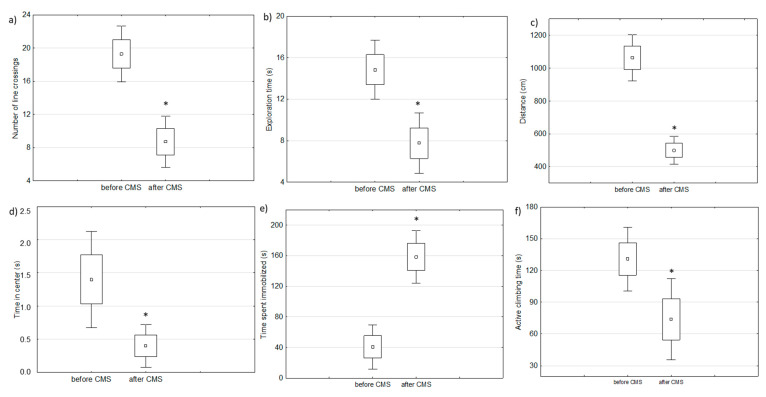
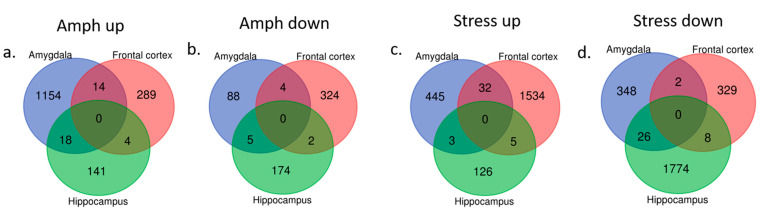
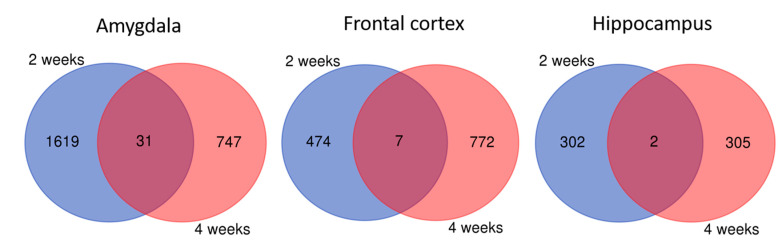
Lithium has been the most important mood stabilizer used for the treatment of bipolar disorder and prophylaxis of manic and depressive episodes. Despite long use in clinical practice, the exact molecular mechanisms of lithium are still not well identified. Previous experimental studies produced inconsistent results due to different duration of lithium treatment and using animals without manic-like or depressive-like symptoms. Therefore, we aimed to analyze the gene expression profile in three brain regions (amygdala, frontal cortex and hippocampus) in the rat model of mania and depression during chronic lithium administration (2 and 4 weeks). Behavioral changes were verified by the forced swim test, open field test and elevated maze test. After the experiment, nucleic acid was extracted from the frontal cortex, hippocampus and amygdala. Gene expression profile was done using SurePrint G3 Rat Gene Expression whole transcriptome microarrays. Data were analyzed using Gene Spring 14.9 software. We found that chronic lithium treatment significantly influenced gene expression profile in both mania and depression models. In manic rats, chronic lithium treatment significantly influenced the expression of the genes enriched in olfactory and taste transduction pathway and long non-coding RNAs in all three brain regions. We report here for the first time that genes regulating olfactory and taste receptor pathways and long non-coding RNAs may be targeted by chronic lithium treatment in the animal model of mania.
锂一直是治疗双相情感障碍和预防躁狂和抑郁发作的最重要的心境稳定剂。尽管在临床实践中已经使用了很长时间,但锂的确切分子机制仍未得到很好的确定。由于锂治疗的持续时间不同,并且使用的动物没有躁狂样或抑郁样症状,因此先前的实验研究产生了不一致的结果。因此,我们旨在分析慢性锂给药(2 周和 4 周)期间躁狂和抑郁大鼠模型中三个脑区(杏仁核、额叶皮层和海马体)的基因表达谱。通过强迫游泳试验、旷场试验和高架迷宫试验验证行为变化。实验结束后,从额叶皮层、海马体和杏仁核中提取核酸。使用 SurePrint G3 Rat Gene Expression 全转录组微阵列进行基因表达谱分析。使用 Gene Spring 14.9 软件进行数据分析。我们发现,慢性锂处理显著影响躁狂和抑郁模型中的基因表达谱。在躁狂大鼠中,慢性锂处理显著影响所有三个脑区中嗅觉和味觉转导途径以及长非编码 RNA 富集的基因的表达。我们在这里首次报道,调节嗅觉和味觉受体途径以及长非编码 RNA 的基因可能是慢性锂处理在躁狂动物模型中的靶点。