Citores Lucía, Iglesias Rosario, Ferreras José M
Department of Biochemistry and Molecular Biology and Physiology, Faculty of Sciences, University of Valladolid, E-47011 Valladolid, Spain.
Toxins (Basel). 2021 Jan 22;13(2):80. doi: 10.3390/toxins13020080.
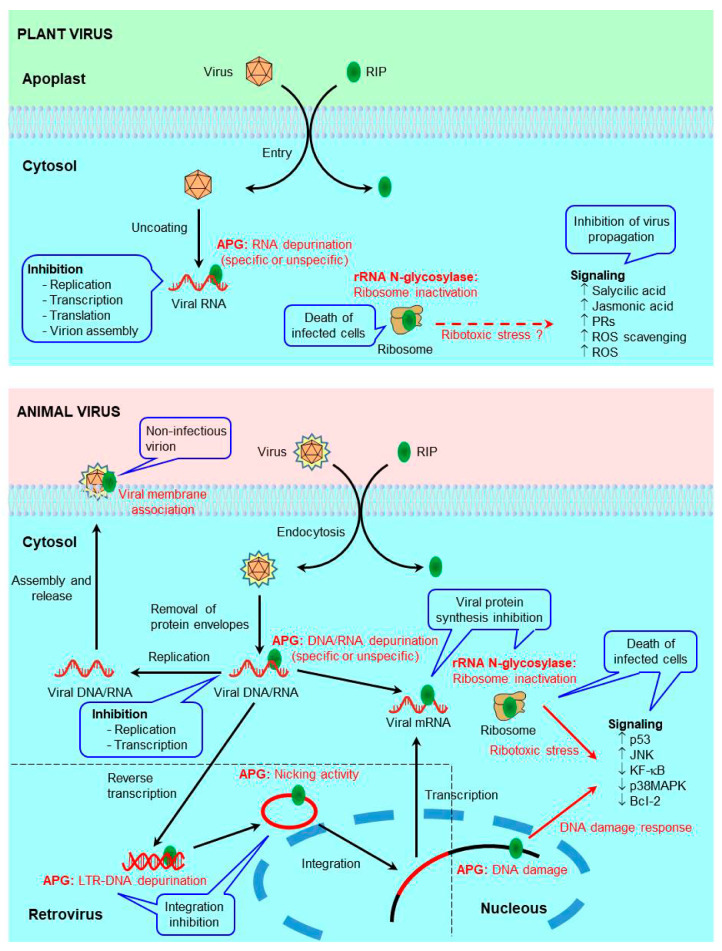
Ribosome-inactivating proteins (RIPs) are rRNA N-glycosylases from plants (EC 3.2.2.22) that inactivate ribosomes thus inhibiting protein synthesis. The antiviral properties of RIPs have been investigated for more than four decades. However, interest in these proteins is rising due to the emergence of infectious diseases caused by new viruses and the difficulty in treating viral infections. On the other hand, there is a growing need to control crop diseases without resorting to the use of phytosanitary products which are very harmful to the environment and in this respect, RIPs have been shown as a promising tool that can be used to obtain transgenic plants resistant to viruses. The way in which RIPs exert their antiviral effect continues to be the subject of intense research and several mechanisms of action have been proposed. The purpose of this review is to examine the research studies that deal with this matter, placing special emphasis on the most recent findings.
核糖体失活蛋白(RIPs)是植物来源的rRNA N-糖基化酶(EC 3.2.2.22),可使核糖体失活,从而抑制蛋白质合成。四十多年来,人们一直在研究RIPs的抗病毒特性。然而,由于新病毒引发的传染病不断出现以及治疗病毒感染的困难,人们对这些蛋白质的兴趣正在增加。另一方面,越来越需要在不使用对环境非常有害的植物检疫产品的情况下控制作物病害,在这方面,RIPs已被证明是一种有前途的工具,可用于获得抗病毒的转基因植物。RIPs发挥抗病毒作用的方式仍然是深入研究的主题,并且已经提出了几种作用机制。本综述的目的是审视处理这一问题的研究,特别强调最新发现。