Department of Hepatobiliary Surgery, Key Laboratory of Basic and Clinical Application Research for Hepatobiliary Diseases, The First Affiliated Hospital of Guangxi Medical University, No. 6 Shuangyong Road, Nanning, 530021, Guangxi, People's Republic of China.
J Exp Clin Cancer Res. 2021 Jan 26;40(1):45. doi: 10.1186/s13046-021-01854-5.
Hepatocellular carcinoma (HCC) has an extremely poor prognosis due to the development of chemoresistance, coupled with inherently increased stemness properties. Long non-coding RNAs (LncRNAs) are key regulators for tumor cell stemness and chemosensitivity. Currently the relevance between LINC00680 and tumor progression was still largely unknown, with only one study showing its significance in glioblastoma. The study herein was aimed at identifying the role of LINC00680 in the regulation HCC stemness and chemosensitivity.
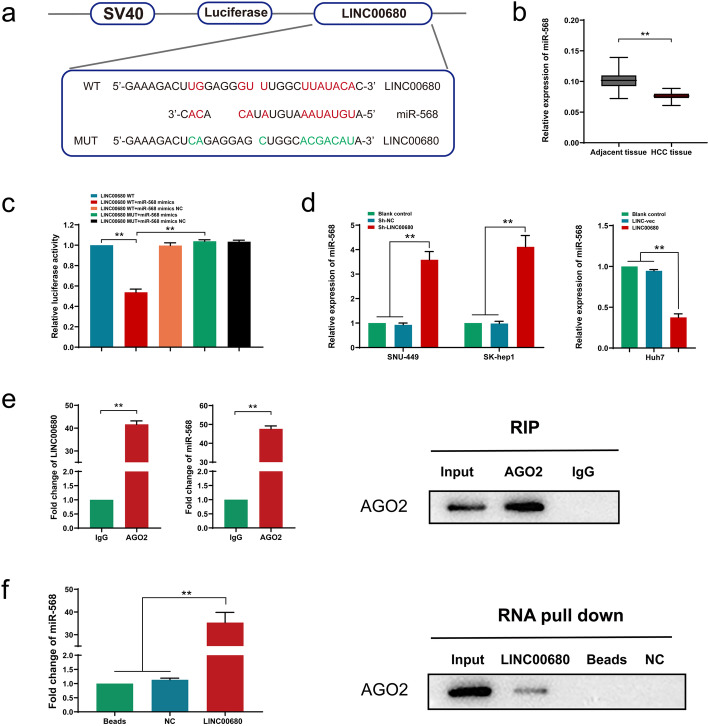
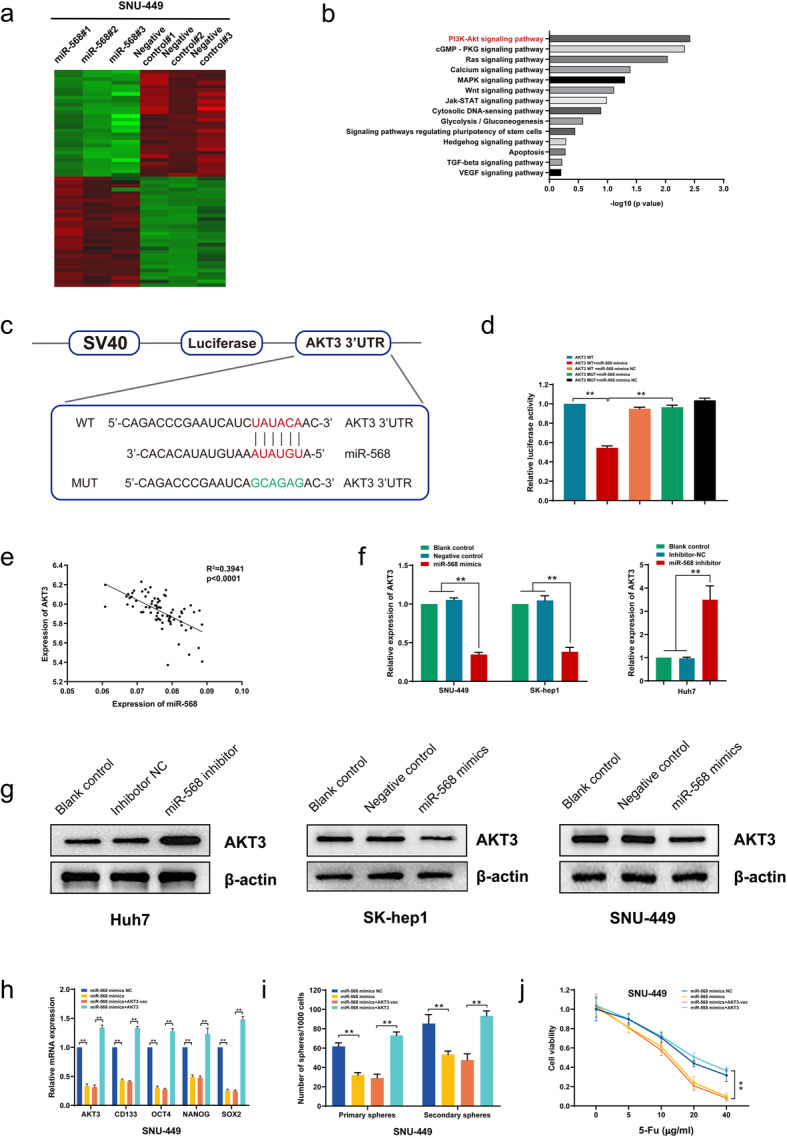
QRT-PCR was used to detect the expression of LINC00680, miR-568 and AKT3 in tissue specimen and cell lines. Gain- or loss-of function assays were applied to access the function of LINC00680 in HCC cells, including cell proliferation and stemness properties. HCC stemness and chemosensitivity were determined by sphere formation, cell viability and colony formation. Luciferase reporter, RNA immunoprecipitation (RIP), and RNA pull-down assays were performed to examine the interaction between LINC00680 and miR-568 as well as that between miR-568 and AKT3. A nude mouse xenograft model was established for the in vivo study.
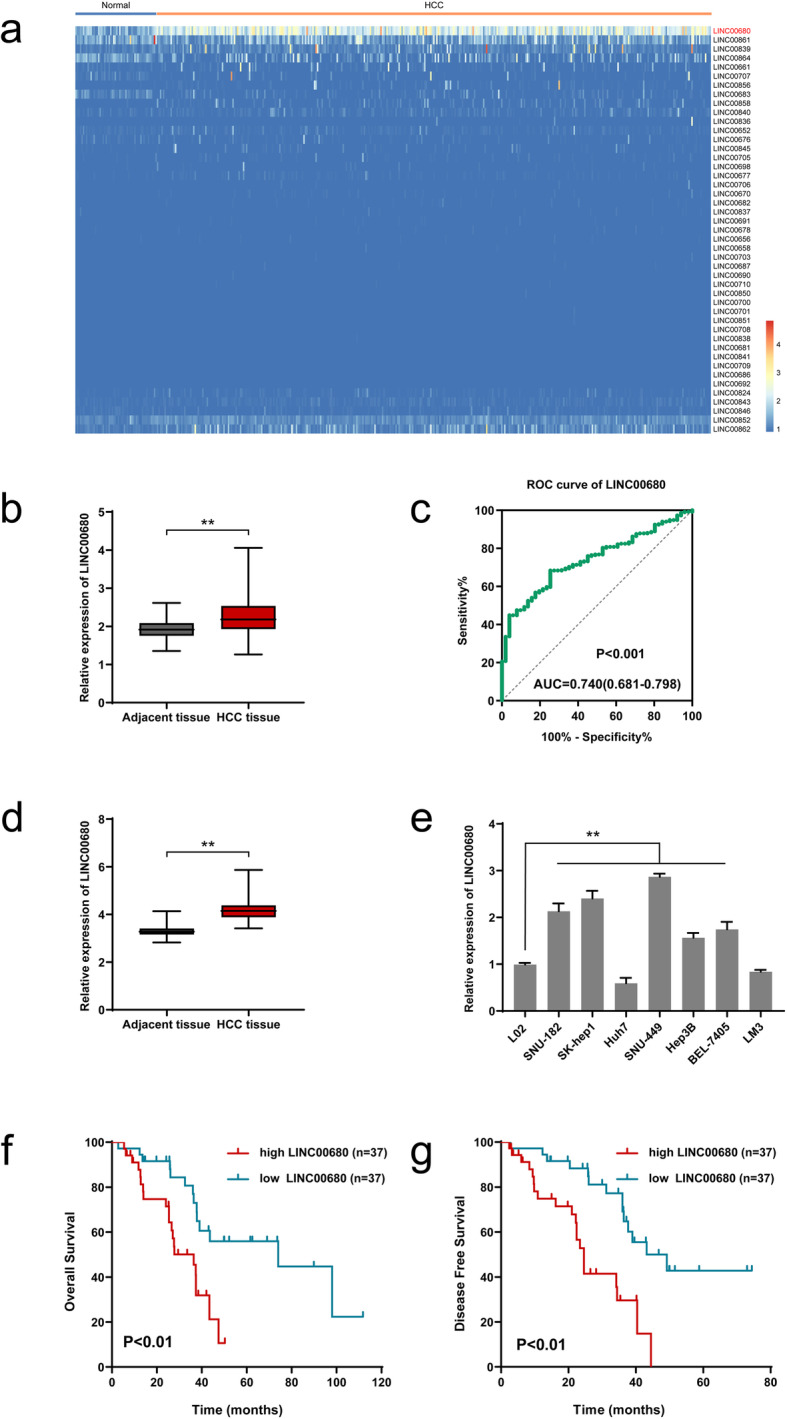
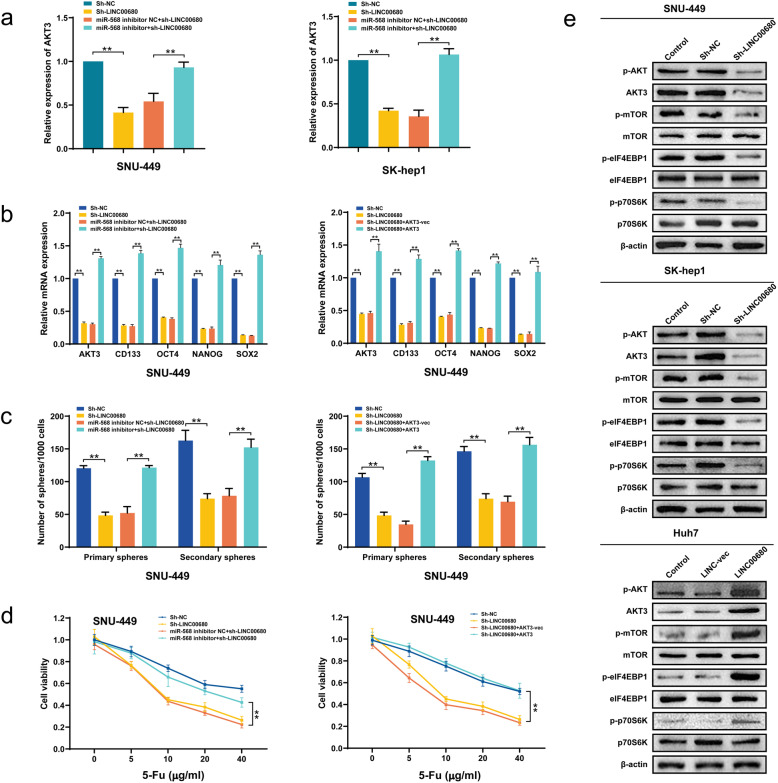
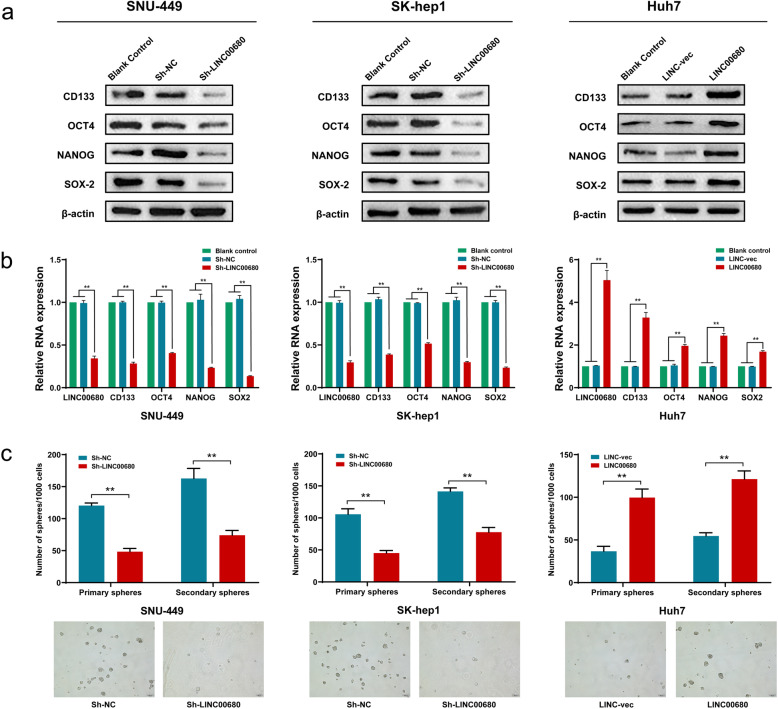
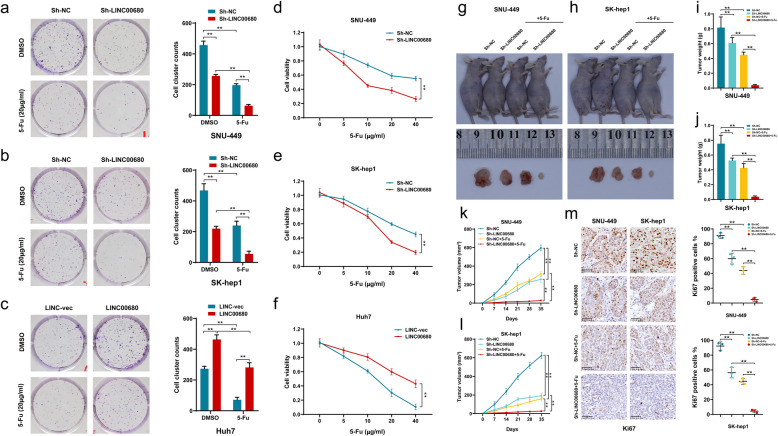
We found that LINC00680 was remarkably upregulated in HCC tissues. Patients with high level of LINC00680 had poorer prognosis. LINC00680 overexpression significantly enhanced HCC cell stemness and decreased in vitro and in vivo chemosensitivity to 5-fluorouracil (5-Fu), whereas LINC00680 knockdown led to opposite results. Mechanism study revealed that LINC00680 regulated HCC stemness and chemosensitivity through sponging miR-568, thereby expediting the expression of AKT3, which further activated its downstream signaling molecules, including mTOR, elF4EBP1, and p70S6K.
LINC00680 promotes HCC stemness properties and decreases chemosensitivity through sponging miR-568 to activate AKT3, suggesting that LINC00680 might be a potentially important HCC diagnosis marker and therapeutic target.
肝细胞癌(HCC)由于化疗耐药的发展,加上固有干细胞特性的增加,预后极差。长链非编码 RNA(lncRNA)是肿瘤细胞干性和化疗敏感性的关键调节因子。目前,LINC00680 与肿瘤进展之间的相关性仍知之甚少,仅有一项研究表明其在神经胶质瘤中的重要性。本研究旨在确定 LINC00680 在调节 HCC 干细胞特性和化疗敏感性中的作用。
使用 QRT-PCR 检测组织标本和细胞系中 LINC00680、miR-568 和 AKT3 的表达。应用增益或缺失功能测定来评估 LINC00680 在 HCC 细胞中的功能,包括细胞增殖和干细胞特性。通过球体形成、细胞活力和集落形成来确定 HCC 干细胞特性和化疗敏感性。通过荧光素酶报告、RNA 免疫沉淀(RIP)和 RNA 下拉测定来检验 LINC00680 与 miR-568 之间以及 miR-568 与 AKT3 之间的相互作用。建立裸鼠异种移植模型进行体内研究。
我们发现 LINC00680 在 HCC 组织中显著上调。LINC00680 水平高的患者预后较差。LINC00680 过表达显著增强 HCC 细胞干性,降低体外和体内对 5-氟尿嘧啶(5-Fu)的化疗敏感性,而 LINC00680 敲低则导致相反的结果。机制研究表明,LINC00680 通过海绵 miR-568 调节 HCC 干细胞特性和化疗敏感性,从而加速 AKT3 的表达,进而激活其下游信号分子,包括 mTOR、eIF4EBP1 和 p70S6K。
LINC00680 通过海绵 miR-568 激活 AKT3 促进 HCC 干细胞特性并降低化疗敏感性,提示 LINC00680 可能是一个潜在的重要 HCC 诊断标志物和治疗靶点。