Liu Yingjuan, Jin Weihua, Deng Zhenzhen, Zhang Quanbin, Wang Jing
Key Laboratory of Experimental Marine Biology, Center for Ocean Mega-Science, Institute of Oceanology, Chinese Academy of Sciences, Qingdao 266071, China.
School of Basic Medicine, Qingdao University, Qingdao 266071, China.
Mar Drugs. 2021 Jan 25;19(2):58. doi: 10.3390/md19020058.
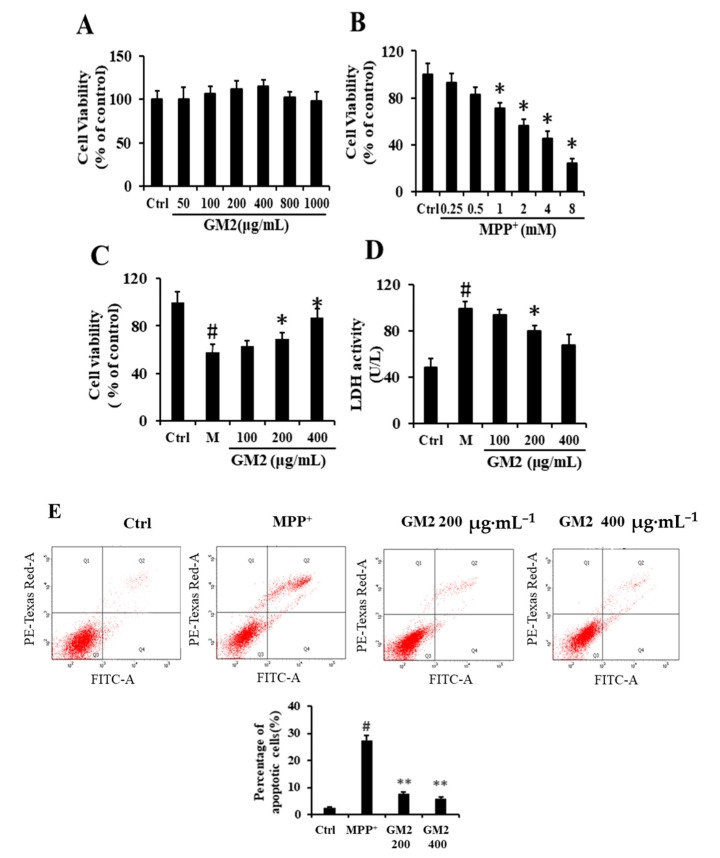
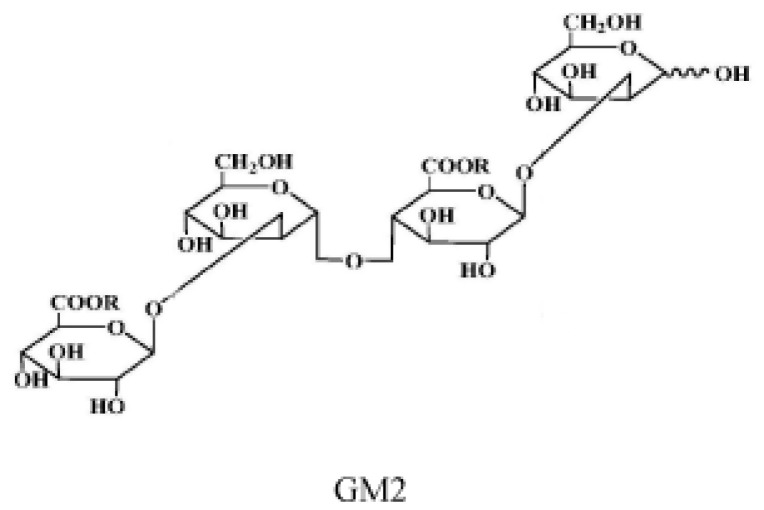
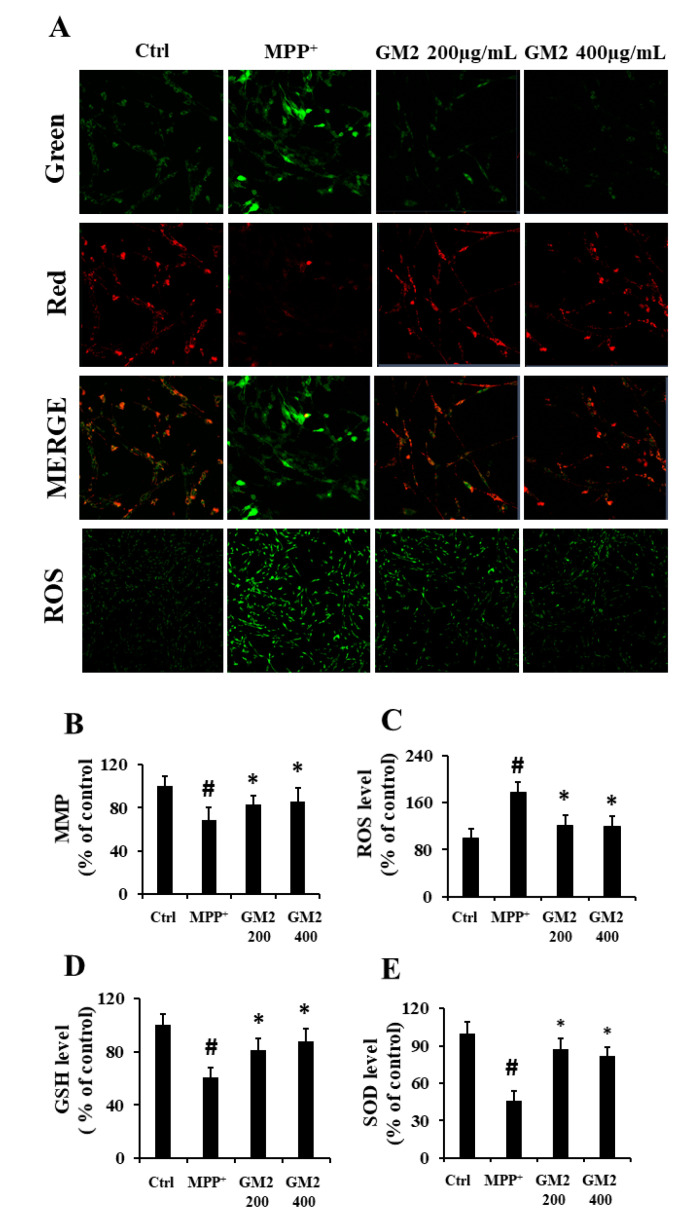
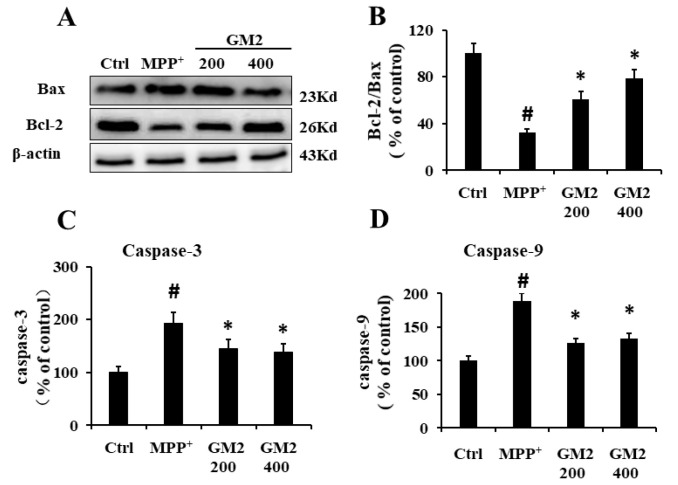
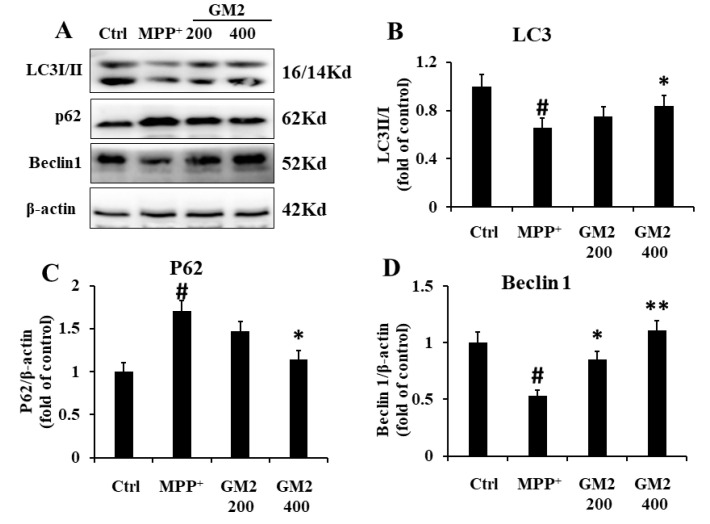
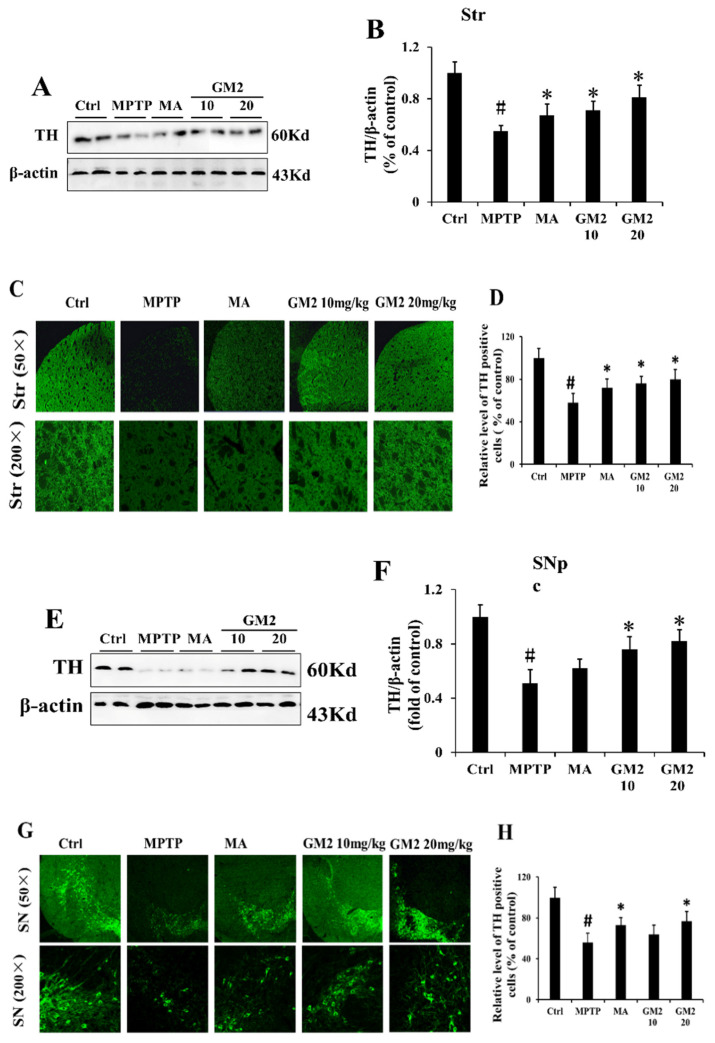
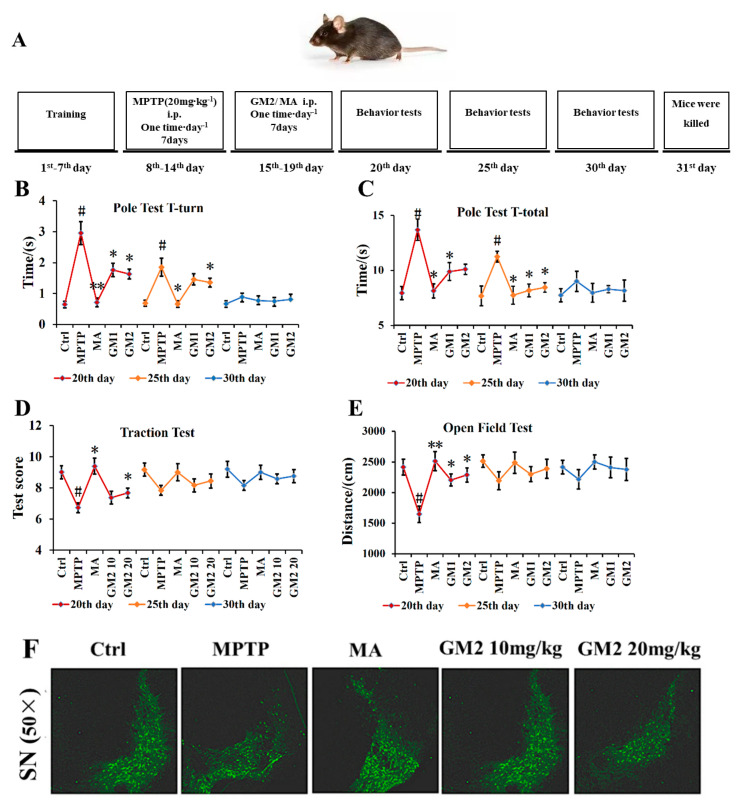
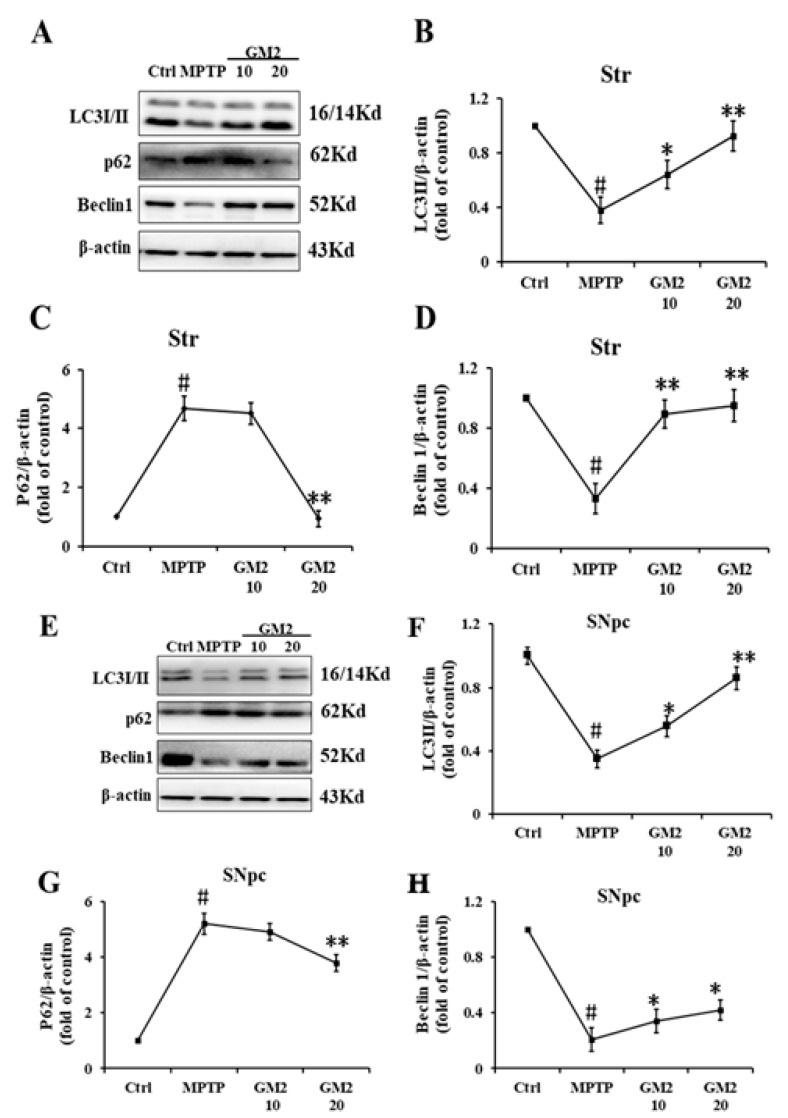
Parkinson's disease (PD), one of the most common neurodegenerative disorders, is caused by dopamine depletion in the striatum and dopaminergic neuron degeneration in the substantia nigra. In our previous study, we hydrolyzed the fucoidan from , obtaining three glucuronomannan oligosaccharides (GMn; GM1, GM2, and GM3) and found that GMn ameliorated behavioral deficits in Parkinsonism mice and downregulated the apoptotic signaling pathway, especially with GM2 showing a more effective role in neuroprotection. However, the neuroprotective mechanism is unclear. Therefore, in this study, we aimed to assess the neuroprotective effects of GM2 in vivo and in vitro. We applied GM2 in 1-methyl-4-phenylpyridinium (MPP)-treated PC12 cells, and the results showed that GM2 markedly improved the cell viability and mitochondrial membrane potential, inhibited MPP-induced apoptosis, and enhanced autophagy. Furthermore, GM2 contributed to reducing the loss of dopaminergic neurons in 1-Methyl-4-phenyl-1,2,3,6-tetrahydropyridine (MPTP)-induced mice through enhancing autophagy. These data indicate that a possible protection of mitochondria and upregulation of autophagy might underlie the observed neuroprotective effects, suggesting that GM2 has potential as a promising multifunctional lead disease-modifying therapy for PD. These findings might pave the way for additional treatment strategies utilizing carbohydrate drugs in PD.
帕金森病(PD)是最常见的神经退行性疾病之一,由纹状体中的多巴胺耗竭和黑质中的多巴胺能神经元变性引起。在我们之前的研究中,我们水解了来自[具体来源未提及]的岩藻依聚糖,获得了三种葡糖醛酸甘露聚糖寡糖(GMn;GM1、GM2和GM3),并发现GMn改善了帕金森病小鼠的行为缺陷并下调了凋亡信号通路,尤其是GM2在神经保护方面表现出更有效的作用。然而,其神经保护机制尚不清楚。因此,在本研究中,我们旨在评估GM2在体内和体外的神经保护作用。我们将GM2应用于1-甲基-4-苯基吡啶鎓(MPP)处理的PC12细胞,结果表明GM2显著提高了细胞活力和线粒体膜电位,抑制了MPP诱导的细胞凋亡,并增强了自噬。此外,GM2通过增强自噬有助于减少1-甲基-4-苯基-1,2,3,6-四氢吡啶(MPTP)诱导的小鼠中多巴胺能神经元的损失。这些数据表明,线粒体的可能保护作用和自噬的上调可能是观察到的神经保护作用的基础,这表明GM2作为一种有前景的多功能疾病修饰治疗药物对帕金森病具有潜力。这些发现可能为在帕金森病中利用碳水化合物药物的额外治疗策略铺平道路。