School of Earth Sciences, The University of Melbourne, Parkville, VIC, 3010, Australia.
Structural Biology and Bioinformatics, Department of Biochemistry and Molecular Biology, Bio21 Molecular Science and Biotechnology Institute, The University of Melbourne, Parkville, VIC, 3010, Australia.
ISME J. 2021 Jun;15(6):1810-1825. doi: 10.1038/s41396-020-00889-4. Epub 2021 Jan 27.
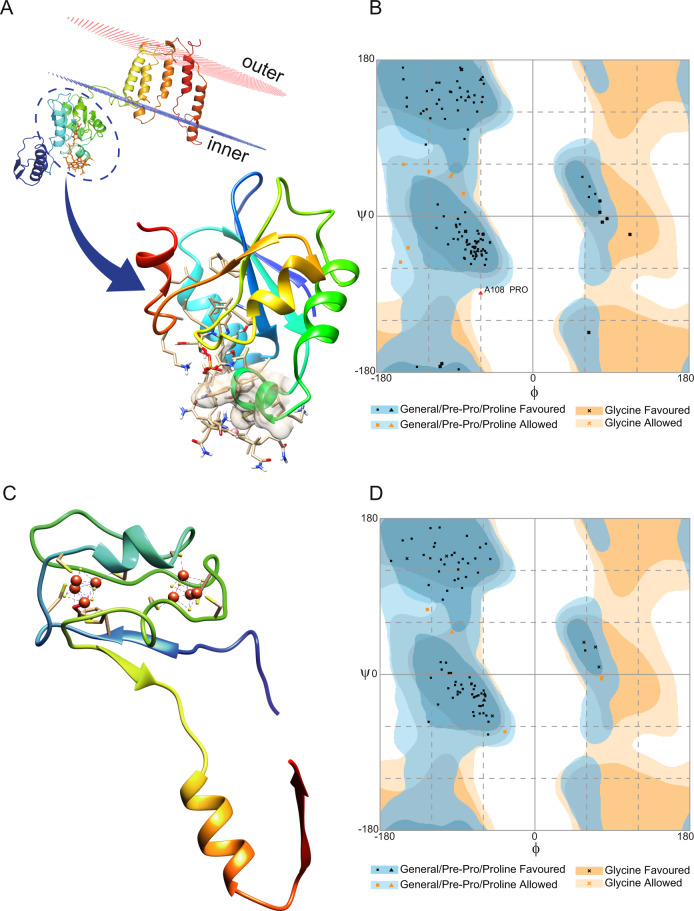
Microbes transform aqueous mercury (Hg) into methylmercury (MeHg), a potent neurotoxin that accumulates in terrestrial and marine food webs, with potential impacts on human health. This process requires the gene pair hgcAB, which encodes for proteins that actuate Hg methylation, and has been well described for anoxic environments. However, recent studies report potential MeHg formation in suboxic seawater, although the microorganisms involved remain poorly understood. In this study, we conducted large-scale multi-omic analyses to search for putative microbial Hg methylators along defined redox gradients in Saanich Inlet, British Columbia, a model natural ecosystem with previously measured Hg and MeHg concentration profiles. Analysis of gene expression profiles along the redoxcline identified several putative Hg methylating microbial groups, including Calditrichaeota, SAR324 and Marinimicrobia, with the last the most active based on hgc transcription levels. Marinimicrobia hgc genes were identified from multiple publicly available marine metagenomes, consistent with a potential key role in marine Hg methylation. Computational homology modelling predicts that Marinimicrobia HgcAB proteins contain the highly conserved amino acid sites and folding structures required for functional Hg methylation. Furthermore, a number of terminal oxidases from aerobic respiratory chains were associated with several putative novel Hg methylators. Our findings thus reveal potential novel marine Hg-methylating microorganisms with a greater oxygen tolerance and broader habitat range than previously recognized.
微生物将水汞 (Hg) 转化为甲基汞 (MeHg),这是一种强效的神经毒素,会在陆地和海洋食物网中积累,可能对人类健康造成影响。这一过程需要 hgcAB 基因对,该基因对编码可促使汞甲基化的蛋白质,在缺氧环境中已有很好的描述。然而,最近的研究报告称,亚缺氧海水中可能会形成甲基汞,尽管涉及的微生物仍知之甚少。在这项研究中,我们进行了大规模的多组学分析,以在不列颠哥伦比亚省萨尼奇湾(Saanich Inlet)的定义氧化还原梯度中寻找潜在的微生物汞甲基化剂,萨尼奇湾是一个具有先前测量的汞和甲基汞浓度分布的模型自然生态系统。沿氧化还原梯度的基因表达谱分析确定了几个潜在的汞甲基化微生物群,包括 Calditrichaeota、SAR324 和 Marinimicrobia,最后一个基于 hgc 转录水平的活性最高。从多个公开的海洋宏基因组中鉴定出了 Marinimicrobia hgc 基因,这与 Marinimicrobia 在海洋汞甲基化中的潜在关键作用一致。计算同源建模预测,Marinimicrobia HgcAB 蛋白包含功能汞甲基化所需的高度保守的氨基酸位点和折叠结构。此外,一些需氧呼吸链中的末端氧化酶与几个潜在的新型汞甲基化剂相关。因此,我们的研究结果揭示了一些潜在的新型海洋汞甲基化微生物,它们的氧气耐受性和栖息地范围比以前认为的要大。