Mainasara Muhammad Murtala, Abu Bakar Mohd Fadzelly, Md Akim Abdah, Linatoc Alona C, Abu Bakar Fazleen Izzany, Ranneh Yazan K H
Faculty of Applied Sciences & Technology, Universiti Tun Hussein Onn Malaysia (UTHM), Hab Pendidikan Tinggi Pagoh, KM1, Jalan Panchor, Muar 84600, Johor, Malaysia.
Faculty of Science, Department of Biological Sciences, Usmanu Danfodiyo University Sokoto, PMB 1046, Sokoto, Nigeria.
Evid Based Complement Alternat Med. 2021 Jan 11;2021:8826986. doi: 10.1155/2021/8826986. eCollection 2021.
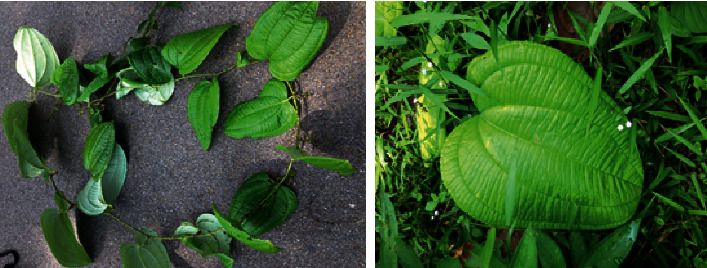
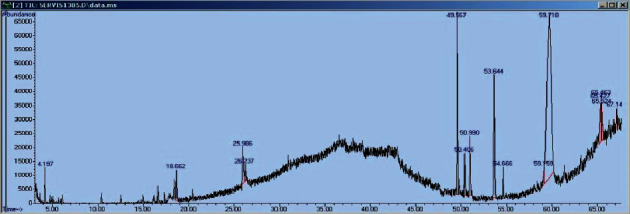
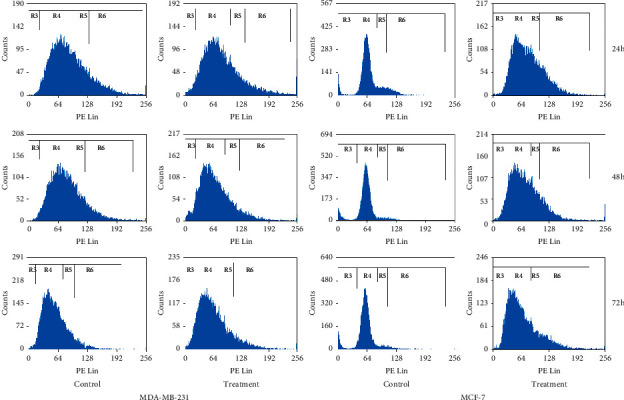
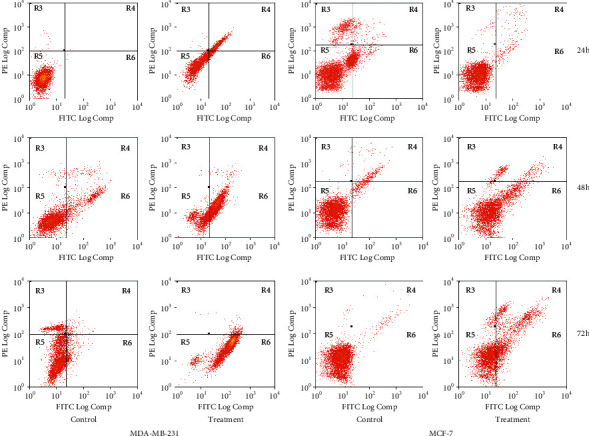
Breast cancer is among the most commonly diagnosed cancer and the leading cause of cancer-related death among women globally. Malaysia is a country that is rich in medicinal plant species. Hence, this research aims to explore the secondary metabolites, antioxidant, and antiproliferative activities of leaf collected from Endau Rompin, Johor, Malaysia. Antioxidant activity was assessed using 2,2-diphenyl-1-picrylhydrazyl (DPPH), ferric reducing antioxidant power (FRAP), and 2,2'-azino-bis-3-ethylbenzthiazoline-6-sulphonic acid (ABTS) assays, while the cytotoxicity of on MDA-MB-231 and MCF-7 breast cancer cell lines was tested using 3-(4,5-dimethylthiazol-2-yl)-2,5-diphenyl tetrazolium bromide (MTT) assay. Cell cycle analysis and apoptosis were assessed using flow cytometry analysis. Phytochemical profiling was conducted using gas chromatography-mass spectrometry (GC-MS). Results showed that methanol extract had the highest antioxidant activity in DPPH, FRAP, and ABTS assays, followed by ethyl acetate and hexane extracts. tested against MDA-MB-231 and MCF-7 cell lines showed a pronounced cytotoxic effect with IC values of 8.96 g/mL, 6.88 g/mL, and 3.27 g/mL in MCF-7 and 14.29 g/mL, 11.86 g/mL, and 7.23 g/mL in MDA-MB-231, respectively. Cell cycle analysis also indicated that prompted apoptosis at various stages, and a significant decrease in viable cells was detected within 24 h and substantially improved after 48 h and 72 h of treatment. Phytochemical profiling of methanol extract revealed the presence of 39 metabolites such as acetic acid, n-hexadecanoic acid, acetin, hexadecanoate, 7-tetradecenal, phytol, octadecanoic acid, cholesterol, palmitic acid, and linolenate. Hence, these findings concluded that extract has promising anticancer and natural antioxidant agents. However, further study is needed to isolate the bioactive compounds and validate the effectiveness of this extract in the In model.
乳腺癌是全球女性中最常被诊断出的癌症之一,也是癌症相关死亡的主要原因。马来西亚是一个药用植物种类丰富的国家。因此,本研究旨在探索从马来西亚柔佛州Endau Rompin采集的树叶的次生代谢产物、抗氧化和抗增殖活性。使用2,2-二苯基-1-苦基肼(DPPH)、铁还原抗氧化能力(FRAP)和2,2'-联氮-双-3-乙基苯并噻唑啉-6-磺酸(ABTS)测定法评估抗氧化活性,同时使用3-(4,5-二甲基噻唑-2-基)-2,5-二苯基溴化四氮唑(MTT)测定法测试其对MDA-MB-231和MCF-7乳腺癌细胞系的细胞毒性。使用流式细胞术分析评估细胞周期分析和细胞凋亡。使用气相色谱-质谱联用(GC-MS)进行植物化学分析。结果表明,甲醇提取物在DPPH、FRAP和ABTS测定中具有最高的抗氧化活性,其次是乙酸乙酯和己烷提取物。对MDA-MB-231和MCF-7细胞系的测试显示出明显的细胞毒性作用,在MCF-7中的IC值分别为8.96μg/mL、6.88μg/mL和3.27μg/mL,在MDA-MB-231中分别为14.29μg/mL、11.86μg/mL和7.23μg/mL。细胞周期分析还表明,其在各个阶段都能促使细胞凋亡,并且在处理24小时内检测到活细胞显著减少,在48小时和72小时后显著改善。甲醇提取物的植物化学分析揭示了39种代谢产物的存在,如乙酸、正十六烷酸、乙酸甘油酯、十六烷酸酯、7-十四碳烯醛、叶绿醇、十八烷酸、胆固醇、棕榈酸和亚麻酸酯。因此,这些发现得出结论,该提取物具有有前景的抗癌和天然抗氧化剂。然而,需要进一步研究以分离生物活性化合物并在体内模型中验证该提取物的有效性。