Sin Ho-Kwan, Wong Ping-Nam, Lo Kin-Yee, Lo Man-Wai, Chan Shuk-Fan, Lo Kwok-Chi, Wong Yuk-Yi, Ho Lo-Yi, Kwok Wing-Tung, Chan Kai-Chun, Wong Andrew Kui-Man, Mak Siu-Ka
Department of Medicine and Geriatrics, Kwong Wah Hospital, 25 Waterloo Road, Kowloon, Hong Kong.
Case Rep Nephrol. 2021 Jan 6;2021:6695906. doi: 10.1155/2021/6695906. eCollection 2021.
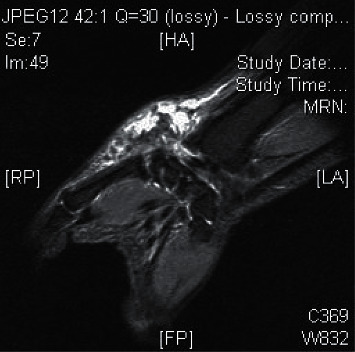
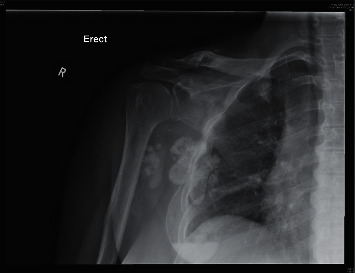
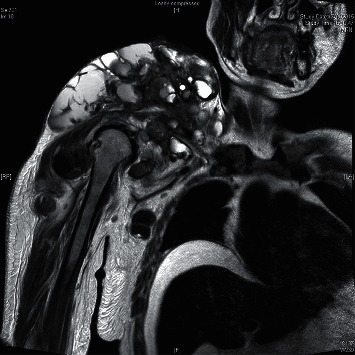
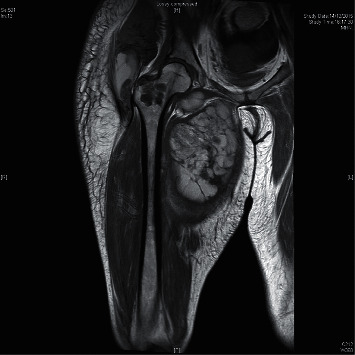
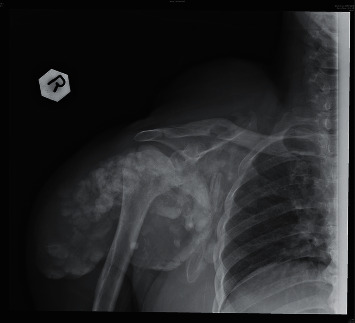
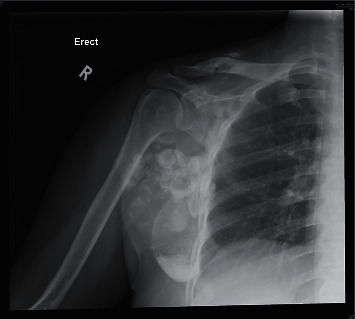
Tumoral calcinosis is a rare but debilitating condition that can affect dialysis patients. Optimal management is largely unknown. We report the clinical course, treatment, and outcome of a peritoneal dialysis (PD) patient who developed tumoral calcinosis refractory to conventional treatment but improved with teriparatide therapy. A 26-year-old lady on PD for 2 years presented to us with tumoral calcinosis involving bilateral hands. Response to surgical excision, parathyroidectomy, and conversion to hemodialysis failed to result in sustained remission, and tumoral calcinosis progressed. After total parathyroidectomy, the patient had transient but partial remission in which her calcinosis deposits remained but were asymptomatic without pain or clinical signs of inflammation. However, she later experienced a relapse with involvement of the left elbow, right shoulder, right hip, and right thigh. Tumoral calcinosis remained uncontrolled resulting in debilitation, likely attributable to poor calcium and phosphate control because of adynamic bone disease after parathyroidectomy despite treatment of superimposed tuberculosis and therapy with sodium thiosulphate and pamidronic acid. Clinical improvement was however evident after the use of teriparatide. Asymptomatic hypocalcemia occurred after teriparatide therapy but resolved after 2 months. In conclusion, teriparatide appears to be useful for treating tumoral calcinosis in the presence of adynamic bone disease. Hypocalcemia can occur in the initial months of therapy.
肿瘤性钙化是一种罕见但使人衰弱的疾病,可影响透析患者。最佳治疗方法在很大程度上尚不清楚。我们报告了一名腹膜透析(PD)患者的临床病程、治疗及结果,该患者发生了对传统治疗难治的肿瘤性钙化,但经特立帕肽治疗后病情改善。一名接受了2年腹膜透析的26岁女性因双侧手部出现肿瘤性钙化前来就诊。手术切除、甲状旁腺切除术及转为血液透析均未能使病情持续缓解,肿瘤性钙化仍进展。全甲状旁腺切除术后,患者有短暂但部分缓解,钙化沉积仍存在,但无症状,无疼痛或炎症临床体征。然而,她后来病情复发,累及左肘、右肩、右髋和右大腿。肿瘤性钙化仍未得到控制,导致身体衰弱,这可能归因于甲状旁腺切除术后因动力缺失性骨病导致的钙和磷控制不佳,尽管同时治疗了叠加的结核病,并使用了硫代硫酸钠和帕米膦酸进行治疗。然而,使用特立帕肽后临床改善明显。特立帕肽治疗后出现无症状性低钙血症,但2个月后缓解。总之,在存在动力缺失性骨病的情况下,特立帕肽似乎对治疗肿瘤性钙化有用。治疗最初几个月可能会发生低钙血症。