Tan Wei Jian, Wang Mona Meng, Ricciardi-Castagnoli Paola, Chan Anita Sook Yee, Lim Tong Seng
A. Menarini Biomarkers Singapore Pte. Ltd., Singapore, Singapore.
Translational Ophthalmic Pathology Platform, Singapore Eye Research Institute, Singapore, Singapore.
Front Mol Biosci. 2021 Jan 11;7:611017. doi: 10.3389/fmolb.2020.611017. eCollection 2020.
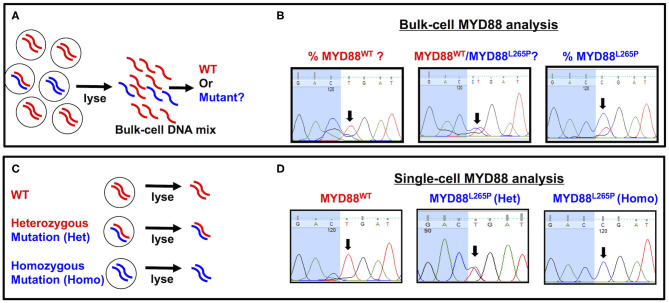
Vitreoretinal lymphoma (VRL) is a rare ocular malignancy that manifests as diffuse large B-cell lymphoma. Early and accurate diagnosis is essential to prevent mistreatment and to reduce the high morbidity and mortality associated with VRL. The disease can be diagnosed using various methods, including cytology, immunohistochemistry, cytokine analysis, flow cytometry, and molecular analysis of bulk vitreous aspirates. Despite these options, VRL diagnosis remains challenging, as samples are often confounded by low cellularity, the presence of debris and non-target immunoreactive cells, and poor cytological preservation. As such, VRL diagnostic accuracy is limited by both false-positive and false-negative outcomes. Missed or inappropriate diagnosis may cause delays in treatment, which can have life-threatening consequences for patients with VRL. In this review, we summarize current knowledge and the diagnostic modalities used for VRL diagnosis. We also highlight several emerging molecular techniques, including high-resolution single cell-based analyses, which may enable more comprehensive and precise VRL diagnoses.
玻璃体视网膜淋巴瘤(VRL)是一种罕见的眼部恶性肿瘤,表现为弥漫性大B细胞淋巴瘤。早期准确诊断对于防止误诊以及降低与VRL相关的高发病率和死亡率至关重要。该疾病可通过多种方法进行诊断,包括细胞学、免疫组织化学、细胞因子分析、流式细胞术以及对大量玻璃体吸出物的分子分析。尽管有这些诊断方法,但VRL的诊断仍然具有挑战性,因为样本常常受到细胞数量少、存在碎片和非靶免疫反应性细胞以及细胞学保存不佳的影响。因此,VRL的诊断准确性受到假阳性和假阴性结果的限制。漏诊或不恰当的诊断可能导致治疗延误,这对VRL患者可能会产生危及生命的后果。在本综述中,我们总结了目前关于VRL诊断的知识和所使用的诊断方法。我们还强调了几种新兴的分子技术,包括基于高分辨率单细胞的分析,这些技术可能使VRL诊断更加全面和精确。