Singapore Eye Research Institute, The Academia, 20 College Road, Discovery Tower, Level 12, Singapore, 169856, Singapore.
Singapore National Eye Centre, Singapore, Singapore.
Sci Rep. 2021 Jan 28;11(1):2448. doi: 10.1038/s41598-021-82103-9.
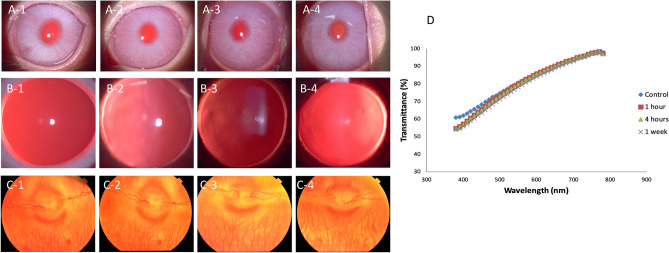
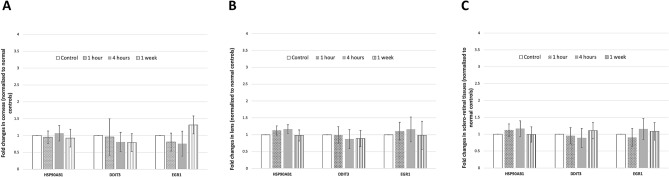
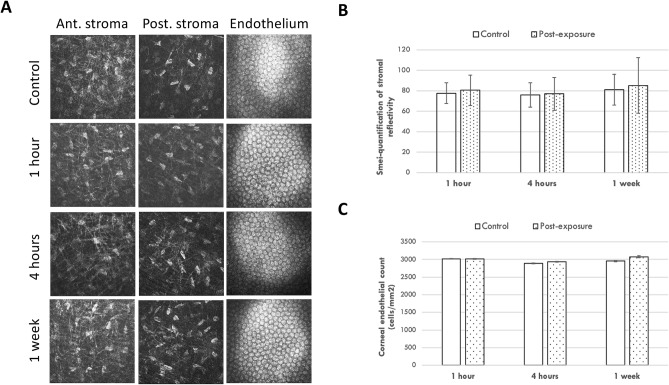
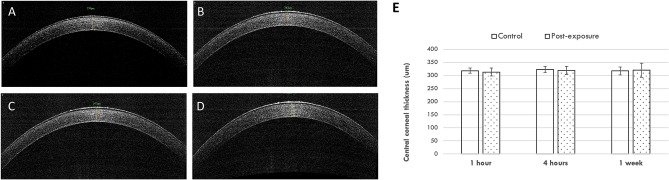
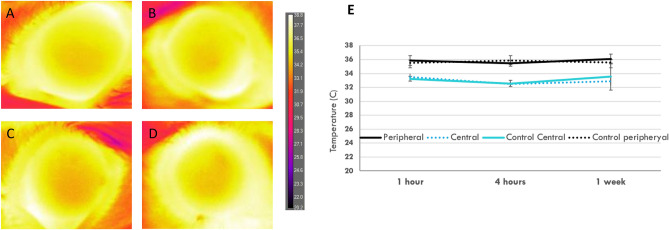
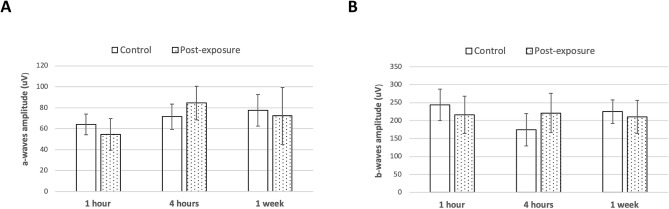
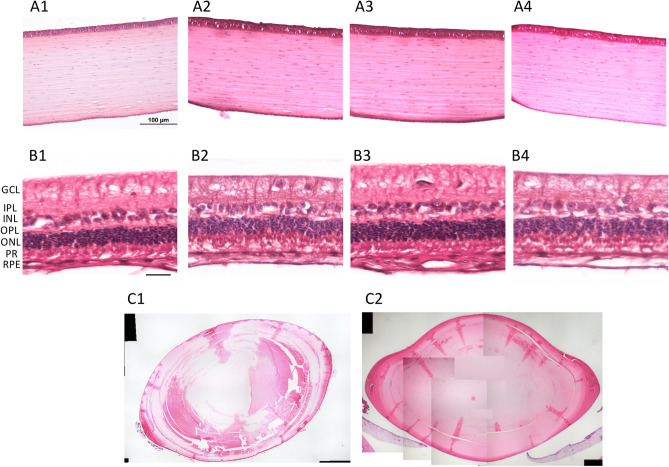
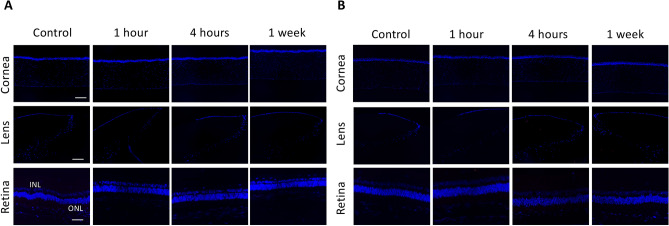
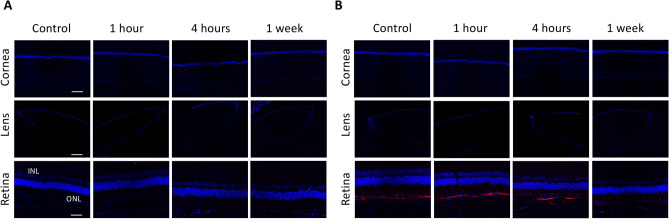
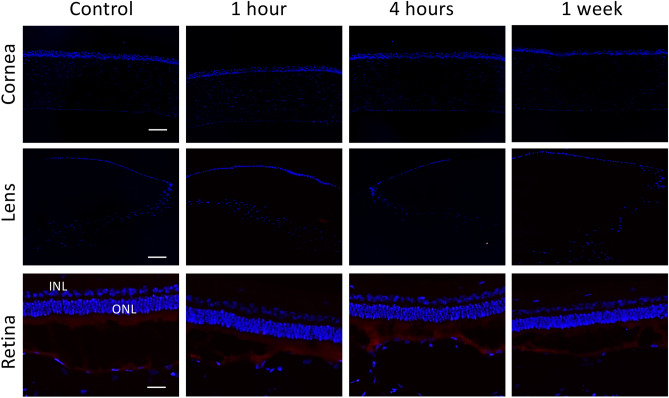
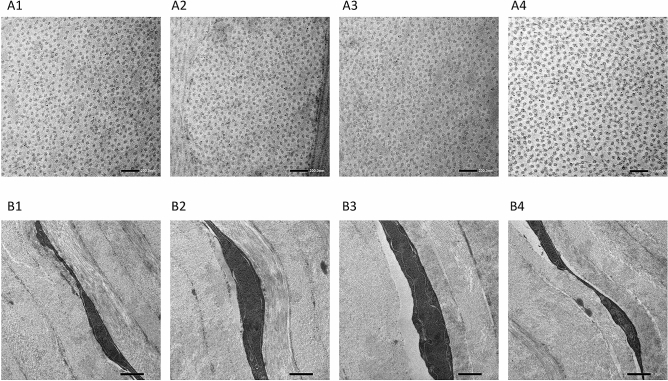
Terahertz (THz) technology has emerged recently as a potential novel imaging modality in biomedical fields, including ophthalmology. However, the ocular biological responses after THz electromagnetic exposure have not been investigated. We conducted a rabbit study to evaluate the safety profiles of THz scanning on eyes, at a tissue, cellular, structural and functional level. Eight animals (16 eyes) were analysed after excessive THz exposure (control, 1 h, 4 h, and 1 week after continuous 4-h exposure; THz frequency = 0.3 THz with continuous pulse generated at 40 µW). We found that at all the time points, the corneas and lens remained clear with no corneal haze or lens opacity formation clinically and histopathologically. No thermal effect, assessed by thermographer, was observed. The rod and cone cell-mediated electroretinography responses were not significantly altered, and the corneal keratocytes activity as well as endothelial viability, assessed by in-vivo confocal microscopy, was not affected. Post-exposed corneas, lens and retinas exhibited no significant changes in the mRNA expression of heat shock protein (HSP)90AB1), DNA damage inducible transcript 3 (DDIT3), and early growth response (EGR)1. These tissues were also negative for the inflammatory (CD11b), fibrotic (fibronectin and α-smooth muscle actin), stress (HSP-47) and apoptotic (TUNEL assay) responses on the immunohistochemical analyses. The optical transmittance of corneas did not change significantly, and the inter-fibrillar distances of the corneal stroma evaluated with transmission electron microscopy were not significantly altered after THz exposure. These results provide the basis for future research work on the development of THz imaging system for its application in ophthalmology.
太赫兹(THz)技术最近作为一种潜在的新型医学成像模式出现在生物医学领域,包括眼科。然而,THz 电磁辐射暴露后眼部的生物学反应尚未得到研究。我们进行了一项兔子研究,以评估 THz 扫描在眼部的安全性,包括组织、细胞、结构和功能水平。8 只动物(16 只眼睛)在过度 THz 暴露后进行了分析(对照组,连续 4 小时暴露 1 小时、4 小时和 1 周后;THz 频率=0.3 THz,连续脉冲以 40 µW 产生)。我们发现,在所有时间点,角膜和晶状体均清晰,临床和组织病理学上均无角膜混浊或晶状体混浊形成。未观察到热效应(通过热像仪评估)。杆状和锥状细胞介导的视网膜电图反应没有明显改变,通过活体共聚焦显微镜评估的角膜成纤维细胞活性以及内皮细胞活力也没有受到影响。暴露后的角膜、晶状体和视网膜在热休克蛋白(HSP)90AB1、DNA 损伤诱导转录物 3(DDIT3)和早期生长反应(EGR)1 的 mRNA 表达方面没有显著变化。这些组织在免疫组织化学分析中也没有炎症(CD11b)、纤维化(纤连蛋白和α-平滑肌肌动蛋白)、应激(HSP-47)和凋亡(TUNEL 检测)反应。角膜的光透过率没有明显变化,用透射电子显微镜评估的角膜基质的纤维间距离在 THz 暴露后也没有明显改变。这些结果为未来开发 THz 成像系统用于眼科应用的研究工作提供了基础。