Favero Vinício Oliosi, Carvalho Rita Hilário, Motta Victória Monteiro, Leite Ana Beatriz Carneiro, Coelho Marcia Reed Rodrigues, Xavier Gustavo Ribeiro, Rumjanek Norma Gouvêa, Urquiaga Segundo
Universidade Federal Rural do Rio de Janeiro, Seropédica, Brazil.
Embrapa Agrobiology, Seropédica, Rio de Janeiro, Brazil.
Front Plant Sci. 2021 Jan 12;11:602645. doi: 10.3389/fpls.2020.602645. eCollection 2020.
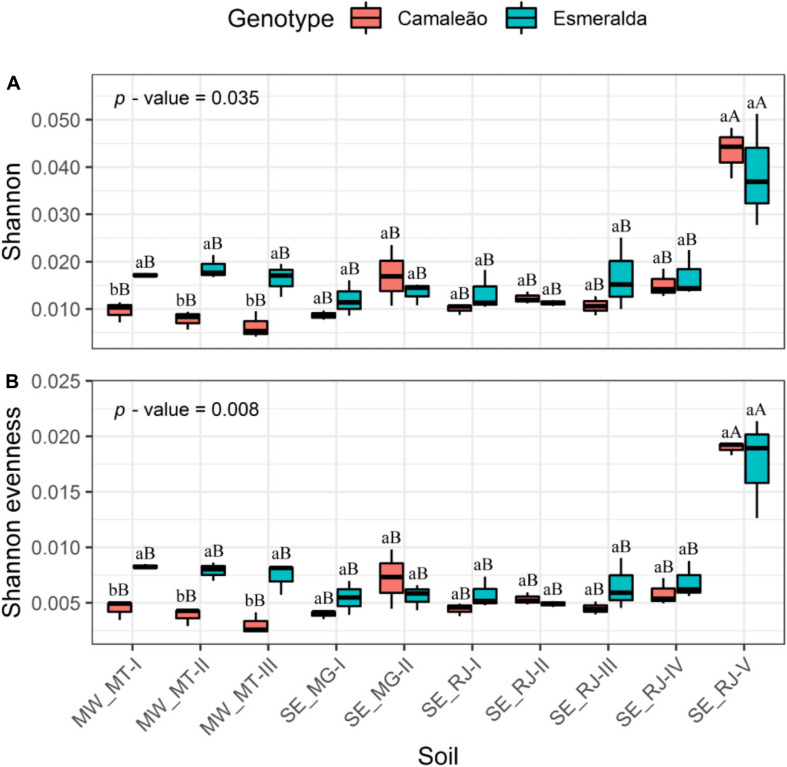
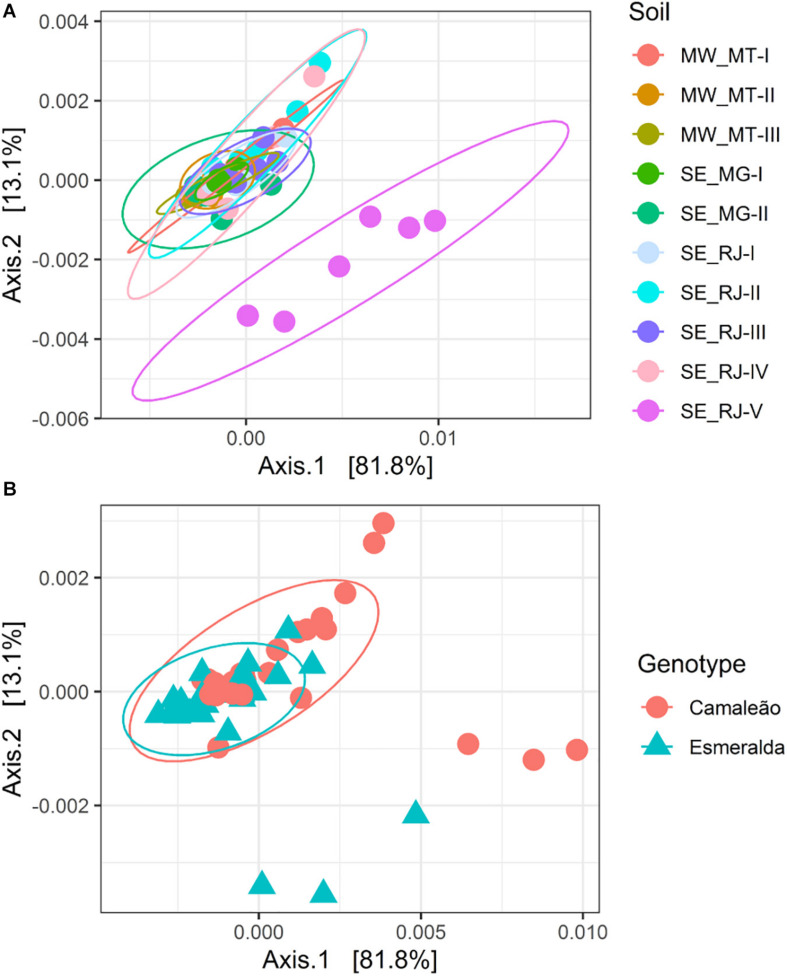
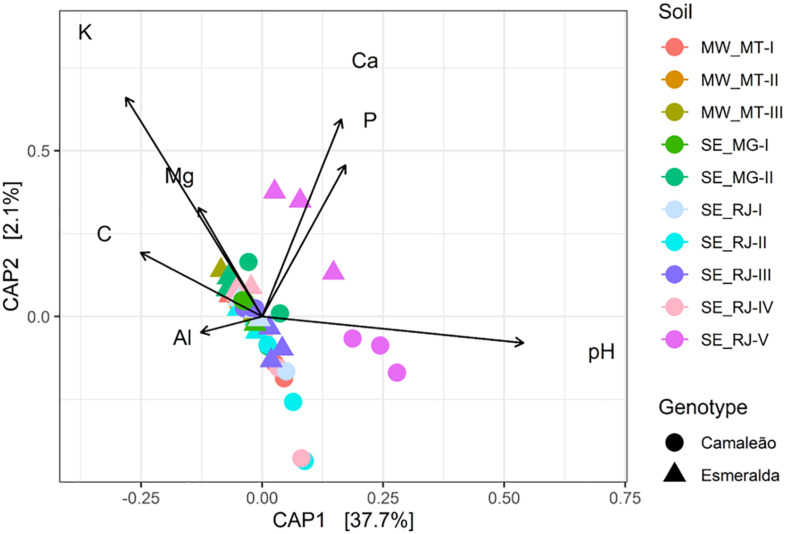
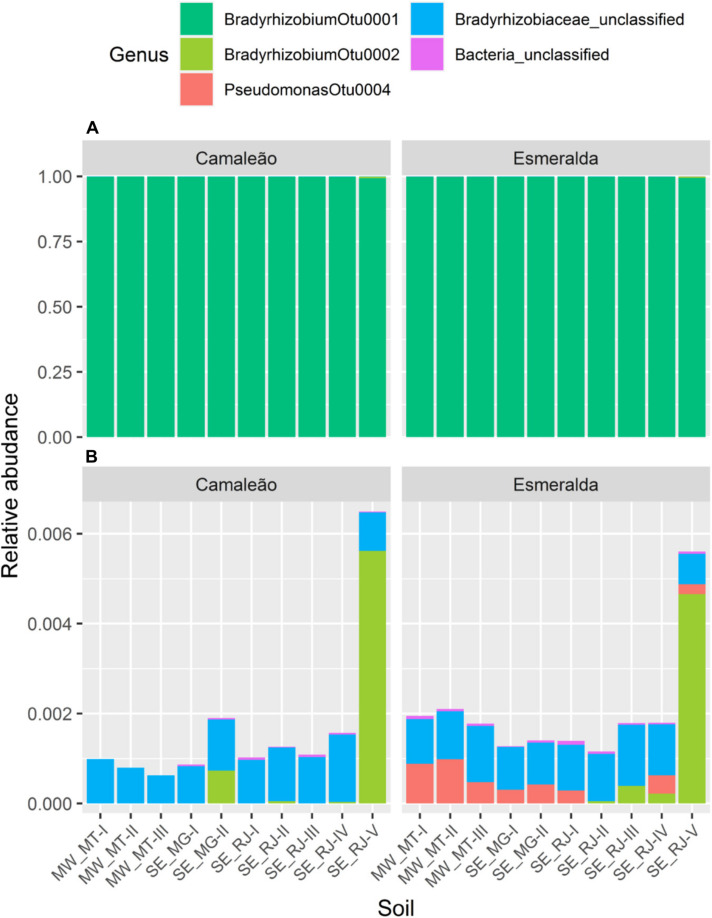
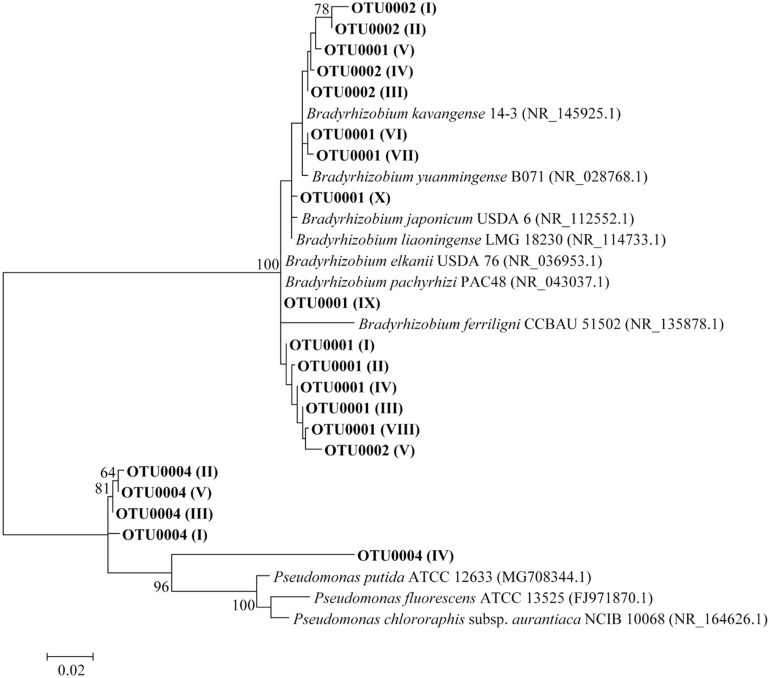
The mung bean has a great potential under tropical conditions given its high content of grain protein. Additionally, its ability to benefit from biological nitrogen fixation (BNF) through association with native rhizobia inhabiting nodule microbiome provides most of the nitrogen independence on fertilizers. Soil microbial communities which are influenced by biogeographical factors and soil properties, represent a source of rhizobacteria capable of stimulating plant growth. The objective of this study is to support selection of beneficial bacteria that form positive interactions with mung bean plants cultivated in tropical soils, as part of a seed inoculation program for increasing grain yield based on the BNF and other mechanisms. Two mung bean genotypes (Camaleão and Esmeralda) were cultivated in 10 soil samples. Nodule microbiome was characterized by next-generation sequencing using Illumina MiSeq 16S rRNA. More than 99% of nodule sequences showed similarity with genus, the only rhizobial present in nodules in our study. Higher bacterial diversity of soil samples collected in agribusiness areas (MW_MT-I, II or III) was associated with Esmeralda genotype, while an organic agroecosystem soil sample (SE_RJ-V) showed the highest bacterial diversity independent of genotype. Furthermore, OTUs close to have dominated in all soil samples, except in the sample from the organic agroecosystem, where just was present. Bacterial community of mung bean nodules is mainly influenced by soil pH, K, Ca, and P. Besides a difference on nodule colonization by OTU sequences close to the genus regarding the two genotypes was detected too. Although representing a small rate, around 0.1% of the total, OTUs were only retrieved from nodules of Esmeralda genotype, suggesting a different trait regarding specificity between macro- and micro-symbionts. The microbiome analysis will guide the next steps in the development of an inoculant for mung bean aiming to promote plant growth and grain yield, composed either by an efficient strain on its own or co-inoculated with a strain. Considering the results achieved, the assessment of microbial ecology parameters is a potent coadjuvant capable to accelerate the inoculant development process and to improve the benefits to the crop by soil microorganisms.
鉴于绿豆的籽粒蛋白质含量高,它在热带条件下具有巨大潜力。此外,通过与根瘤微生物群落中的本地根瘤菌共生来利用生物固氮(BNF)的能力,使得绿豆在很大程度上不依赖化肥提供氮素。受生物地理因素和土壤性质影响的土壤微生物群落,是能够刺激植物生长的根际细菌的一个来源。本研究的目的是支持选择与热带土壤中种植的绿豆植株形成积极相互作用的有益细菌,作为基于生物固氮和其他机制提高籽粒产量的种子接种计划的一部分。在10个土壤样本中种植了两种绿豆基因型(卡马莱昂和埃斯梅拉达)。使用Illumina MiSeq 16S rRNA通过下一代测序对根瘤微生物群落进行了表征。超过99%的根瘤序列与 属相似, 属是我们研究中根瘤中唯一存在的根瘤菌。在农业综合企业区(MW_MT - I、II或III)采集的土壤样本中,较高的细菌多样性与埃斯梅拉达基因型相关,而一个有机农业生态系统土壤样本(SE_RJ - V)显示出与基因型无关的最高细菌多样性。此外,除了来自有机农业生态系统的样本中仅存在 外,在所有土壤样本中,与 接近的操作分类单元(OTUs)占主导地位。绿豆根瘤的细菌群落主要受土壤pH值、钾、钙和磷的影响。此外,还检测到两种基因型在与 属接近的OTU序列对根瘤的定殖方面存在差异。尽管仅占总数的约0.1%,但 操作分类单元仅从埃斯梅拉达基因型的根瘤中获得,这表明在宏观和微观共生体之间的特异性方面存在不同特征。微生物群落分析将指导下一步开发旨在促进植物生长和籽粒产量的绿豆接种剂,该接种剂可以由单一的高效 菌株组成,也可以与 菌株共同接种。考虑到所取得的结果,对微生物生态参数的评估是一种有效的辅助手段,能够加速接种剂的开发过程,并提高土壤微生物对作物的益处。