Departamento de Bioquímica y Biología Molecular y Celular, Facultad de Ciencias, Universidad de Zaragoza, Spain.
Instituto de Biocomputación y Física de Sistemas Complejos, BIFI (GBsC-CSIC and BIFI-IQFR Joint Units), Universidad de Zaragoza, Spain.
Oxid Med Cell Longev. 2021 Jan 15;2021:6673661. doi: 10.1155/2021/6673661. eCollection 2021.
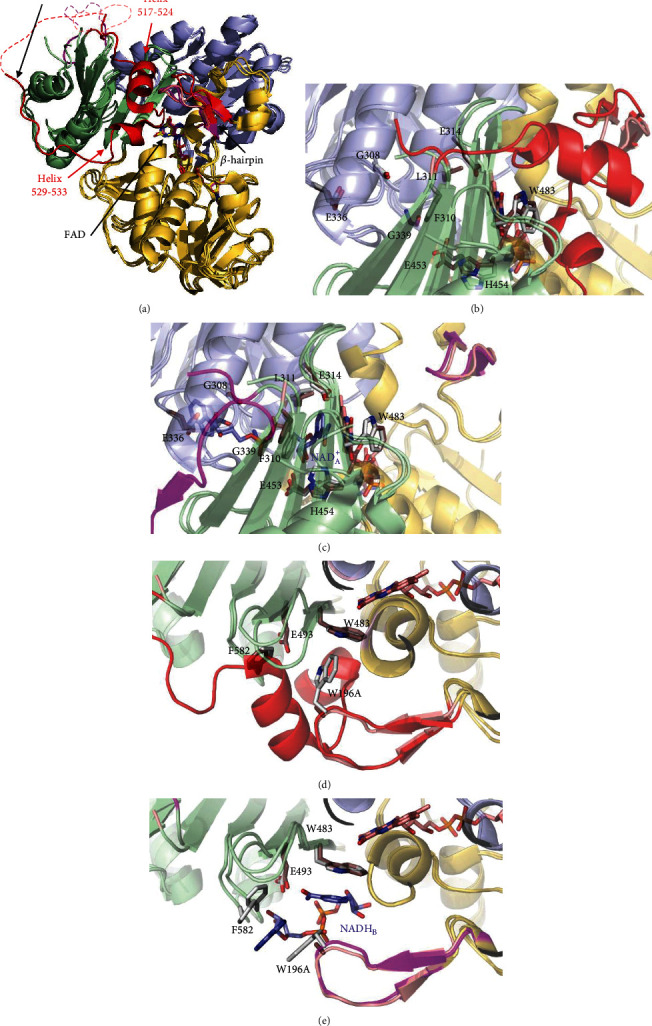
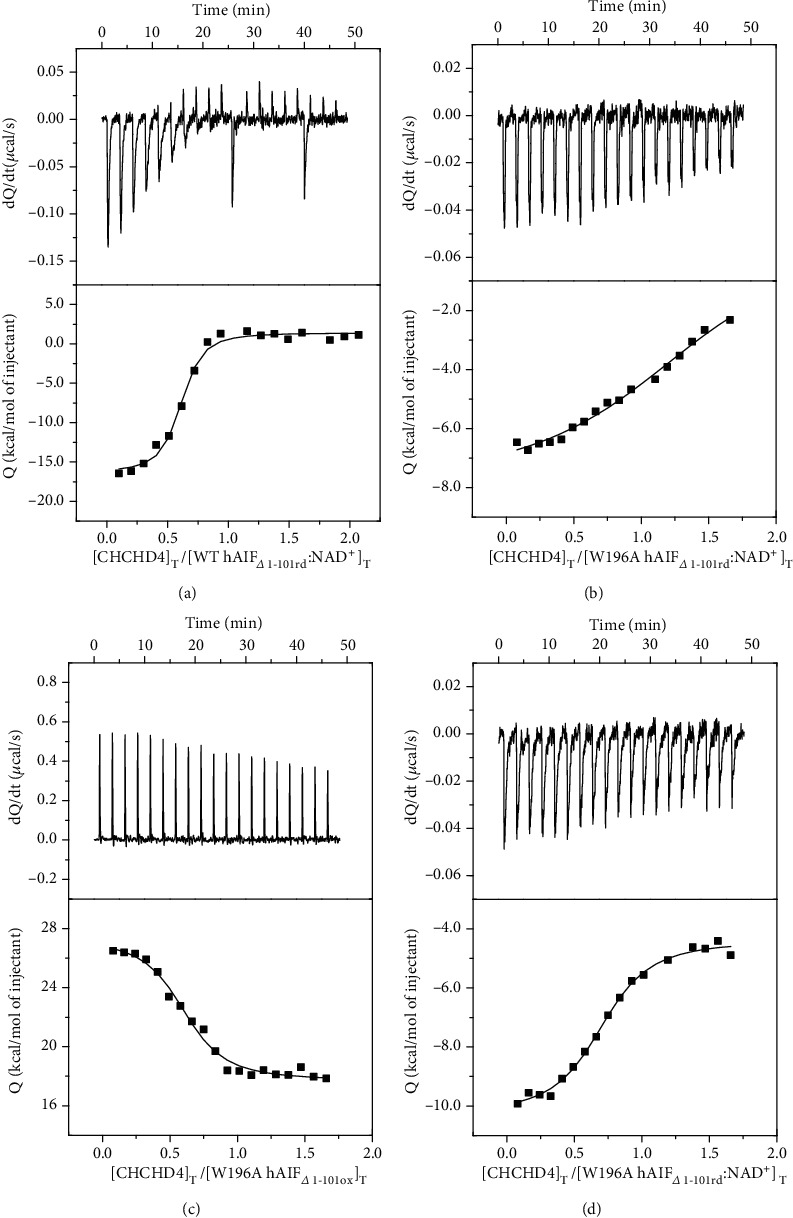
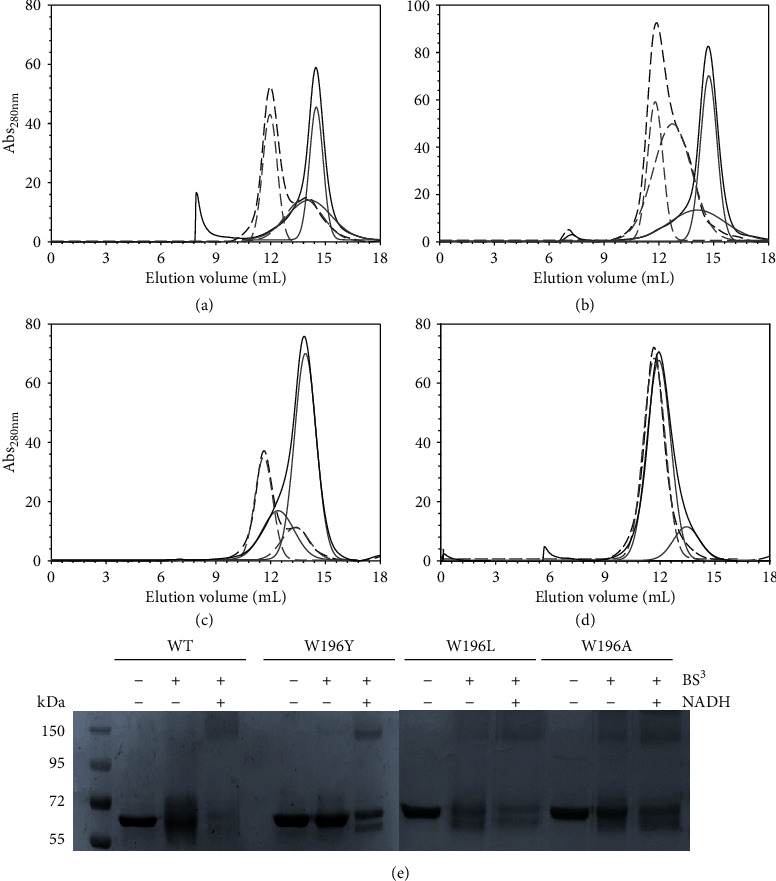
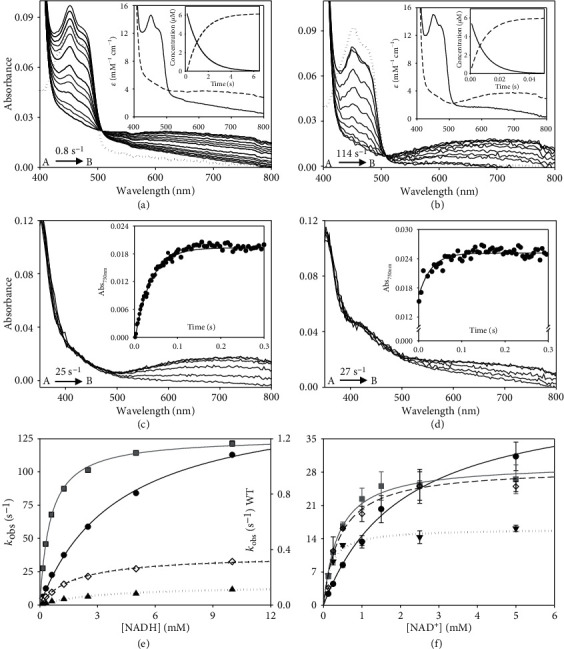
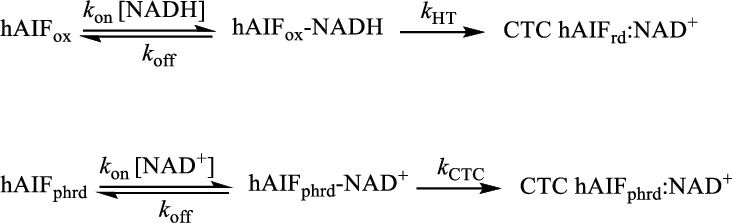
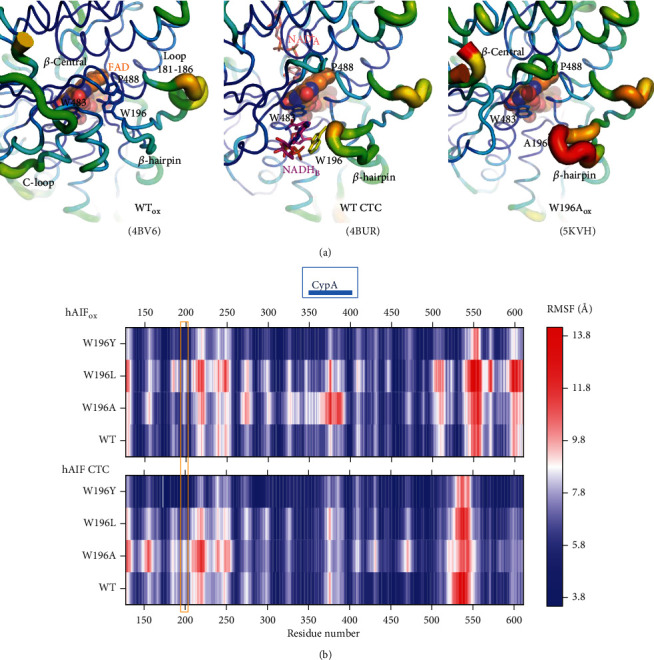
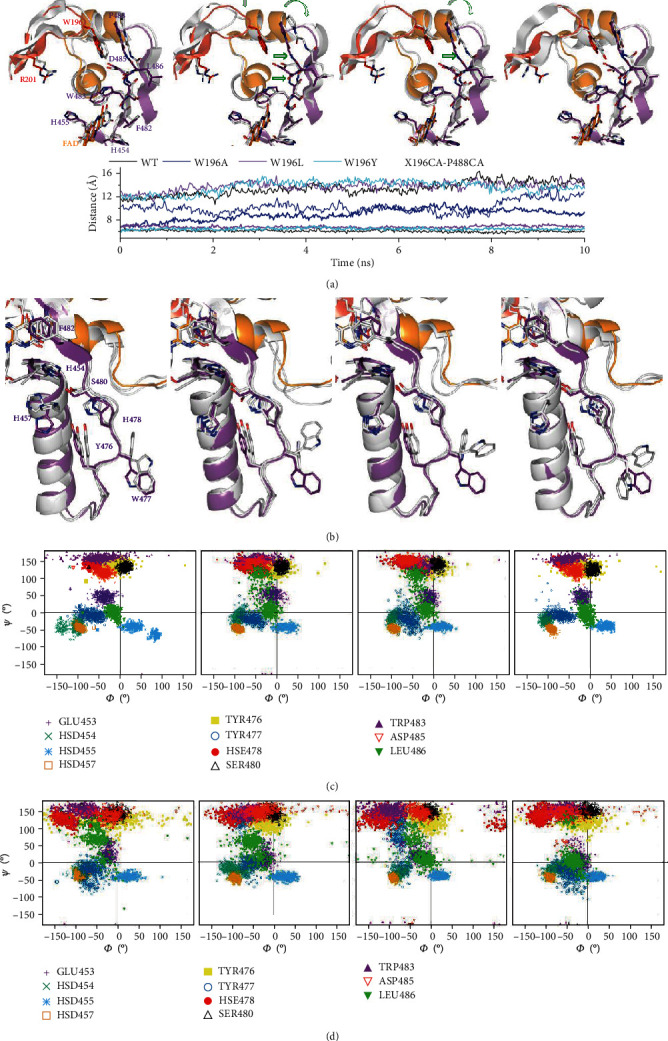
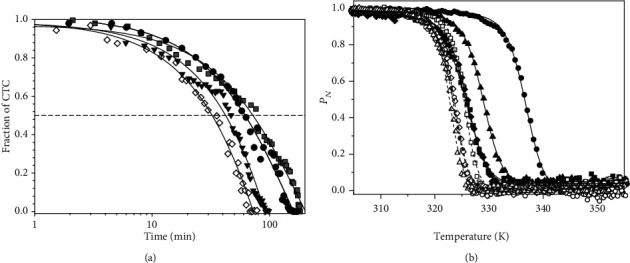
The human apoptosis-inducing factor (hAIF) is a moonlight flavoprotein involved in mitochondrial respiratory complex assembly and caspase-independent programmed cell death. These functions might be modulated by its redox-linked structural transition that enables hAIF to act as a NAD(H/) redox sensor. Upon reduction with NADH, hAIF undergoes a conformational reorganization in two specific insertions-the flexible regulatory C-loop and the 190-202 -harpin-promoting protein dimerization and the stabilization of a long-life charge transfer complex (CTC) that modulates its monomer-dimer equilibrium and its protein interaction network in healthy mitochondria. In this regard, here, we investigated the precise function of the -hairpin in the AIF conformation landscape related to its redox mechanism, by analyzing the role played by W196, a key residue in the interaction of this motif with the regulatory C-loop. Mutations at W196 decrease the compactness and stability of the oxidized hAIF, indicating that the -hairpin and C-loop coupling contribute to protein stability. Kinetic studies complemented with computational simulations reveal that W196 and the -hairpin conformation modulate the low efficiency of hAIF as NADH oxidoreductase, contributing to configure its active site in a noncompetent geometry for hydride transfer and to stabilize the CTC state by enhancing the affinity for NAD. Finally, the -hairpin motif contributes to define the conformation of AIF's interaction surfaces with its physiological partners. These findings improve our understanding on the molecular basis of hAIF's cellular activities, a crucial aspect for clarifying its associated pathological mechanisms and developing new molecular therapies.
人细胞凋亡诱导因子(hAIF)是一种月光黄素蛋白,参与线粒体呼吸复合物的组装和半胱天冬酶非依赖性程序性细胞死亡。这些功能可能通过其氧化还原相关的结构转变来调节,这使得 hAIF 能够作为 NAD(H)/氧化还原传感器发挥作用。在与 NADH 还原时,hAIF 在两个特定插入物-柔性调节 C 环和 190-202 -harin 促进蛋白二聚化中经历构象重排,并且稳定长寿命电荷转移复合物(CTC),该复合物调节其单体-二聚体平衡及其在健康线粒体中的蛋白质相互作用网络。在这方面,我们通过分析关键残基 W196 在该模体与调节 C 环相互作用中的作用,研究了 -hairpin 在与 hAIF 氧化还原机制相关的构象景观中的精确功能。在 W196 处的突变降低了氧化 hAIF 的紧凑性和稳定性,表明 -hairpin 和 C 环偶联有助于蛋白质稳定性。动力学研究与计算模拟相结合表明,W196 和 -hairpin 构象调节 hAIF 作为 NADH 氧化还原酶的低效率,有助于将其活性位点配置为不利于氢化物转移的非竞争几何形状,并通过增强对 NAD 的亲和力来稳定 CTC 状态。最后,-hairpin 模体有助于确定 AIF 与其生理伴侣相互作用表面的构象。这些发现提高了我们对 hAIF 细胞活性的分子基础的理解,这是阐明其相关病理机制和开发新的分子治疗方法的关键方面。