Rathore Richa, Schutt Charles R, Van Tine Brian A
Division of Medical Oncology, Washington University in St. Louis, St. Louis, MO 63110, USA.
Siteman Cancer Center, St. Louis, MO 63110, USA.
Cancer Drug Resist. 2020;3(4):762-774. doi: 10.20517/cdr.2020.46. Epub 2020 Sep 17.
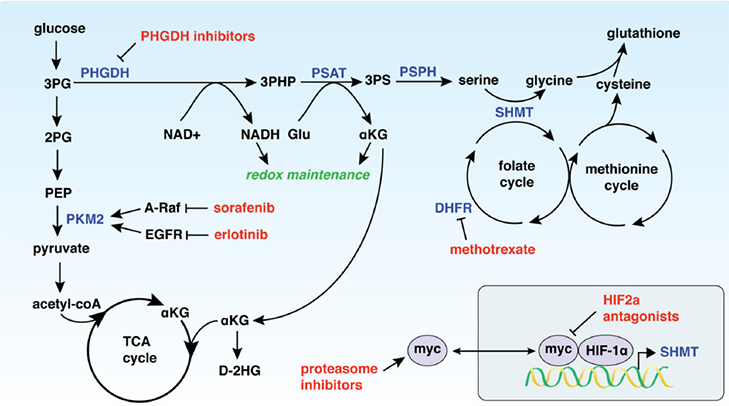
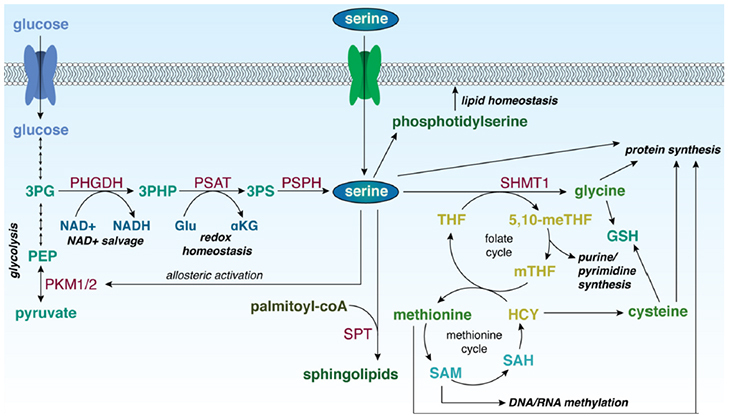
At the forefront of cancer research is the rapidly evolving understanding of metabolic reprogramming within cancer cells. The expeditious adaptation to metabolic inhibition allows cells to evolve and acquire resistance to targeted treatments, which makes therapeutic exploitation complex but achievable. 3-phosphoglycerate dehydrogenase (PHGDH) is the rate-limiting enzyme of de novo serine biosynthesis and is highly expressed in a variety of cancers, including breast cancer, melanoma, and Ewing's sarcoma. This review will investigate the role of PHGDH in normal biological processes, leading to the role of PHGDH in the progression of cancer. With an understanding of the molecular mechanisms by which PHGDH expression advances cancer growth, we will highlight the known mechanisms of resistance to cancer therapeutics facilitated by PHGDH biology and identify avenues for combatting PHGDH-driven resistance with inhibitors of PHGDH to allow for the development of effective metabolic therapies.
癌症研究的前沿是对癌细胞内代谢重编程的快速演变的理解。对代谢抑制的迅速适应使细胞能够进化并获得对靶向治疗的抗性,这使得治疗开发变得复杂但可行。3-磷酸甘油酸脱氢酶(PHGDH)是从头合成丝氨酸的限速酶,在包括乳腺癌、黑色素瘤和尤因肉瘤在内的多种癌症中高度表达。本综述将研究PHGDH在正常生物学过程中的作用,进而探讨PHGDH在癌症进展中的作用。通过了解PHGDH表达促进癌症生长的分子机制,我们将强调由PHGDH生物学促成的癌症治疗抗性的已知机制,并确定用PHGDH抑制剂对抗PHGDH驱动的抗性的途径,以便开发有效的代谢疗法。