Department of Psychiatry, New York State Psychiatric Institute, Columbia University, 1051 Riverside Dr., Unit 78, New York, NY, 10032, USA.
Department of Neurosurgery, Washington University in St. Louis, St. Louis, MO, 63110, USA.
Psychopharmacology (Berl). 2021 Apr;238(4):1111-1120. doi: 10.1007/s00213-020-05758-8. Epub 2021 Jan 29.
Elevated whole-blood serotonin (5-HT) is a robust biomarker in ~ 30% of patients with autism spectrum disorders, in which repetitive behavior is a core symptom. Furthermore, elevated whole-blood 5-HT has also been described in patients with pediatric obsessive-compulsive disorder. The 5-HT receptor is associated with repetitive behaviors seen in both disorders. Chronic blockade of serotonin transporter (SERT) reduces 5-HT receptor levels in the orbitofrontal cortex (OFC) and attenuates the sensorimotor deficits and hyperactivity seen with the 5-HT agonist RU24969. We hypothesized that enhanced SERT function would increase 5-HT receptor levels in OFC and enhance sensorimotor deficits and hyperactivity induced by RU24969.
We examined the impact of the SERT Ala56 mutation, which leads to enhanced SERT function, on 5-HT receptor binding and 5-HT-mediated sensorimotor deficits.
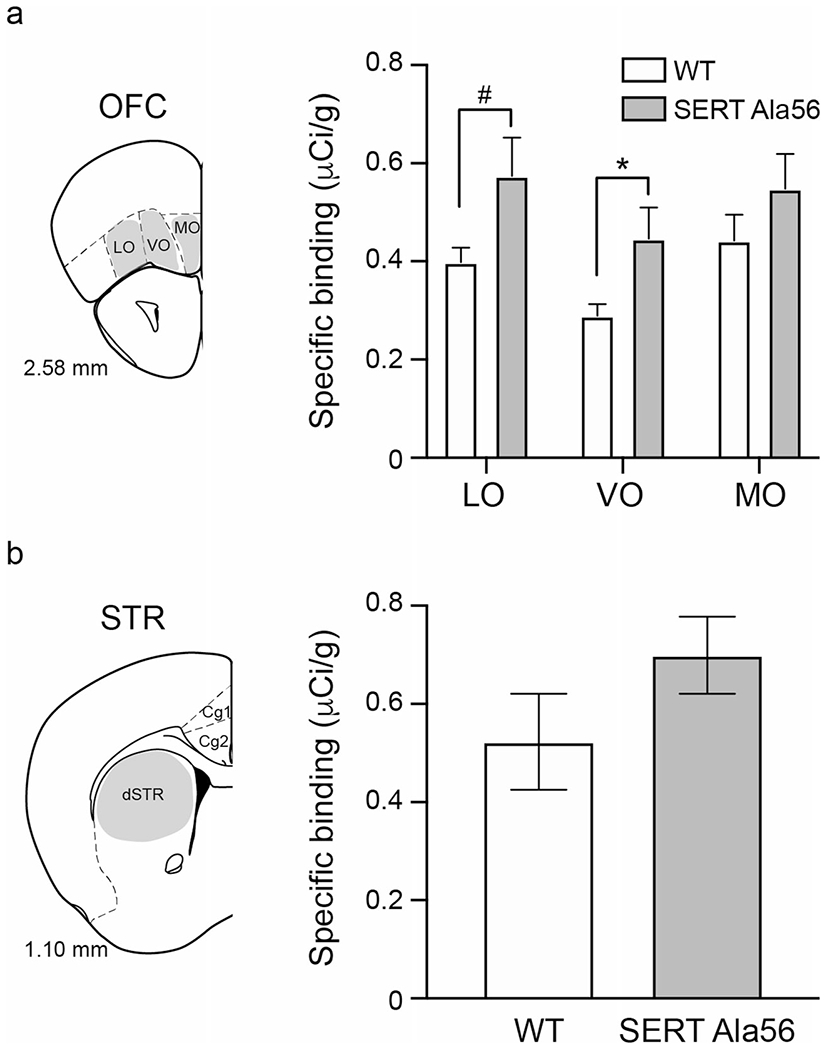
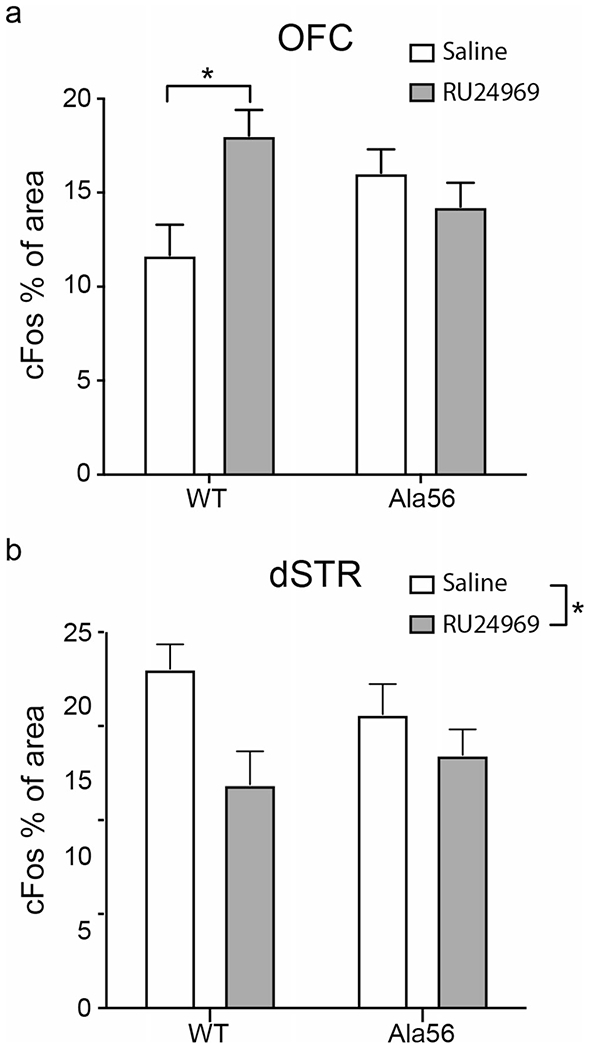
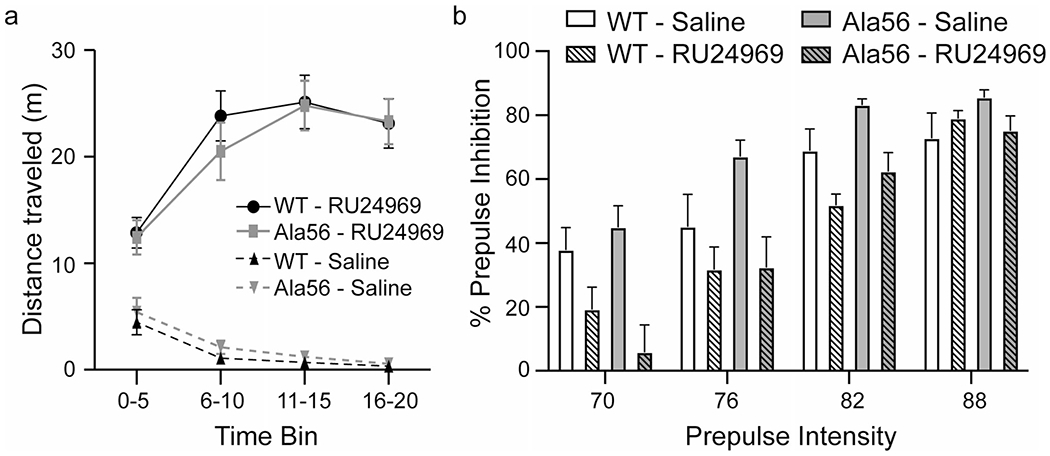
Specific binding to 5-HT receptors was measured in OFC and striatum of naïve SERT Ala56 or wild-type mice. The impact of the 5-HT receptor agonist RU24969 on prepulse inhibition (PPI) of startle, hyperactivity, and expression of cFos was examined.
While enhanced SERT function increased 5-HT receptor levels in OFC of Ala56 mice, RU24969-induced PPI deficits and hyperlocomotion were not different between genotypes. Baseline levels of cFos expression were not different between groups. RU24969 increased cFos expression in OFC of wild-types and decreased cFos in the striatum.
While reducing 5-HT receptors may attenuate sensorimotor gating deficits, increased 5-HT levels in SERT Ala56 mice do not necessarily exacerbate these deficits, potentially due to compensations during neural circuit development in this model system.
全血 5-羟色胺(5-HT)升高是约 30%自闭症谱系障碍患者的一个强有力的生物标志物,其中重复行为是核心症状。此外,儿科强迫症患者也有全血 5-HT 升高的描述。5-HT 受体与两种疾病中的重复行为有关。5-羟色胺转运体(SERT)的慢性阻断可降低眶额皮质(OFC)中的 5-HT 受体水平,并减轻 5-HT 激动剂 RU24969 引起的感觉运动缺陷和过度活跃。我们假设增强 SERT 功能会增加 OFC 中的 5-HT 受体水平,并增强 RU24969 引起的感觉运动缺陷和过度活跃。
我们研究了导致 SERT 功能增强的 SERT Ala56 突变对 5-HT 受体结合和 5-HT 介导的感觉运动缺陷的影响。
在 SERT Ala56 或野生型小鼠的大脑前额叶皮质和纹状体中测量 5-HT 受体的特异性结合。研究了 5-HT 受体激动剂 RU24969 对惊跳反射前抑制(PPI)、过度活跃和 cFos 表达的影响。
虽然增强 SERT 功能增加了 Ala56 小鼠 OFC 中的 5-HT 受体水平,但 RU24969 诱导的 PPI 缺陷和过度活跃在两种基因型之间没有差异。各组之间的基础 cFos 表达水平没有差异。RU24969 增加了野生型动物 OFC 中的 cFos 表达,降低了纹状体中的 cFos 表达。
虽然降低 5-HT 受体可能会减轻感觉运动门控缺陷,但在 SERT Ala56 小鼠中增加 5-HT 水平不一定会加剧这些缺陷,这可能是由于在这个模型系统的神经回路发育过程中存在代偿。