• 文献检索
  • 文档翻译
  • 深度研究
  • 学术资讯
  • Suppr Zotero 插件Zotero 插件
  • 邀请有礼
  • 套餐&价格
  • 历史记录
应用&插件
Suppr Zotero 插件Zotero 插件浏览器插件Mac 客户端Windows 客户端微信小程序
定价
高级版会员购买积分包购买API积分包
服务
文献检索文档翻译深度研究API 文档MCP 服务
关于我们
关于 Suppr公司介绍联系我们用户协议隐私条款
关注我们

Suppr 超能文献

核心技术专利:CN118964589B侵权必究
粤ICP备2023148730 号-1Suppr @ 2026

文献检索

告别复杂PubMed语法,用中文像聊天一样搜索,搜遍4000万医学文献。AI智能推荐,让科研检索更轻松。

立即免费搜索

文件翻译

保留排版,准确专业,支持PDF/Word/PPT等文件格式,支持 12+语言互译。

免费翻译文档

深度研究

AI帮你快速写综述,25分钟生成高质量综述,智能提取关键信息,辅助科研写作。

立即免费体验

产后出血及其严重形式的风险因素与客观评估的失血情况-一项前瞻性队列研究。

Risk Factors for Postpartum Hemorrhage and its Severe Forms with Blood Loss Evaluated Objectively - A Prospective Cohort Study.

机构信息

Department of Obstetrics and Gynecology, Universidade Estadual de Campinas, Campinas, SP, Brazil.

出版信息

Rev Bras Ginecol Obstet. 2021 Feb;43(2):113-118. doi: 10.1055/s-0040-1718439. Epub 2021 Jan 28.

DOI:10.1055/s-0040-1718439
PMID:33511619
原文链接:https://pmc.ncbi.nlm.nih.gov/articles/PMC10183850/
Abstract

OBJECTIVE

To identify risk factors related to postpartum hemorrhage (PPH) and severe PPH with blood loss quantified objectively.

METHODS

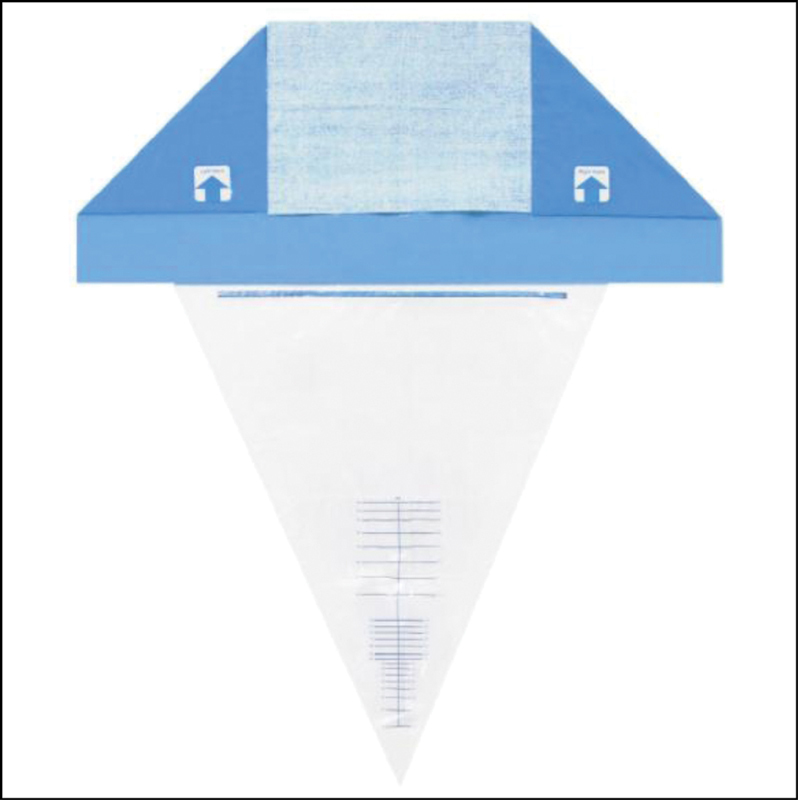
This is a complementary analysis of a prospective cohort study that included pregnant women delivering vaginally. The total blood loss was obtained through the sum of the volume collected from the drape with the weight of gauzes, compresses and pads used by women within 2 hours. Exploratory data analysis was performed to assess mean, standard deviation (SD), frequency, percentage and percentiles. The risk factors for postpartum bleeding were evaluated using linear and logistic regression.

RESULTS

We included 270 women. The mean blood loss at 120 minutes was 427.49 mL (±335.57 mL). Thirty-one percent (84 women) bled > 500 mL and 8.2% (22 women) bled > 1,000 mL within 2 hours. Episiotomy, longer second stage of labor and forceps delivery were related to blood loss > 500 mL within 2 hours, in the univariate analysis. In the multivariate analysis, only forceps remained associated with bleeding > 500 mL within 2 hours (odds ratio [OR] = 9.5 [2.85-31.53]). Previous anemia and episiotomy were also related to blood loss > 1,000mL.

CONCLUSION

Prolonged second stage of labor, forceps and episiotomy are related to increased incidence of PPH, and should be used as an alert for the delivery assistants for early recognition and prompt treatment for PPH.

摘要

目的

确定与产后出血(PPH)和出血量客观量化的重度 PPH 相关的风险因素。

方法

这是一项前瞻性队列研究的补充分析,纳入了阴道分娩的孕妇。总出血量通过收集产妇在 2 小时内使用的围裙、纱布、压布和垫的重量之和来获得。进行探索性数据分析以评估平均值、标准差(SD)、频率、百分比和百分位数。使用线性和逻辑回归评估产后出血的风险因素。

结果

我们纳入了 270 名妇女。120 分钟时的平均出血量为 427.49 毫升(±335.57 毫升)。31%(84 名妇女)在 2 小时内出血量>500 毫升,8.2%(22 名妇女)出血量>1000 毫升。在单因素分析中,会阴切开术、第二产程延长和产钳分娩与 2 小时内出血量>500 毫升相关。在多因素分析中,只有产钳与 2 小时内出血量>500 毫升相关(比值比[OR] = 9.5[2.85-31.53])。既往贫血和会阴切开术也与出血量>1000 毫升相关。

结论

第二产程延长、产钳和会阴切开术与 PPH 发生率增加相关,应作为分娩助手的警示,以便早期识别和及时治疗 PPH。
https://cdn.ncbi.nlm.nih.gov/pmc/blobs/38c3/10183850/3e02e5e155e2/10-1055-s-0040-1718439-i200028-1.jpg

相似文献

1
Risk Factors for Postpartum Hemorrhage and its Severe Forms with Blood Loss Evaluated Objectively - A Prospective Cohort Study.产后出血及其严重形式的风险因素与客观评估的失血情况-一项前瞻性队列研究。
Rev Bras Ginecol Obstet. 2021 Feb;43(2):113-118. doi: 10.1055/s-0040-1718439. Epub 2021 Jan 28.
2
Ability of shock index and heart rate to predict the percentage of body blood volume lost after vaginal delivery as an indicator of severity: results from a prospective cohort study.休克指数和心率预测阴道分娩后失血量占体重百分比的能力作为严重程度的指标:一项前瞻性队列研究的结果。
J Glob Health. 2019 Dec;9(2):020432. doi: 10.7189/jogh.09.020432.
3
Differential effects of different delivery methods on progression to severe postpartum hemorrhage between Chinese nulliparous and multiparous women: a retrospective cohort study.不同分娩方式对中国初产妇和经产妇严重产后出血进展的差异影响:一项回顾性队列研究
BMC Pregnancy Childbirth. 2020 Oct 31;20(1):660. doi: 10.1186/s12884-020-03351-7.
4
Anesthesia technique and postpartum hemorrhage: a prospective cohort study.麻醉技术与产后出血:一项前瞻性队列研究。
Braz J Anesthesiol. 2022 May-Jun;72(3):338-341. doi: 10.1016/j.bjane.2021.06.002. Epub 2021 Jun 24.
5
Predelivery maternal fibrinogen as a predictor of blood loss after vaginal delivery.分娩前母体纤维蛋白原作为阴道分娩后失血的预测指标。
Arch Gynecol Obstet. 2016 Oct;294(4):745-51. doi: 10.1007/s00404-016-4031-z. Epub 2016 Feb 22.
6
Inability to predict postpartum hemorrhage: insights from Egyptian intervention data.无法预测产后出血:来自埃及干预数据的见解。
BMC Pregnancy Childbirth. 2011 Nov 28;11:97. doi: 10.1186/1471-2393-11-97.
7
Incidence and risk factors for postpartum hemorrhage in Uganda.乌干达产后出血的发病率及危险因素
Reprod Health. 2016 Apr 14;13:38. doi: 10.1186/s12978-016-0154-8.
8
The length of the third stage of labor and the risk of postpartum hemorrhage.第三产程的时长与产后出血风险
Obstet Gynecol. 2005 Feb;105(2):290-3. doi: 10.1097/01.AOG.0000151993.83276.70.
9
Duration of Expulsive Efforts and Risk of Postpartum Hemorrhage in Nulliparous Women: A Population-Based Study.初产妇用力分娩时间与产后出血风险:一项基于人群的研究
PLoS One. 2015 Nov 10;10(11):e0142171. doi: 10.1371/journal.pone.0142171. eCollection 2015.
10
Postpartum haemorrhage in nulliparous women: incidence and risk factors in low and high risk women. A Dutch population-based cohort study on standard (> or = 500 ml) and severe (> or = 1000 ml) postpartum haemorrhage.未生育女性的产后出血:低风险和高风险女性的发病率及风险因素。一项基于荷兰人群的队列研究,研究标准(≥500毫升)和严重(≥1000毫升)产后出血情况。
Eur J Obstet Gynecol Reprod Biol. 2004 Aug 10;115(2):166-72. doi: 10.1016/j.ejogrb.2003.12.008.

引用本文的文献

1
Risk factors and prediction model for massive transfusion during cesarean section in singleton pregnancies with anterior placenta previa, prior caesarean and prenatal suspicion of placenta accreta spectrum: a retrospective case-control study.前置胎盘、既往剖宫产史及产前怀疑胎盘植入谱系疾病的单胎妊娠剖宫产术中大量输血的危险因素及预测模型:一项回顾性病例对照研究
BMC Pregnancy Childbirth. 2025 Sep 1;25(1):910. doi: 10.1186/s12884-025-08041-w.
2
Evaluating predelivery platelet and coagulation indices as predictors of immediate postpartum haemorrhage in low-risk women undergoing vaginal delivery.评估分娩前血小板和凝血指标,以预测低风险阴道分娩女性产后即刻出血情况。
BMC Pregnancy Childbirth. 2025 Mar 17;25(1):298. doi: 10.1186/s12884-025-07427-0.
3

本文引用的文献

1
Assessing and managing hypovolemic shock in puerperal women.评估和处理产褥期妇女低血容量性休克。
Best Pract Res Clin Obstet Gynaecol. 2019 Nov;61:89-105. doi: 10.1016/j.bpobgyn.2019.05.012. Epub 2019 May 27.
2
Shock index and heart rate standard reference values in the immediate postpartum period: A cohort study.即刻产后时期的休克指数和心率标准参考值:一项队列研究。
PLoS One. 2019 Jun 11;14(6):e0217907. doi: 10.1371/journal.pone.0217907. eCollection 2019.
3
Postpartum hemorrhage: new insights for definition and diagnosis.
Nomogram based on clinical characteristics and ultrasound indicators for predicting severe postpartum hemorrhage in patients with anterior placenta previa combined with previous cesarean section: a retrospective case-control study.基于临床特征和超声指标的预测前壁胎盘前置合并剖宫产史患者产后严重出血的列线图:一项回顾性病例对照研究。
BMC Pregnancy Childbirth. 2024 Aug 31;24(1):572. doi: 10.1186/s12884-024-06706-6.
4
Prevalence of risk factors for primary postpartum hemorrhage in a university hospital.某大学医院产后出血首要原因的危险因素流行情况。
Rev Bras Enferm. 2023 Nov 27;76(5):e20220134. doi: 10.1590/0034-7167-2022-0134. eCollection 2023.
5
Factors associated with severe maternal outcome in patients admitted to an intensive care unit in northeastern Brazil with postpartum hemorrhage: a retrospective cohort study.与巴西东北部因产后出血入住重症监护病房的患者严重产妇结局相关的因素:一项回顾性队列研究。
BMC Pregnancy Childbirth. 2023 Aug 10;23(1):573. doi: 10.1186/s12884-023-05874-1.
6
Hemostatic biomarkers associated with postpartum hemorrhage: a systematic review and meta-analysis.与产后出血相关的止血生物标志物:系统评价和荟萃分析。
Blood Adv. 2023 Oct 10;7(19):5954-5967. doi: 10.1182/bloodadvances.2023010143.
7
The use of IVF/ICSI and risk of postpartum hemorrhage: A retrospective cohort study of 153,765 women in China.IVF/ICSI 的使用与产后出血风险:中国 153765 名妇女的回顾性队列研究。
Front Public Health. 2023 Mar 21;11:1016457. doi: 10.3389/fpubh.2023.1016457. eCollection 2023.
产后出血:定义和诊断的新见解。
Am J Obstet Gynecol. 2018 Aug;219(2):162-168. doi: 10.1016/j.ajog.2018.04.013. Epub 2018 Apr 14.
4
Global, regional, and national levels of maternal mortality, 1990-2015: a systematic analysis for the Global Burden of Disease Study 2015.1990 - 2015年全球、区域及国家层面的孕产妇死亡率:全球疾病负担研究2015的系统分析
Lancet. 2016 Oct 8;388(10053):1775-1812. doi: 10.1016/S0140-6736(16)31470-2.
5
Incidence and risk factors for postpartum hemorrhage in Uganda.乌干达产后出血的发病率及危险因素
Reprod Health. 2016 Apr 14;13:38. doi: 10.1186/s12978-016-0154-8.
6
Rethinking maternal health.重新思考孕产妇健康。
Lancet Glob Health. 2016 Apr;4(4):e227-8. doi: 10.1016/S2214-109X(16)00044-9. Epub 2016 Mar 4.
7
Obstetric hemorrhage: A global review.产科出血:一项全球综述。
Semin Perinatol. 2016 Mar;40(2):96-8. doi: 10.1053/j.semperi.2015.11.014. Epub 2015 Dec 29.
8
Daily oral iron supplementation during pregnancy.孕期每日口服铁补充剂。
Cochrane Database Syst Rev. 2015 Jul 22;2015(7):CD004736. doi: 10.1002/14651858.CD004736.pub5.
9
Critical maternal health knowledge gaps in low- and middle-income countries for the post-2015 era.2015年后低收入和中等收入国家关键的孕产妇健康知识差距
Reprod Health. 2015 Jun 5;12:55. doi: 10.1186/s12978-015-0044-5.
10
Global causes of maternal death: a WHO systematic analysis.全球孕产妇死亡原因:世卫组织系统分析。
Lancet Glob Health. 2014 Jun;2(6):e323-33. doi: 10.1016/S2214-109X(14)70227-X. Epub 2014 May 5.