Department of Molecular and Human Genetics, Baylor College of Medicine, Houston, TX 77030, USA.
Genes (Basel). 2021 Jan 27;12(2):177. doi: 10.3390/genes12020177.
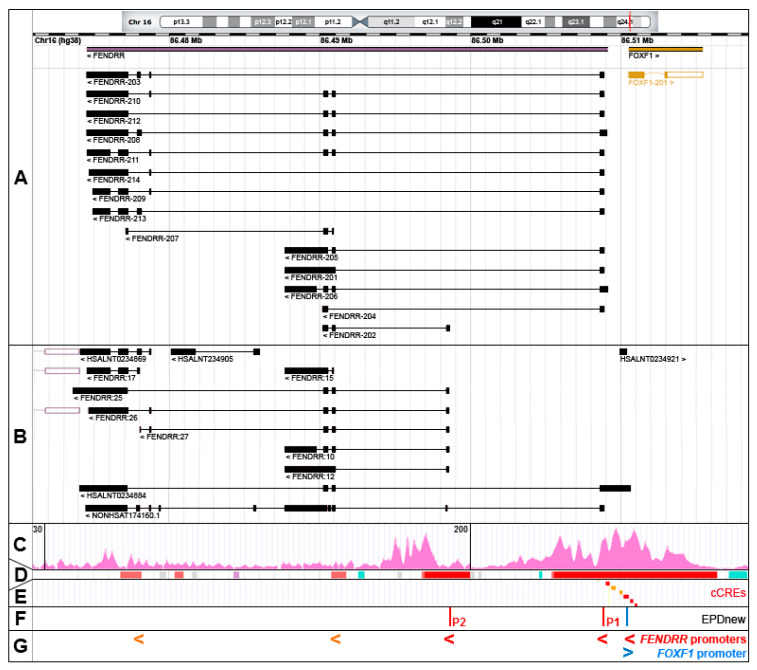
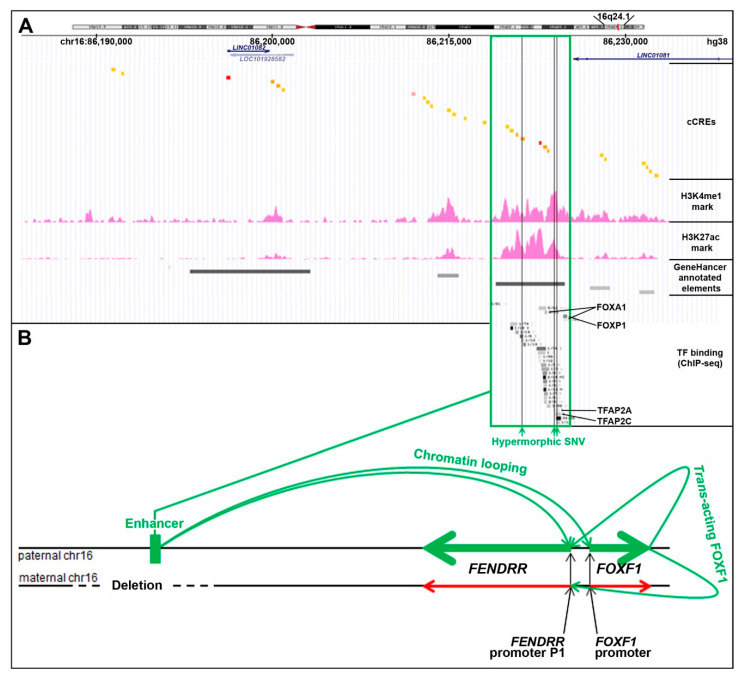
The Adjacent Noncoding Developmental Regulatory RNA () plays an important role in the control of gene expression in mammals. It is transcribed in the opposite direction to the neighboring gene with which it shares a region containing promoters. In humans, is located on chromosome 16q24.1, and is positively regulated both by the distant lung-specific -acting enhancer and by -acting FOXF1. has been shown to function as a competing endogenous RNA, sponging microRNAs and protein factors that control stability of mRNAs, and as an epigenetic modifier of chromatin structure around gene promoters and other regulatory sites, targeting them with histone methyltrasferase complexes. In mice, is essential for development of the heart, lungs, and gastrointestinal system; its homozygous loss causes embryonic or perinatal lethality. Importantly, deregulation of expression has been causatively linked also to tumorigenesis, resistance to chemotherapy, fibrosis, and inflammatory diseases. Here, we review the current knowledge on the structure, expression, and involvement in development and tissue maintenance.
邻近非编码发育调控 RNA () 在哺乳动物基因表达的控制中发挥着重要作用。它与相邻的基因在含有启动子的区域反方向转录。在人类中,位于 16q24.1 染色体上,由远距离肺特异性激活增强子和 FOXF1 激活正向调节。已被证明作为竞争性内源性 RNA,海绵 microRNAs 和控制 mRNA 稳定性的蛋白质因子,并作为染色质结构的表观遗传修饰物,通过组蛋白甲基转移酶复合物靶向基因启动子和其他调节位点。在小鼠中,对于心脏、肺和胃肠道系统的发育至关重要;其纯合缺失导致胚胎或围产期致死。重要的是,表达的失调也与肿瘤发生、化疗耐药、纤维化和炎症性疾病有关。在这里,我们回顾了关于结构、表达以及在发育和组织维持中的作用的最新知识。