• 文献检索
  • 文档翻译
  • 深度研究
  • 学术资讯
  • Suppr Zotero 插件Zotero 插件
  • 邀请有礼
  • 套餐&价格
  • 历史记录
应用&插件
Suppr Zotero 插件Zotero 插件浏览器插件Mac 客户端Windows 客户端微信小程序
定价
高级版会员购买积分包购买API积分包
服务
文献检索文档翻译深度研究API 文档MCP 服务
关于我们
关于 Suppr公司介绍联系我们用户协议隐私条款
关注我们

Suppr 超能文献

核心技术专利:CN118964589B侵权必究
粤ICP备2023148730 号-1Suppr @ 2026

文献检索

告别复杂PubMed语法,用中文像聊天一样搜索,搜遍4000万医学文献。AI智能推荐,让科研检索更轻松。

立即免费搜索

文件翻译

保留排版,准确专业,支持PDF/Word/PPT等文件格式,支持 12+语言互译。

免费翻译文档

深度研究

AI帮你快速写综述,25分钟生成高质量综述,智能提取关键信息,辅助科研写作。

立即免费体验

COVID-19 相关脑卒中的病因:SVIN COVID-19 多国注册研究。

Stroke etiologies in patients with COVID-19: the SVIN COVID-19 multinational registry.

机构信息

Institute of Biomedical Research of Salamanca, Department of Neurology, Hospital Universitario de Salamanca, Salamanca, Spain.

Department of Neurology, Hospital Clínico Universitario de Valladolid, Valladolid, Spain.

出版信息

BMC Neurol. 2021 Jan 30;21(1):43. doi: 10.1186/s12883-021-02075-1.

DOI:10.1186/s12883-021-02075-1
PMID:33514335
原文链接:https://pmc.ncbi.nlm.nih.gov/articles/PMC7846488/
Abstract

BACKGROUND AND PURPOSE

Coronavirus disease 2019 (COVID-19) is associated with a small but clinically significant risk of stroke, the cause of which is frequently cryptogenic. In a large multinational cohort of consecutive COVID-19 patients with stroke, we evaluated clinical predictors of cryptogenic stroke, short-term functional outcomes and in-hospital mortality among patients according to stroke etiology.

METHODS

We explored clinical characteristics and short-term outcomes of consecutively evaluated patients 18 years of age or older with acute ischemic stroke (AIS) and laboratory-confirmed COVID-19 from 31 hospitals in 4 countries (3/1/20-6/16/20).

RESULTS

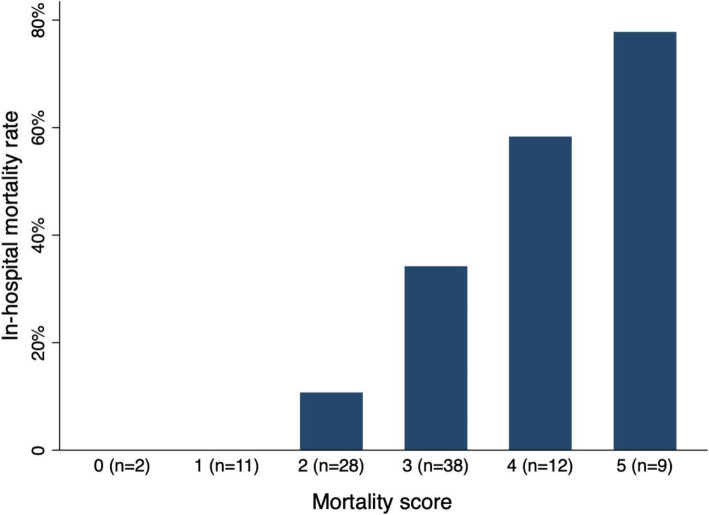
Of the 14.483 laboratory-confirmed patients with COVID-19, 156 (1.1%) were diagnosed with AIS. Sixty-one (39.4%) were female, 84 (67.2%) white, and 88 (61.5%) were between 60 and 79 years of age. The most frequently reported etiology of AIS was cryptogenic (55/129, 42.6%), which was associated with significantly higher white blood cell count, c-reactive protein, and D-dimer levels than non-cryptogenic AIS patients (p</=0.05 for all comparisons). In a multivariable backward stepwise regression model estimating the odds of in-hospital mortality, cryptogenic stroke mechanism was associated with a fivefold greater odds in-hospital mortality than strokes due to any other mechanism (adjusted OR 5.16, 95%CI 1.41-18.87, p = 0.01). In that model, older age (aOR 2.05 per decade, 95%CI 1.35-3.11, p < 0.01) and higher baseline NIHSS (aOR 1.12, 95%CI 1.02-1.21, p = 0.01) were also independently predictive of mortality.

CONCLUSIONS

Our findings suggest that cryptogenic stroke among COVID-19 patients carries a significant risk of early mortality.

摘要

背景与目的

COVID-19 与小但具有临床意义的中风风险相关,其病因常常是隐源性的。在一项大型多国连续 COVID-19 中风患者队列研究中,我们根据中风病因评估了隐源性中风的临床预测因素、短期功能结局和住院死亡率。

方法

我们从 4 个国家的 31 家医院连续评估了年龄在 18 岁或以上、急性缺血性中风(AIS)和实验室确诊 COVID-19 的患者,探讨了这些患者的临床特征和短期结局。

结果

在 14483 例实验室确诊 COVID-19 患者中,有 156 例(1.1%)诊断为 AIS。61 例(39.4%)为女性,84 例(67.2%)为白人,88 例(61.5%)年龄在 60-79 岁之间。AIS 最常见的病因是隐源性(55/129,42.6%),与非隐源性 AIS 患者相比,白细胞计数、C 反应蛋白和 D-二聚体水平显著升高(所有比较 p</=0.05)。在一个多变量逐步向后回归模型中,估计住院死亡率的优势比,隐源性中风机制与任何其他机制引起的中风相比,住院死亡率高出五倍(调整后的 OR 5.16,95%CI 1.41-18.87,p=0.01)。在该模型中,年龄较大(每十年增加 2.05,95%CI 1.35-3.11,p<0.01)和较高的基线 NIHSS(aOR 1.12,95%CI 1.02-1.21,p=0.01)也是死亡率的独立预测因素。

结论

我们的研究结果表明,COVID-19 患者的隐源性中风具有早期死亡的高风险。
https://cdn.ncbi.nlm.nih.gov/pmc/blobs/5134/7847003/ba184af7180f/12883_2021_2075_Fig1_HTML.jpg

相似文献

1
Stroke etiologies in patients with COVID-19: the SVIN COVID-19 multinational registry.COVID-19 相关脑卒中的病因:SVIN COVID-19 多国注册研究。
BMC Neurol. 2021 Jan 30;21(1):43. doi: 10.1186/s12883-021-02075-1.
2
Cerebrovascular events and outcomes in hospitalized patients with COVID-19: The SVIN COVID-19 Multinational Registry.新型冠状病毒肺炎住院患者的脑血管事件及转归:SVIN新型冠状病毒肺炎多国注册研究
Int J Stroke. 2021 Jun;16(4):437-447. doi: 10.1177/1747493020959216. Epub 2020 Sep 30.
3
Stroke Among Patients Hospitalized With COVID-19: Results From the American Heart Association COVID-19 Cardiovascular Disease Registry.COVID-19 住院患者中的中风:美国心脏协会 COVID-19 心血管疾病登记研究结果。
Stroke. 2022 Mar;53(3):800-807. doi: 10.1161/STROKEAHA.121.035270. Epub 2021 Oct 27.
4
Plasma D-dimer level is associated with clinical outcomes in patients with atrial fibrillation related acute ischemic stroke after pneumonia.血浆 D-二聚体水平与肺炎后伴心房颤动的急性缺血性脑卒中患者的临床结局相关。
BMC Neurol. 2021 Mar 27;21(1):137. doi: 10.1186/s12883-021-02168-x.
5
COVID-19-related strokes are associated with increased mortality and morbidity: A multicenter comparative study from Bengaluru, South India.COVID-19 相关脑卒中与死亡率和发病率增加相关:来自印度南部班加罗尔的多中心对比研究。
Int J Stroke. 2021 Jun;16(4):429-436. doi: 10.1177/1747493020968236. Epub 2020 Dec 6.
6
Impact of D-dimer levels for short-term or long-term outcomes in cryptogenic stroke patients.不明原因卒中患者的 D-二聚体水平对短期或长期结局的影响。
J Neurol. 2018 Mar;265(3):628-636. doi: 10.1007/s00415-018-8742-x. Epub 2018 Jan 25.
7
European Multicenter Study of ET-COVID-19.欧洲多中心 ET-COVID-19 研究。
Stroke. 2021 Jan;52(1):31-39. doi: 10.1161/STROKEAHA.120.031514. Epub 2020 Nov 23.
8
Acute ischaemic stroke associated with SARS-CoV-2 infection in North America.北美与 SARS-CoV-2 感染相关的急性缺血性脑卒中。
J Neurol Neurosurg Psychiatry. 2022 Apr;93(4):360-368. doi: 10.1136/jnnp-2021-328354. Epub 2022 Jan 25.
9
SARS-CoV-2 and Stroke in a New York Healthcare System.SARS-CoV-2 与纽约医疗体系中的中风。
Stroke. 2020 Jul;51(7):2002-2011. doi: 10.1161/STROKEAHA.120.030335. Epub 2020 May 20.
10
Vessel wall magnetic resonance imaging in COVID-19-associated cryptogenic ischemic stroke.COVID-19 相关隐源性缺血性卒中的血管壁磁共振成像。
Eur J Neurol. 2022 Feb;29(2):615-619. doi: 10.1111/ene.15128. Epub 2021 Oct 6.

引用本文的文献

1
Effects of coronavirus disease 2019 on the incidence, mortality, and prognosis of ischemic stroke: a systematic review and meta-analysis.2019冠状病毒病对缺血性卒中发病率、死亡率及预后的影响:一项系统评价和荟萃分析
Front Neurol. 2025 May 13;16:1486887. doi: 10.3389/fneur.2025.1486887. eCollection 2025.
2
Combination therapy of Epidermal Growth Factor and Growth Hormone-Releasing Hexapeptide in acute ischemic stroke: a phase I/II non-blinded, randomized clinical trial.表皮生长因子与生长激素释放六肽联合治疗急性缺血性卒中:一项I/II期非盲、随机临床试验。
Front Neurol. 2024 Apr 4;15:1303402. doi: 10.3389/fneur.2024.1303402. eCollection 2024.
3

本文引用的文献

1
Decline in mild stroke presentations and intravenous thrombolysis during the COVID-19 pandemic: The Society of Vascular and Interventional Neurology Multicenter Collaboration.新冠疫情期间轻度中风发作和静脉溶栓治疗的减少:血管和介入神经病学学会多中心合作。
Clin Neurol Neurosurg. 2021 Feb;201:106436. doi: 10.1016/j.clineuro.2020.106436. Epub 2020 Dec 15.
2
The Impact of SARS-CoV-2 on Stroke Epidemiology and Care: A Meta-Analysis.SARS-CoV-2 对中风流行病学和护理的影响:一项荟萃分析。
Ann Neurol. 2021 Feb;89(2):380-388. doi: 10.1002/ana.25967. Epub 2020 Dec 9.
3
Acute Ischemic Stroke and COVID-19: Experience From a Comprehensive Stroke Center in Midwest US.
Prevalence and impact of SARS-CoV-2 infection among patients with acute ischaemic stroke: a nationwide register-based cohort study in Denmark.
在丹麦开展的一项全国范围内基于登记的队列研究显示,急性缺血性脑卒中患者中 SARS-CoV-2 感染的流行率和影响。
BMJ Open. 2024 Mar 28;14(3):e081527. doi: 10.1136/bmjopen-2023-081527.
4
Epidemiology, pathogenesis, and management of Coronavirus disease 2019-associated stroke.2019冠状病毒病相关卒中的流行病学、发病机制及管理
Front Med. 2023 Dec;17(6):1047-1067. doi: 10.1007/s11684-023-1041-7. Epub 2024 Jan 2.
5
SARS-CoV-2 infection activating a novel variant of the gene and subsequently causing development of CADASIL.严重急性呼吸综合征冠状病毒2(SARS-CoV-2)感染激活该基因的一种新变体,随后导致伴有皮质下梗死和白质脑病的常染色体显性遗传性脑动脉病(CADASIL)的发展。
Arch Med Sci. 2022 Apr 4;19(6):1781-1794. doi: 10.5114/aoms/146978. eCollection 2023.
6
Genetic Architecture of Ischaemic Strokes after COVID-19 Shows Similarities with Large Vessel Strokes.COVID-19 后缺血性中风的遗传结构与大动脉性中风相似。
Int J Mol Sci. 2023 Aug 30;24(17):13452. doi: 10.3390/ijms241713452.
7
Ischemic strokes in COVID-19: risk factors, obesity paradox, and distinction between trigger and causal association.新型冠状病毒肺炎中的缺血性卒中:危险因素、肥胖悖论以及触发因素与因果关联的区分
Front Neurol. 2023 Aug 1;14:1222009. doi: 10.3389/fneur.2023.1222009. eCollection 2023.
8
Neurologic Manifestations of Coronavirus Disease 2019 in Children: An Iranian Hospital-Based Study.儿童 2019 冠状病毒病的神经表现:伊朗基于医院的研究。
Arch Iran Med. 2023 Mar 1;26(3):166-171. doi: 10.34172/aim.2023.25.
9
Cerebrovascular Disease in COVID-19.COVID-19 相关脑血管病。
Viruses. 2023 Jul 21;15(7):1598. doi: 10.3390/v15071598.
10
Cerebrovascular disease in patients with COVID-19 infection: a case series from Lebanon.新型冠状病毒肺炎感染患者的脑血管疾病:来自黎巴嫩的病例系列
Ann Med Surg (Lond). 2023 Jun 10;85(7):3701-3708. doi: 10.1097/MS9.0000000000000953. eCollection 2023 Jul.
急性缺血性中风与新冠病毒病:来自美国中西部一家综合卒中中心的经验
Front Neurol. 2020 Aug 20;11:910. doi: 10.3389/fneur.2020.00910. eCollection 2020.
4
Cerebrovascular events and outcomes in hospitalized patients with COVID-19: The SVIN COVID-19 Multinational Registry.新型冠状病毒肺炎住院患者的脑血管事件及转归:SVIN新型冠状病毒肺炎多国注册研究
Int J Stroke. 2021 Jun;16(4):437-447. doi: 10.1177/1747493020959216. Epub 2020 Sep 30.
5
Characteristics and Outcomes in Patients With COVID-19 and Acute Ischemic Stroke: The Global COVID-19 Stroke Registry.COVID-19 与急性缺血性卒中患者的特征与结局:全球 COVID-19 卒中登记研究。
Stroke. 2020 Sep;51(9):e254-e258. doi: 10.1161/STROKEAHA.120.031208. Epub 2020 Jul 9.
6
Emergent Large Vessel Occlusion Stroke During New York City's COVID-19 Outbreak: Clinical Characteristics and Paraclinical Findings.新冠疫情期间纽约市出现的紧急大血管闭塞性卒中:临床特征和辅助检查结果。
Stroke. 2020 Sep;51(9):2656-2663. doi: 10.1161/STROKEAHA.120.030397. Epub 2020 Jul 31.
7
Mechanisms of Stroke in COVID-19.新冠病毒感染所致中风的机制
Cerebrovasc Dis. 2020;49(4):451-458. doi: 10.1159/000509581. Epub 2020 Jul 20.
8
Acute Cerebrovascular Events in Hospitalized COVID-19 Patients.住院 COVID-19 患者中的急性脑血管事件。
Stroke. 2020 Sep;51(9):e219-e222. doi: 10.1161/STROKEAHA.120.030995. Epub 2020 Jul 20.
9
Cerebrovascular disease in patients with COVID-19: neuroimaging, histological and clinical description.COVID-19 患者的脑血管病:神经影像学、组织学和临床描述。
Brain. 2020 Oct 1;143(10):3089-3103. doi: 10.1093/brain/awaa239.
10
The emerging spectrum of COVID-19 neurology: clinical, radiological and laboratory findings.新型冠状病毒肺炎神经系统表现的研究进展:临床、影像学和实验室表现。
Brain. 2020 Oct 1;143(10):3104-3120. doi: 10.1093/brain/awaa240.