Division of Oncogenomics, The Netherlands Cancer Institute, Plesmanlaan 121, 1066CX, Amsterdam, The Netherlands.
Division of Molecular Pathology, The Netherlands Cancer Institute, Plesmanlaan 121, 1066 CX, Amsterdam, The Netherlands.
Genome Biol. 2021 Jan 29;22(1):54. doi: 10.1186/s13059-021-02272-8.
Frequent activation of the co-transcriptional factor YAP is observed in a large number of solid tumors. Activated YAP associates with enhancer loci via TEAD4-DNA-binding protein and stimulates cancer aggressiveness. Although thousands of YAP/TEAD4 binding-sites are annotated, their functional importance is unknown. Here, we aim at further identification of enhancer elements that are required for YAP functions.
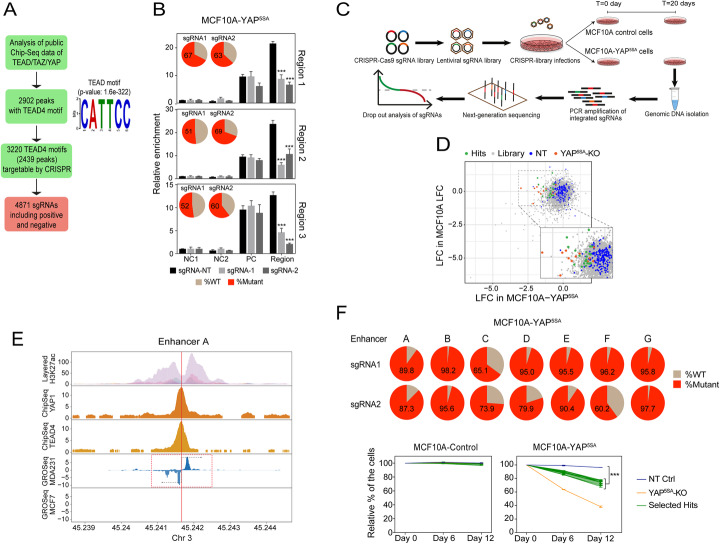
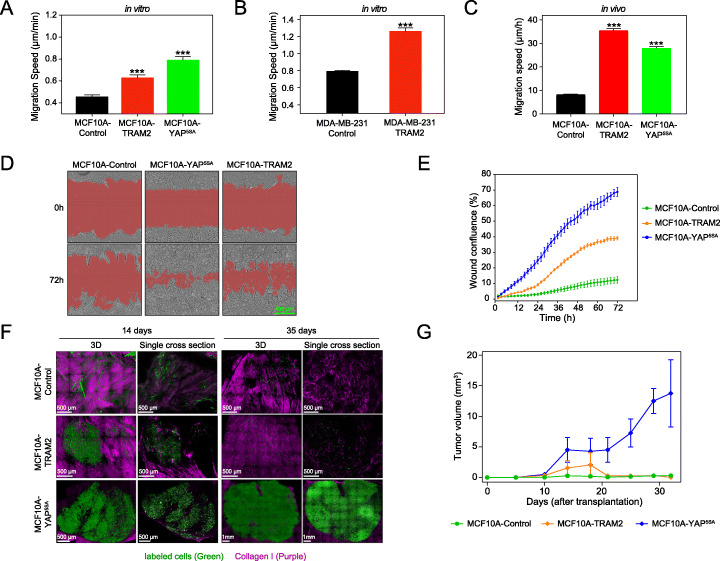
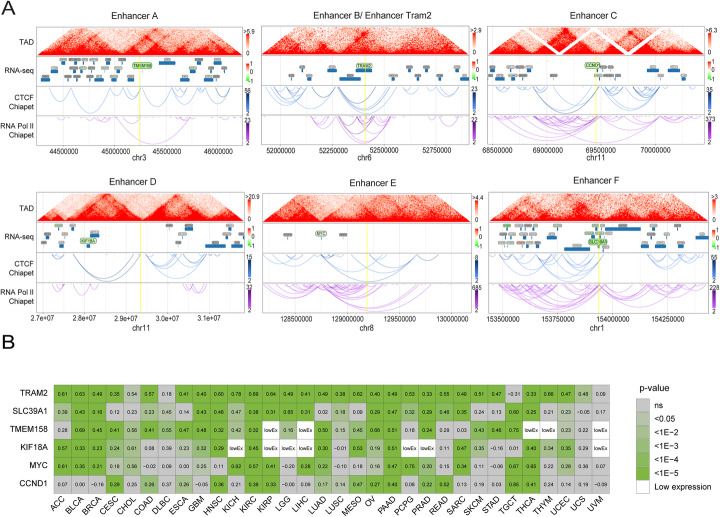
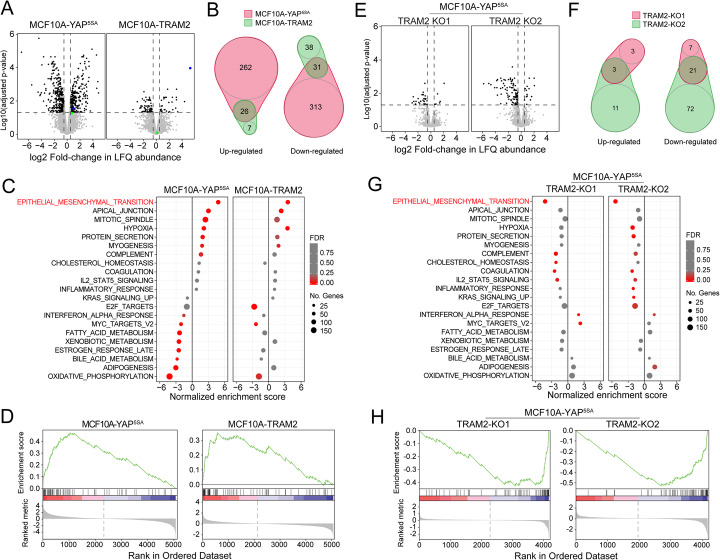
We first apply genome-wide ChIP profiling of YAP to systematically identify enhancers that are bound by YAP/TEAD4. Next, we implement a genetic approach to uncover functions of YAP/TEAD4-associated enhancers, demonstrate its robustness, and use it to reveal a network of enhancers required for YAP-mediated proliferation. We focus on Enhancer, as its target gene TRAM2 shows the strongest expression-correlation with YAP activity in nearly all tumor types. Interestingly, TRAM2 phenocopies the YAP-induced cell proliferation, migration, and invasion phenotypes and correlates with poor patient survival. Mechanistically, we identify FSTL-1 as a major direct client of TRAM2 that is involved in these phenotypes. Thus, TRAM2 is a key novel mediator of YAP-induced oncogenic proliferation and cellular invasiveness.
YAP is a transcription co-factor that binds to thousands of enhancer loci and stimulates tumor aggressiveness. Using unbiased functional approaches, we dissect YAP enhancer network and characterize TRAM2 as a novel mediator of cellular proliferation, migration, and invasion. Our findings elucidate how YAP induces cancer aggressiveness and may assist diagnosis of cancer metastasis.
在大量实体肿瘤中,共转录因子 YAP 频繁被激活。活化的 YAP 通过 TEAD4-DNA 结合蛋白与增强子位点结合,并刺激癌症的侵袭性。尽管已经注释了数千个 YAP/TEAD4 结合位点,但它们的功能重要性尚不清楚。在这里,我们旨在进一步鉴定对 YAP 功能必不可少的增强子元件。
我们首先应用 YAP 的全基因组 ChIP 分析来系统地鉴定 YAP/TEAD4 结合的增强子。接下来,我们采用遗传方法来揭示 YAP/TEAD4 相关增强子的功能,证明其稳健性,并利用它揭示 YAP 介导的增殖所需的增强子网络。我们关注 Enhancer,因为其靶基因 TRAM2 在几乎所有肿瘤类型中与 YAP 活性的表达相关性最强。有趣的是,TRAM2 模拟了 YAP 诱导的细胞增殖、迁移和侵袭表型,并与患者预后不良相关。从机制上讲,我们确定 FSTL-1 是 TRAM2 的主要直接客户,它参与了这些表型。因此,TRAM2 是 YAP 诱导的致癌增殖和细胞侵袭性的关键新介质。
YAP 是一种转录共因子,可与数千个增强子位点结合并刺激肿瘤侵袭性。通过使用无偏的功能方法,我们剖析了 YAP 增强子网络,并将 TRAM2 鉴定为细胞增殖、迁移和侵袭的新型介质。我们的研究结果阐明了 YAP 如何诱导癌症侵袭性,并可能有助于癌症转移的诊断。