Madsen Ralitsa R, Longden James, Knox Rachel G, Robin Xavier, Völlmy Franziska, Macleod Kenneth G, Moniz Larissa S, Carragher Neil O, Linding Rune, Vanhaesebroeck Bart, Semple Robert K
Centre for Cardiovascular Science, Queen's Medical Research Institute, University of Edinburgh, Edinburgh EH16 4TJ, UK.
Metabolic Research Laboratories, Wellcome Trust-MRC Institute of Metabolic Science, University of Cambridge, Cambridge CB2 0QQ, UK.
Dis Model Mech. 2021 Mar 1;14(3). doi: 10.1242/dmm.048298. Epub 2021 Mar 11.
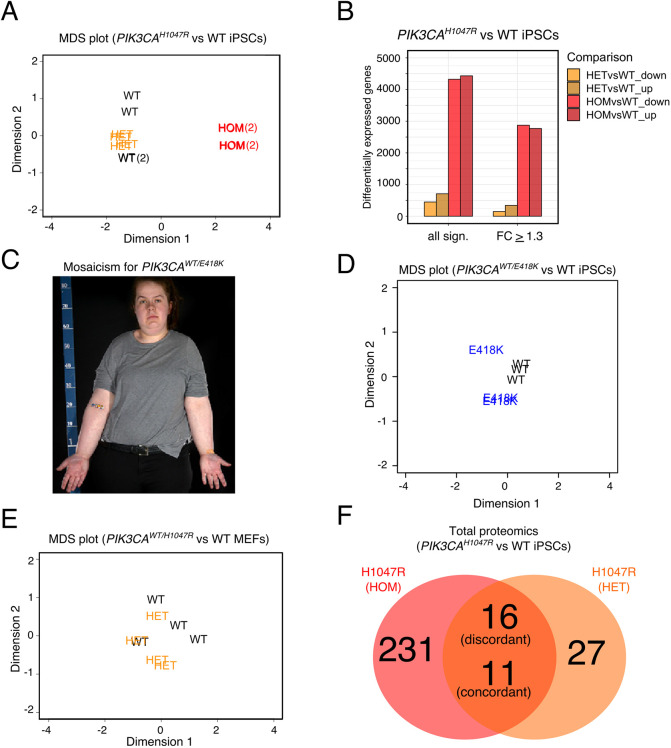
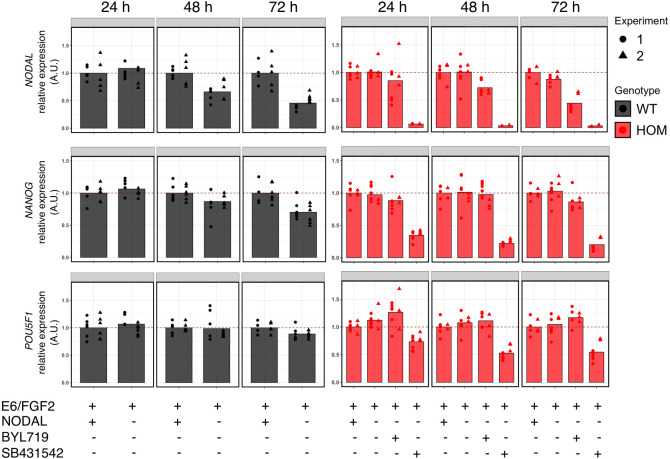
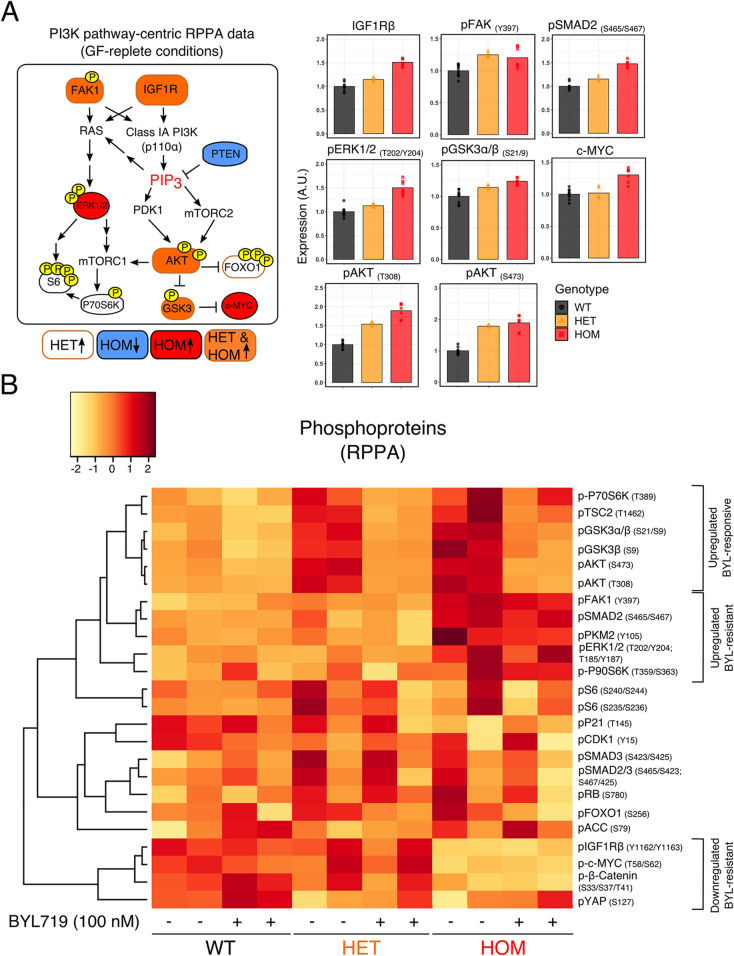
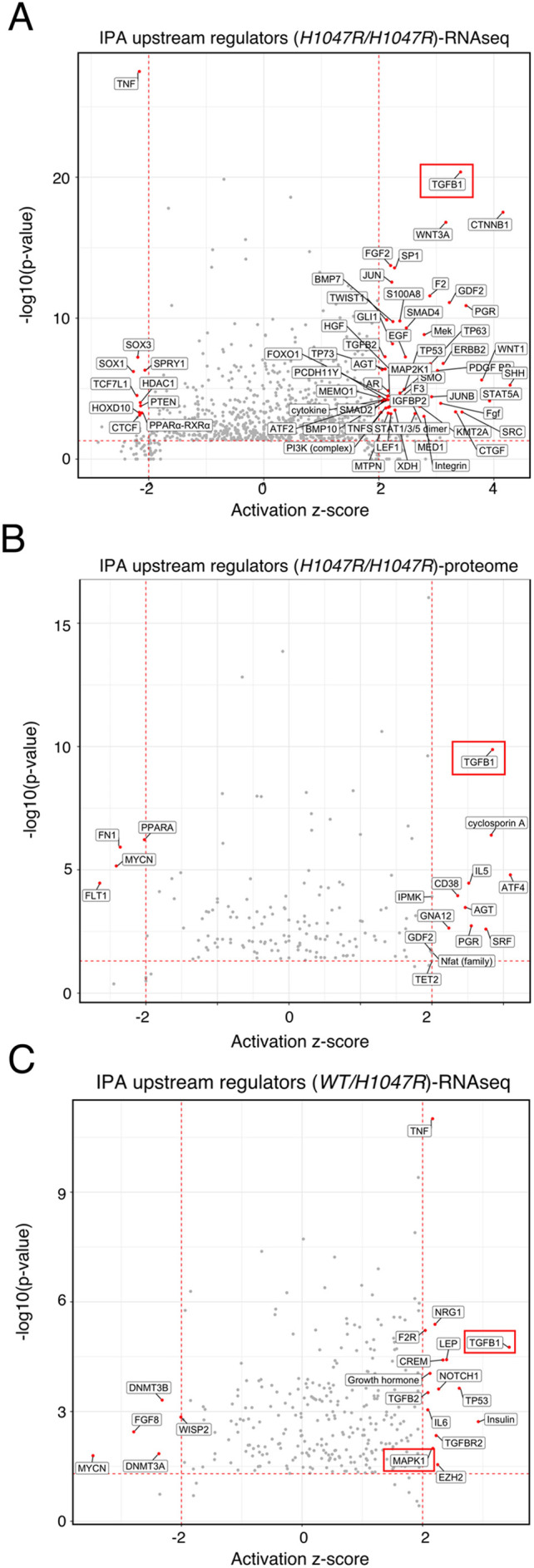
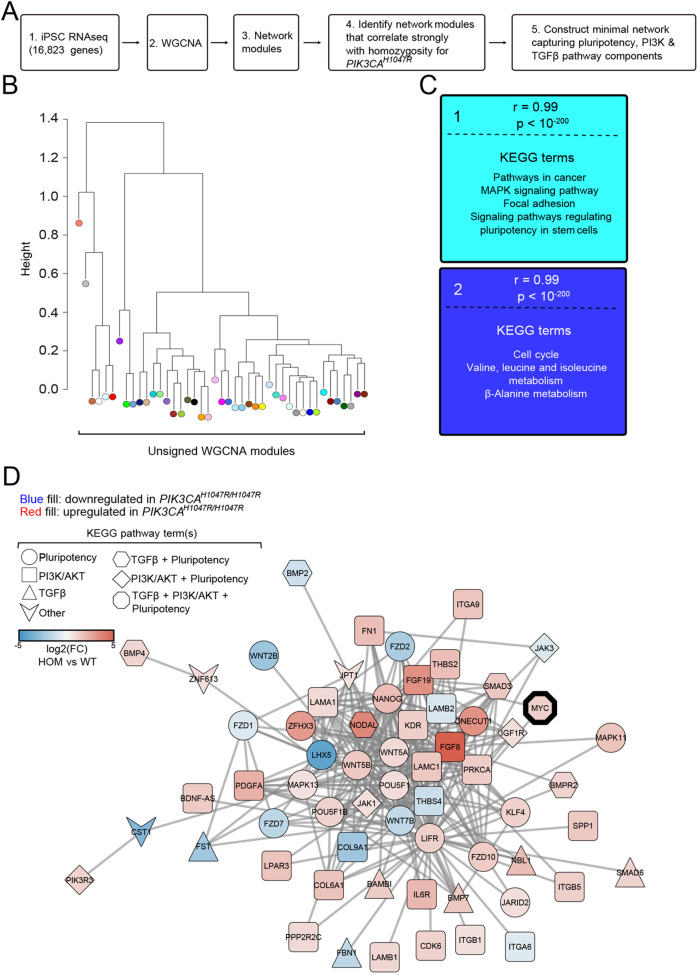
Activating PIK3CA mutations are known 'drivers' of human cancer and developmental overgrowth syndromes. We recently demonstrated that the 'hotspot' PIK3CAH1047R variant exerts unexpected allele dose-dependent effects on stemness in human pluripotent stem cells (hPSCs). In this study, we combine high-depth transcriptomics, total proteomics and reverse-phase protein arrays to reveal potentially disease-related alterations in heterozygous cells, and to assess the contribution of activated TGFβ signalling to the stemness phenotype of homozygous PIK3CAH1047R cells. We demonstrate signalling rewiring as a function of oncogenic PI3K signalling strength, and provide experimental evidence that self-sustained stemness is causally related to enhanced autocrine NODAL/TGFβ signalling. A significant transcriptomic signature of TGFβ pathway activation in heterozygous PIK3CAH1047R was observed but was modest and was not associated with the stemness phenotype seen in homozygous mutants. Notably, the stemness gene expression in homozygous PIK3CAH1047R hPSCs was reversed by pharmacological inhibition of NODAL/TGFβ signalling, but not by pharmacological PI3Kα pathway inhibition. Altogether, this provides the first in-depth analysis of PI3K signalling in hPSCs and directly links strong PI3K activation to developmental NODAL/TGFβ signalling. This work illustrates the importance of allele dosage and expression when artificial systems are used to model human genetic disease caused by activating PIK3CA mutations. This article has an associated First Person interview with the first author of the paper.
激活型PIK3CA突变是人类癌症和发育过度生长综合征已知的“驱动因素”。我们最近证明,“热点”PIK3CAH1047R变体对人类多能干细胞(hPSC)的干性具有意想不到的等位基因剂量依赖性影响。在本研究中,我们结合高深度转录组学、全蛋白质组学和反相蛋白质阵列,以揭示杂合细胞中潜在的疾病相关改变,并评估激活的TGFβ信号传导对纯合PIK3CAH1047R细胞干性表型的贡献。我们证明信号重编程是致癌性PI3K信号强度的函数,并提供实验证据表明自我维持的干性与增强的自分泌NODAL/TGFβ信号传导有因果关系。在杂合PIK3CAH1047R中观察到TGFβ途径激活的显著转录组特征,但程度较轻,且与纯合突变体中所见的干性表型无关。值得注意的是,纯合PIK3CAH1047R hPSC中的干性基因表达通过NODAL/TGFβ信号传导的药理学抑制而逆转,但未通过药理学PI3Kα途径抑制而逆转。总之,这提供了对hPSC中PI3K信号传导的首次深入分析,并直接将强烈的PI3K激活与发育性NODAL/TGFβ信号传导联系起来。这项工作说明了在使用人工系统模拟由激活PIK3CA突变引起的人类遗传疾病时,等位基因剂量和表达的重要性。本文有对该论文第一作者的相关第一人称访谈。