Department of Hematology and Medical Oncology, Emory University School of Medicine, Atlanta, GA, USA.
Cancer Biology Graduate Program, Emory University, Atlanta, GA, USA.
Commun Biol. 2021 Jan 29;4(1):142. doi: 10.1038/s42003-021-01663-8.
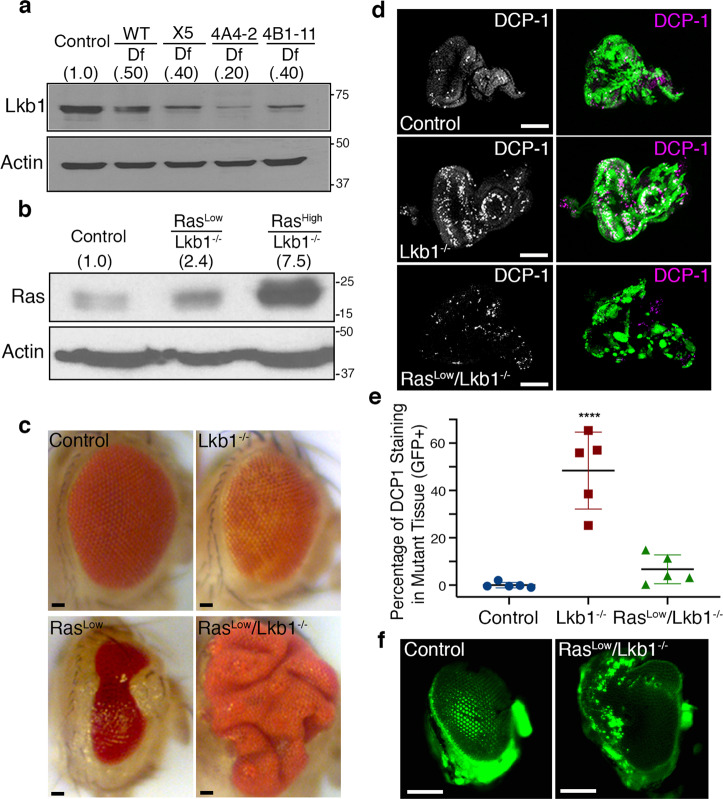
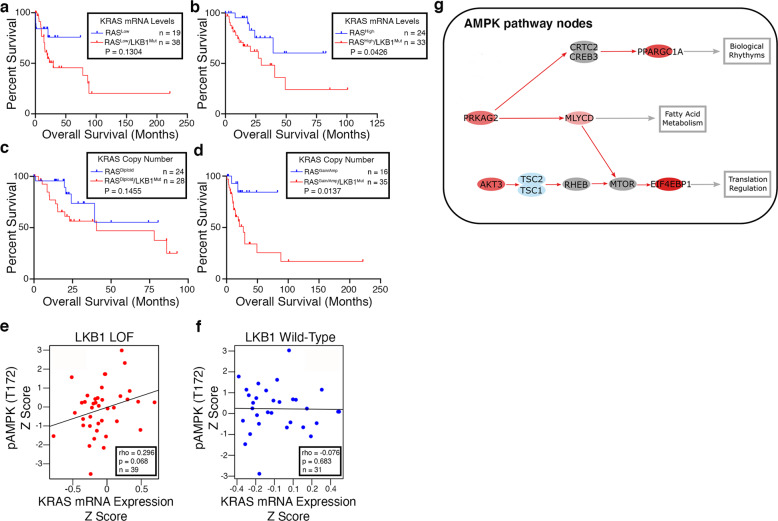
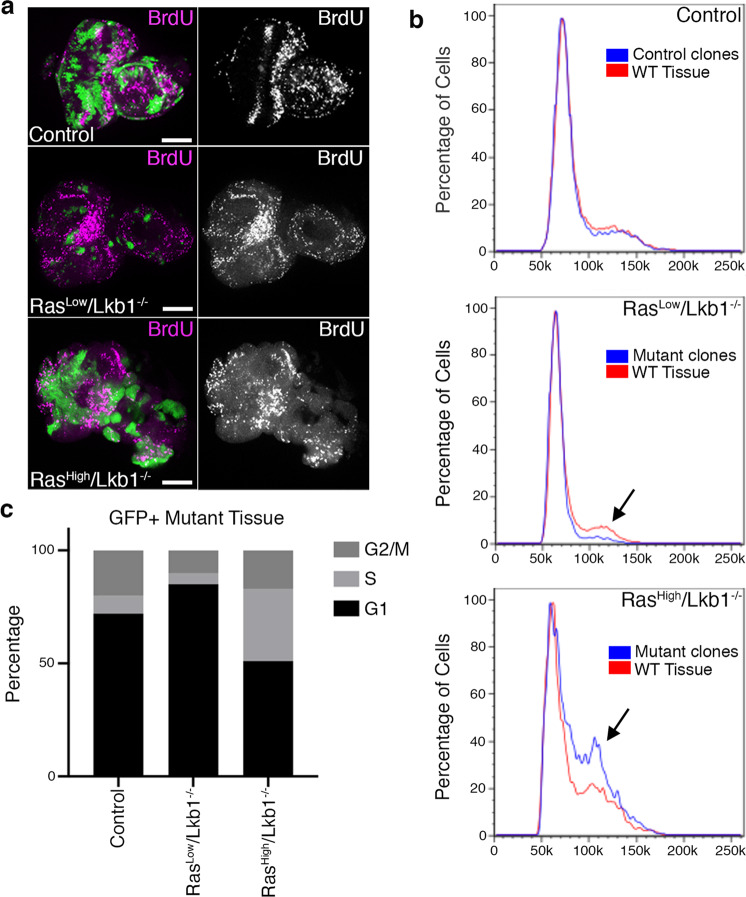
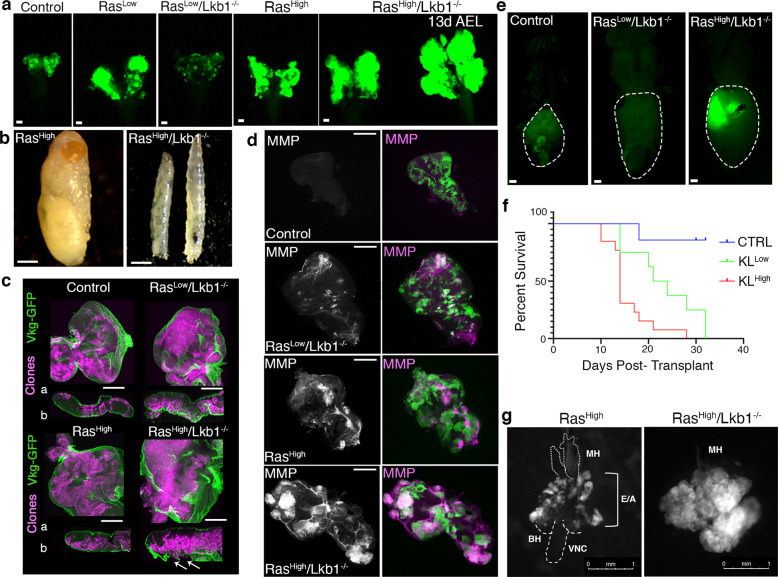
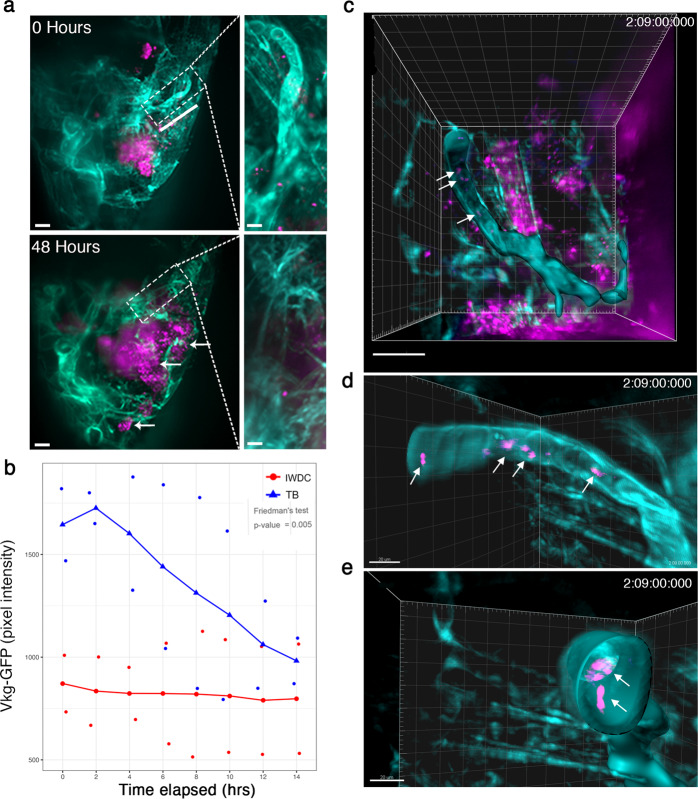
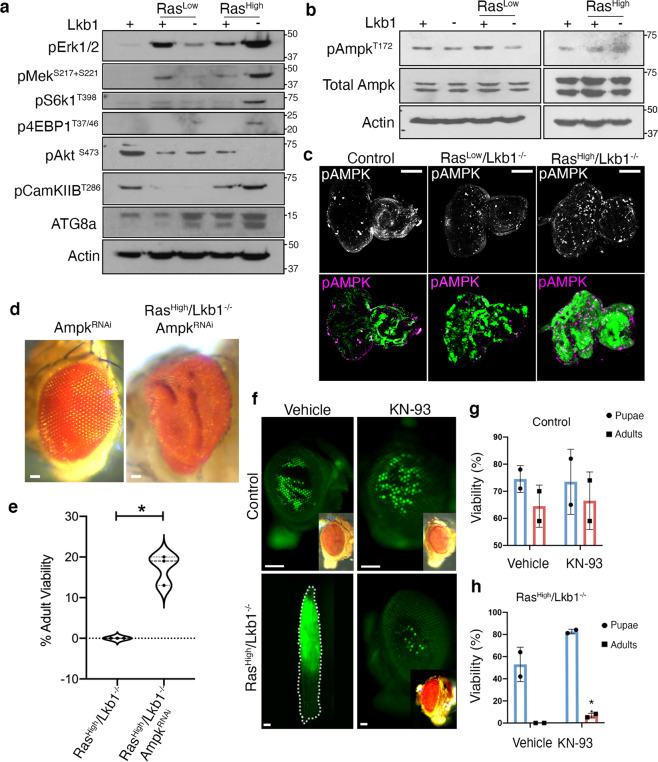
The genetic and metabolic heterogeneity of RAS-driven cancers has confounded therapeutic strategies in the clinic. To address this, rapid and genetically tractable animal models are needed that recapitulate the heterogeneity of RAS-driven cancers in vivo. Here, we generate a Drosophila melanogaster model of Ras/Lkb1 mutant carcinoma. We show that low-level expression of oncogenic Ras (Ras) promotes the survival of Lkb1 mutant tissue, but results in autonomous cell cycle arrest and non-autonomous overgrowth of wild-type tissue. In contrast, high-level expression of oncogenic Ras (Ras) transforms Lkb1 mutant tissue resulting in lethal malignant tumors. Using simultaneous multiview light-sheet microcopy, we have characterized invasion phenotypes of Ras/Lkb1 tumors in living larvae. Our molecular analysis reveals sustained activation of the AMPK pathway in malignant Ras/Lkb1 tumors, and demonstrate the genetic and pharmacologic dependence of these tumors on CaMK-activated Ampk. We further show that LKB1 mutant human lung adenocarcinoma patients with high levels of oncogenic KRAS exhibit worse overall survival and increased AMPK activation. Our results suggest that high levels of oncogenic KRAS is a driving event in the malignant transformation of LKB1 mutant tissue, and uncovers a vulnerability that may be used to target this aggressive genetic subset of RAS-driven tumors.
RAS 驱动的癌症在遗传和代谢上的异质性使临床治疗策略变得复杂。为了解决这个问题,需要快速且可遗传的动物模型来在体内重现 RAS 驱动的癌症的异质性。在这里,我们生成了一个 Ras/Lkb1 突变癌的果蝇模型。我们表明,低水平表达致癌 Ras(Ras)促进 Lkb1 突变组织的存活,但导致自主细胞周期停滞和野生型组织的非自主过度生长。相比之下,高水平表达致癌 Ras(Ras)转化 Lkb1 突变组织导致致命的恶性肿瘤。我们使用同时多视图光片显微镜对 Ras/Lkb1 肿瘤在活体幼虫中的侵袭表型进行了表征。我们的分子分析揭示了恶性 Ras/Lkb1 肿瘤中 AMPK 途径的持续激活,并证明了这些肿瘤对 CaMK 激活的 Ampk 的遗传和药理依赖性。我们进一步表明,具有高水平致癌 KRAS 的 LKB1 突变型人类肺腺癌患者的总生存率较差,并且 AMPK 激活增加。我们的结果表明,高水平的致癌 KRAS 是 LKB1 突变组织恶性转化的驱动事件,并揭示了可能用于靶向这种具有侵略性的 RAS 驱动肿瘤的遗传亚群的脆弱性。