Oxidative Stress Research Laboratory, Institute of Biological Sciences, Federal University of Pará, Av. Augusto Corrêa, 01, Belém, PA, 66075-110, Brazil.
Laboratory of Pathophysiology and Therapeutic Research, Centro de Ciências Sociais Saúde e Tecnologia - CCSST, Federal University of Maranhão, Campus Avançado - Bom Jesus, Prédio de Medicina, Av. da Universidade, S/N, Imperatriz, MA, 65915-240, Brazil.
Sci Rep. 2021 Jan 29;11(1):2623. doi: 10.1038/s41598-021-82032-7.
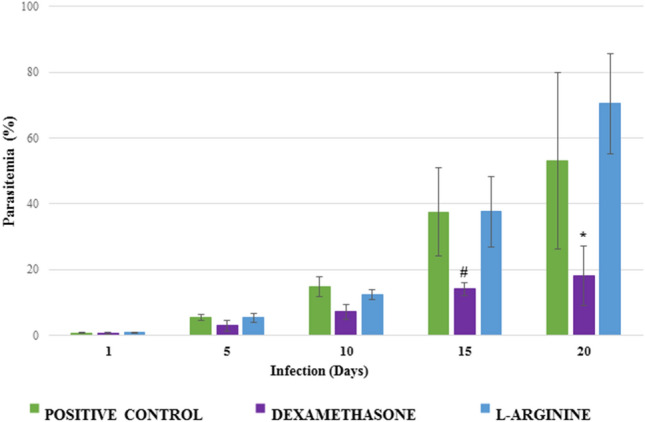
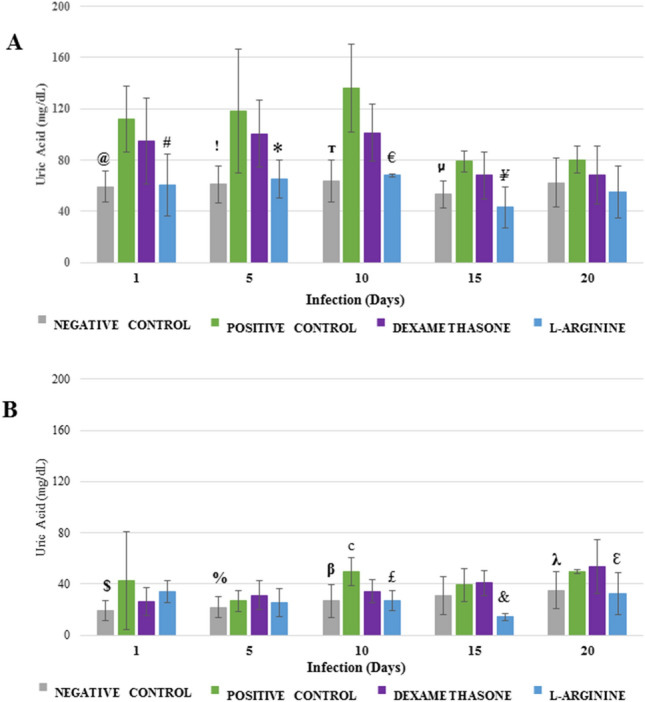
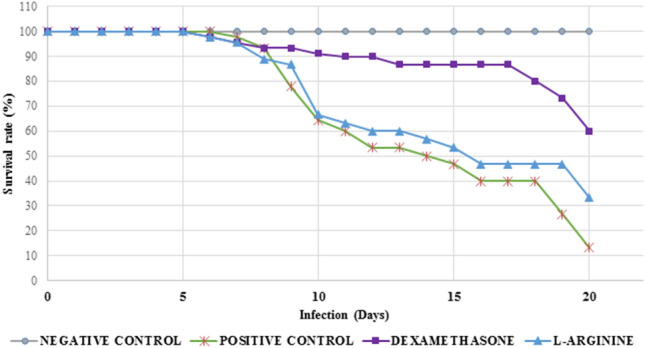
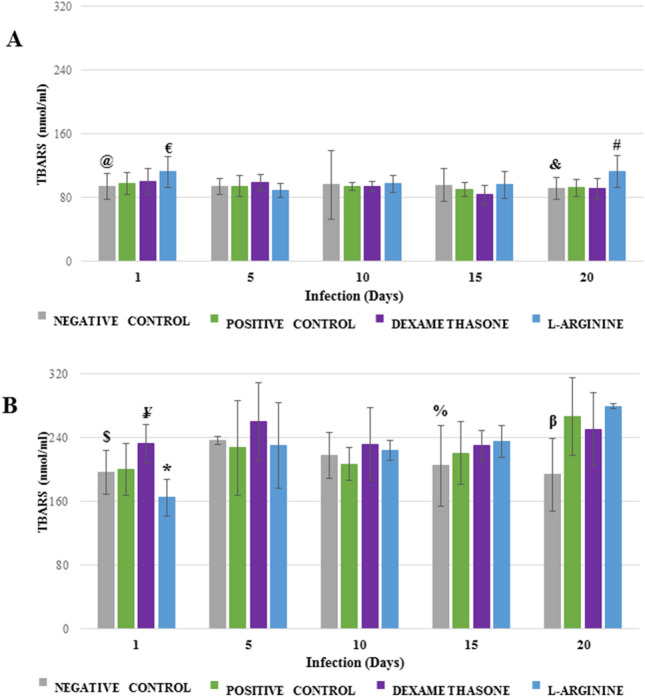
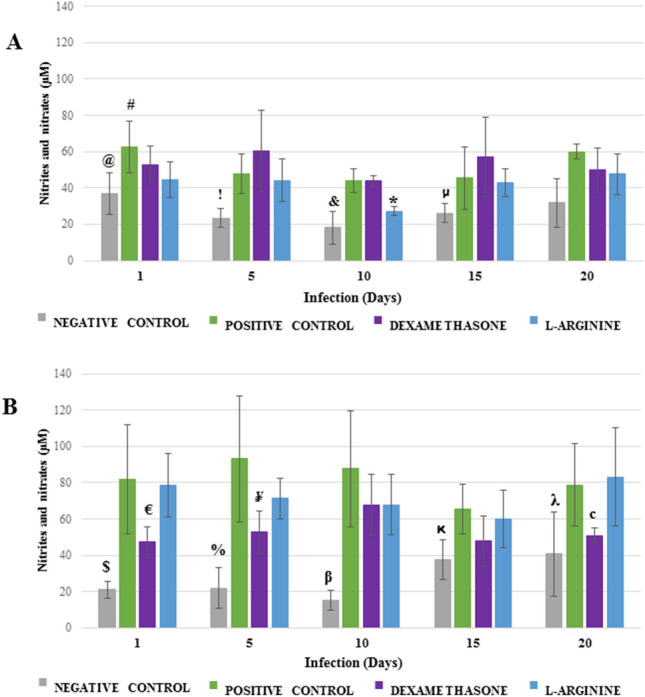
The present study aimed to evaluate the effects of dexamethasone on the redox status, parasitemia evolution, and survival rate of Plasmodium berghei-infected mice. Two-hundred and twenty-five mice were infected with Plasmodium berghei and subjected to stimulation or inhibition of NO synthesis. The stimulation of NO synthesis was performed through the administration of L-arginine, while its inhibition was made by the administration of dexamethasone. Inducible NO synthase (iNOS) inhibition by dexamethasone promoted an increase in the survival rate of P. berghei-infected mice, and the data suggested the participation of oxidative stress in the brain as a result of plasmodial infection, as well as the inhibition of brain NO synthesis, which promoted the survival rate of almost 90% of the animals until the 15th day of infection, with possible direct interference of ischemia and reperfusion syndrome, as seen by increased levels of uric acid. Inhibition of brain iNOS by dexamethasone caused a decrease in parasitemia and increased the survival rate of infected animals, suggesting that NO synthesis may stimulate a series of compensatory redox effects that, if overstimulated, may be responsible for the onset of severe forms of malaria.
本研究旨在评估地塞米松对伯氏疟原虫感染小鼠氧化还原状态、寄生虫血症演变和存活率的影响。将 225 只小鼠感染伯氏疟原虫,并对其进行一氧化氮(NO)合成的刺激或抑制处理。通过给予 L-精氨酸来刺激 NO 合成,而通过给予地塞米松来抑制其合成。地塞米松对诱导型一氧化氮合酶(iNOS)的抑制作用促进了感染伯氏疟原虫的小鼠存活率的提高,数据表明,寄生虫感染导致脑内氧化应激增加,以及脑内 NO 合成的抑制作用,促进了近 90%的动物的存活率,直到感染的第 15 天,可能通过尿酸水平的升高直接干扰了缺血再灌注综合征。地塞米松抑制脑 iNOS 导致寄生虫血症减少,并提高了感染动物的存活率,这表明 NO 合成可能会刺激一系列代偿性的氧化还原反应,如果过度刺激,可能是导致严重疟疾的原因。