Department of Food Science, Nutrition, and Health Promotion, Mississippi State University, Starkville, USA; Department of Food Science and Technology, Advanced Food Safety Research Group, BrainKorea21 Plus, Chung-Ang University, Korea.
Department of Food Science, Nutrition, and Health Promotion, Mississippi State University, Starkville, USA.
Poult Sci. 2021 Mar;100(3):100961. doi: 10.1016/j.psj.2020.12.058. Epub 2020 Dec 24.
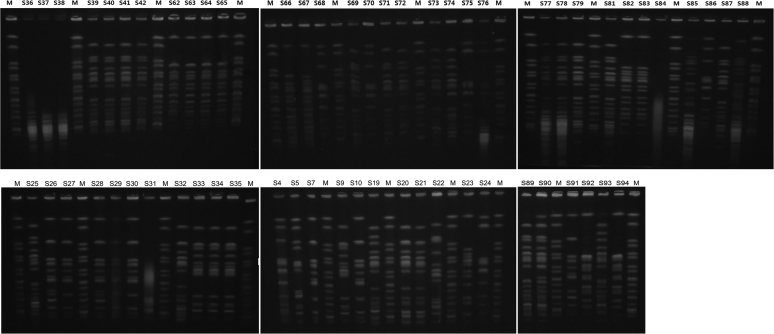
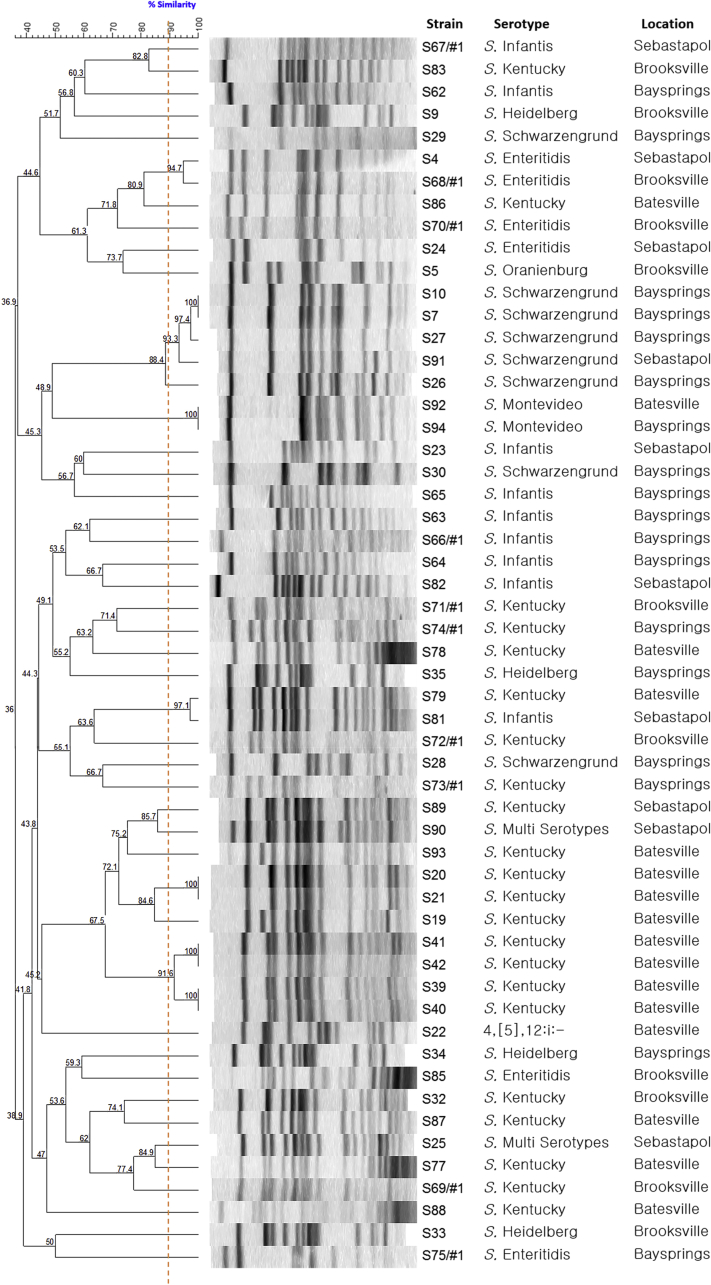
Salmonella is one of the common foodborne bacteria, causing 80.3 million illnesses every year worldwide. This study was conducted to isolate and identify Salmonella enterica serovars from poultry samples responsible for causing foodborne poisoning in the Mississippi area, United States. A total of 55 S. enterica serovars-Enteritidis (6), Oranienburg (1), Schwarzengrund (8), Heidelberg (4), Kentucky (22), 4, [5], 12:i:- (1), Montevideo (2), Infantis (9), and multi serotypes (2)-were isolated from approximately 110 poultry samples. Through pulsed-field gel electrophoresis (PFGE) analysis, 8 to 13 bands were obtained. The profiles showed >90% similarity in strains within the same type. Consequently, PFGE could be a useful tool to determine chromosomal similarity (clonality of strains) that can be used to trace down epidemiologic sources and geographical origins of Salmonella.
沙门氏菌是常见的食源性细菌之一,每年在全球导致 8030 万人患病。本研究旨在从美国密西西比地区引起食源性中毒的家禽样本中分离和鉴定沙门氏菌肠炎血清型。从大约 110 个家禽样本中分离出了 55 株沙门氏菌肠炎血清型-肠炎(6)、奥伦堡(1)、施瓦曾贝格(8)、海德堡(4)、肯塔基(22)、4、[5]、12:i:-(1)、蒙特维多(2)、婴儿型(9)和多血清型(2)-。通过脉冲场凝胶电泳(PFGE)分析,获得了 8 到 13 条带。图谱显示同一类型内菌株的相似性>90%。因此,PFGE 可以作为一种有用的工具来确定染色体相似性(菌株的克隆性),这可以用于追踪沙门氏菌的流行病学来源和地理起源。