Bourgeois Thibaut, Jalil Antoine, Thomas Charles, Magnani Charlène, Le Guern Naig, Gautier Thomas, Pais de Barros Jean-Paul, Bergas Victoria, Choubley Hélène, Mazzeo Loïc, Menegaut Louise, Josiane Lebrun Lorène, Van Dongen Kévin, Xolin Marion, Jourdan Tony, Buch Chloé, Labbé Jérome, Saas Philippe, Lagrost Laurent, Masson David, Grober Jacques
Univ. Bourgogne Franche-Comté, LNC UMR12131, Dijon, France; INSERM, LNC UMR 1231, Dijon, France; FCS Bourgogne Franche-Comté, LipSTIC LabEx, Dijon, France.
Univ. Bourgogne Franche-Comté, LNC UMR12131, Dijon, France; INSERM, LNC UMR 1231, Dijon, France; FCS Bourgogne Franche-Comté, LipSTIC LabEx, Dijon, France; Lipidomic analytic plate-forme, Univ. Bourgogne Franche-Comté, Batiment B3, Bvd Maréchal de Lattre de Tassigny, Dijon, France.
J Lipid Res. 2021;62:100013. doi: 10.1194/jlr.RA120000737. Epub 2020 Dec 17.
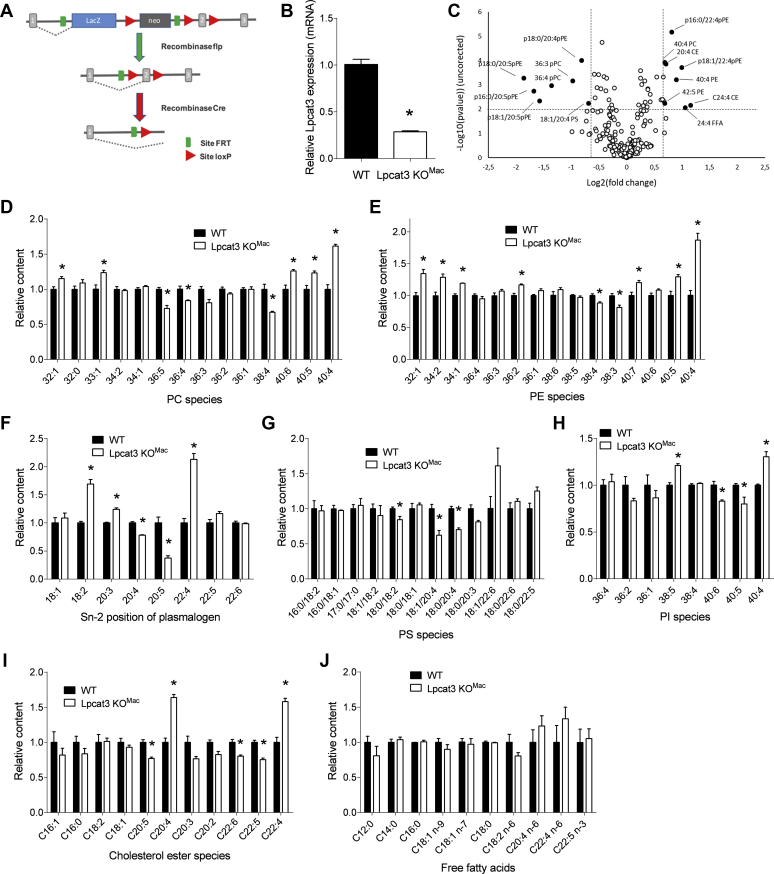
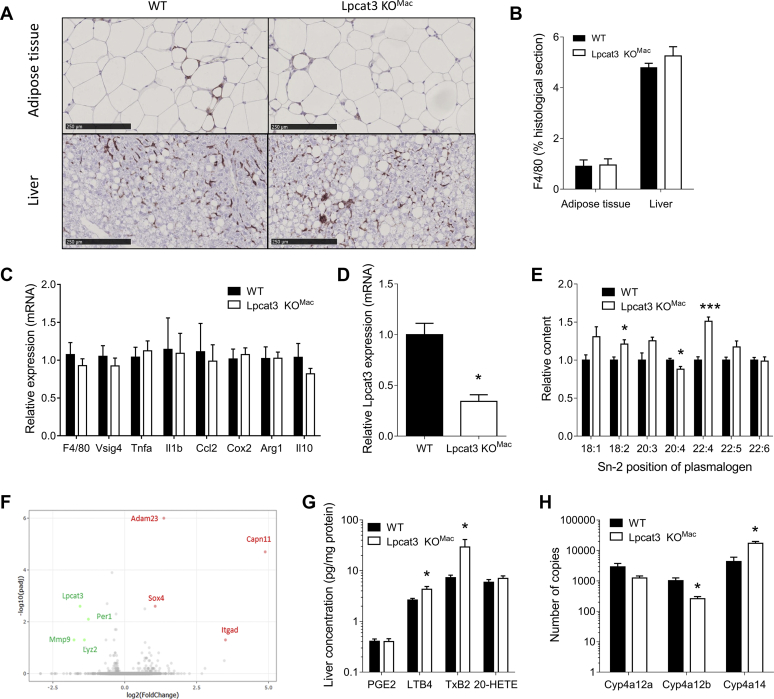
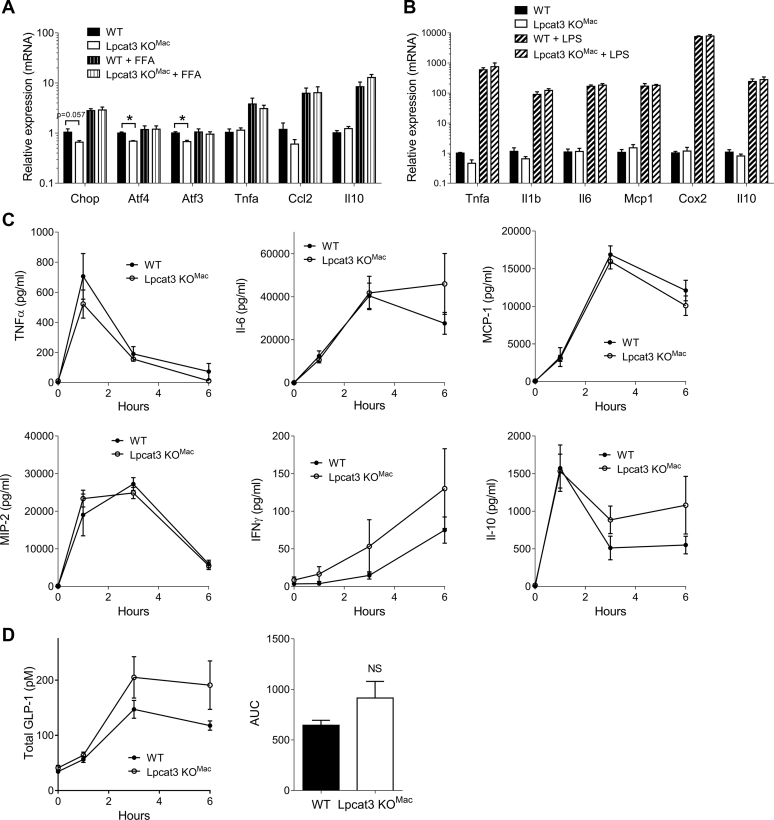
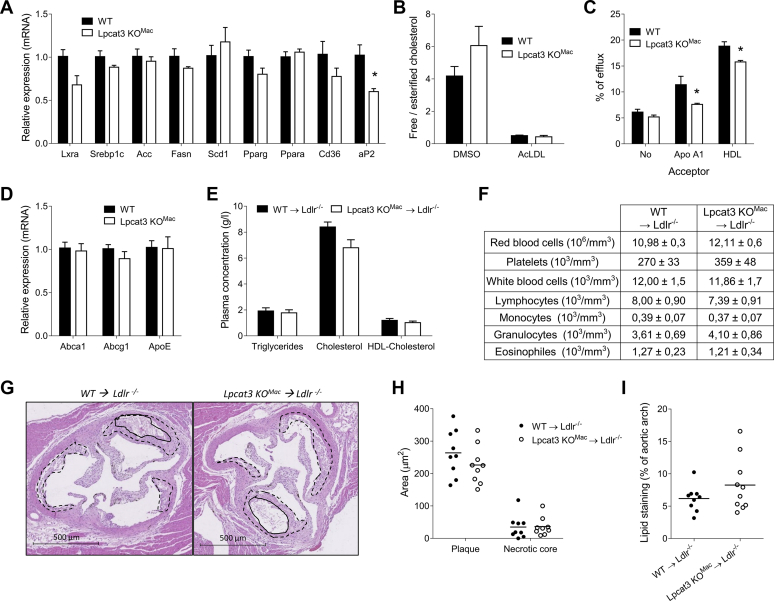
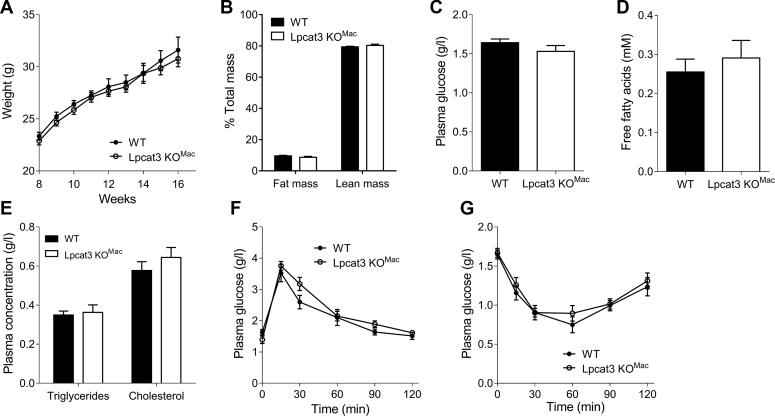
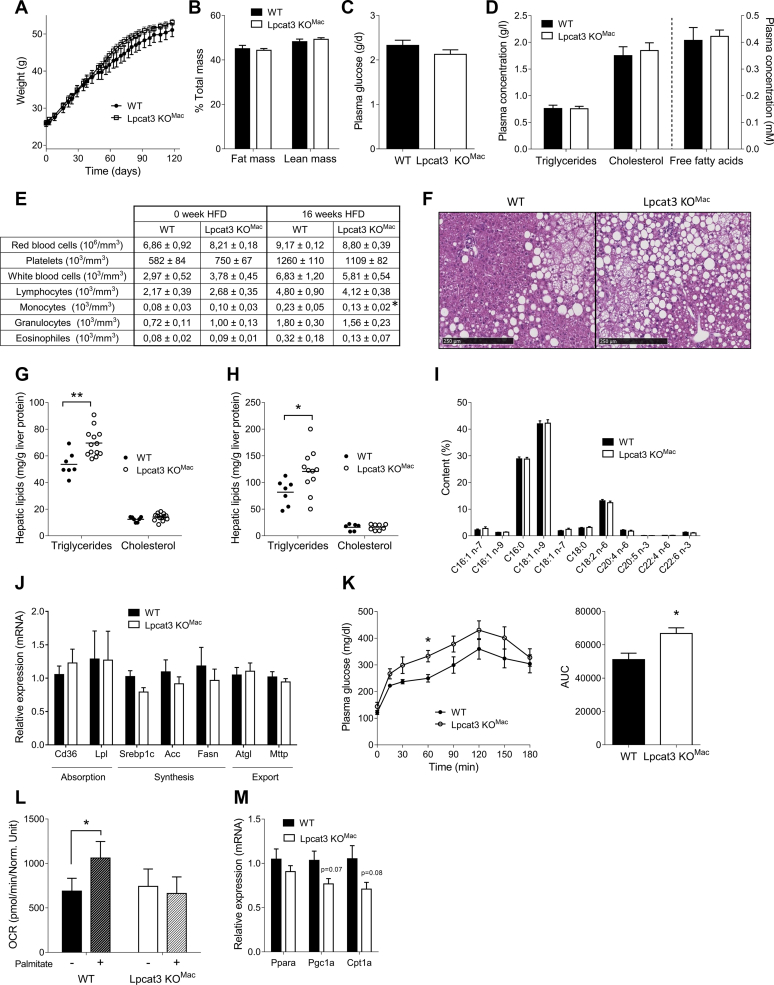
Recent studies have highlighted an important role for lysophosphatidylcholine acyltransferase 3 (LPCAT3) in controlling the PUFA composition of cell membranes in the liver and intestine. In these organs, LPCAT3 critically supports cell-membrane-associated processes such as lipid absorption or lipoprotein secretion. However, the role of LPCAT3 in macrophages remains controversial. Here, we investigated LPCAT3's role in macrophages both in vitro and in vivo in mice with atherosclerosis and obesity. To accomplish this, we used the LysMCre strategy to develop a mouse model with conditional Lpcat3 deficiency in myeloid cells (Lpcat3KO). We observed that partial Lpcat3 deficiency (approximately 75% reduction) in macrophages alters the PUFA composition of all phospholipid (PL) subclasses, including phosphatidylinositols and phosphatidylserines. A reduced incorporation of C20 PUFAs (mainly arachidonic acid [AA]) into PLs was associated with a redistribution of these FAs toward other cellular lipids such as cholesteryl esters. Lpcat3 deficiency had no obvious impact on macrophage inflammatory response or endoplasmic reticulum (ER) stress; however, Lpcat3KO macrophages exhibited a reduction in cholesterol efflux in vitro. In vivo, myeloid Lpcat3 deficiency did not affect atherosclerosis development in LDL receptor deficient mouse (Ldlr) mice. Lpcat3KO mice on a high-fat diet displayed a mild increase in hepatic steatosis associated with alterations in several liver metabolic pathways and in liver eicosanoid composition. We conclude that alterations in AA metabolism along with myeloid Lpcat3 deficiency may secondarily affect AA homeostasis in the whole liver, leading to metabolic disorders and triglyceride accumulation.
近期研究突显了溶血磷脂酰胆碱酰基转移酶3(LPCAT3)在控制肝脏和肠道细胞膜多不饱和脂肪酸(PUFA)组成方面的重要作用。在这些器官中,LPCAT3对诸如脂质吸收或脂蛋白分泌等细胞膜相关过程至关重要。然而,LPCAT3在巨噬细胞中的作用仍存在争议。在此,我们在患有动脉粥样硬化和肥胖症的小鼠体内及体外研究了LPCAT3在巨噬细胞中的作用。为此,我们采用LysMCre策略构建了一种在髓系细胞中条件性Lpcat3基因敲除的小鼠模型(Lpcat3KO)。我们观察到巨噬细胞中Lpcat3部分缺失(约减少75%)会改变所有磷脂(PL)亚类的PUFA组成,包括磷脂酰肌醇和磷脂酰丝氨酸。C20多不饱和脂肪酸(主要是花生四烯酸[AA])掺入PL减少与这些脂肪酸向其他细胞脂质如胆固醇酯的重新分布有关。Lpcat3缺失对巨噬细胞炎症反应或内质网(ER)应激没有明显影响;然而,Lpcat3KO巨噬细胞在体外胆固醇流出减少。在体内,髓系Lpcat3缺失不影响低密度脂蛋白受体缺陷小鼠(Ldlr)的动脉粥样硬化发展。高脂饮食的Lpcat3KO小鼠肝脂肪变性轻度增加,伴有几种肝脏代谢途径和肝脏类花生酸组成的改变。我们得出结论认为,AA代谢改变以及髓系Lpcat3缺失可能继发影响整个肝脏的AA稳态,导致代谢紊乱和甘油三酯蓄积。