Hu Jielun, Zhang Lin, Lin Winnie, Tang Whitney, Chan Francis K L, Ng Siew C
Center for Gut Microbiota Research, Department of Medicine and Therapeutics, The Chinese University of Hong Kong, Hong Kong, China.
Institute of Digestive Disease, State Key Laboratory of Digestive Disease, LKS Institute of Health Science, The Chinese University of Hong Kong, Hong Kong, China.
Trends Food Sci Technol. 2021 Feb;108:187-196. doi: 10.1016/j.tifs.2020.12.009. Epub 2020 Dec 14.
Patients with COVID-19 caused by SARS-CoV-2 exhibit diverse clinical manifestations and severity including enteric involvement. Commensal gut bacteria can contribute to defense against potential pathogens by promoting beneficial immune interactions. Interventions targeting the gut microbiome may have systemic anti-viral effects in SARS-CoV-2 infection.
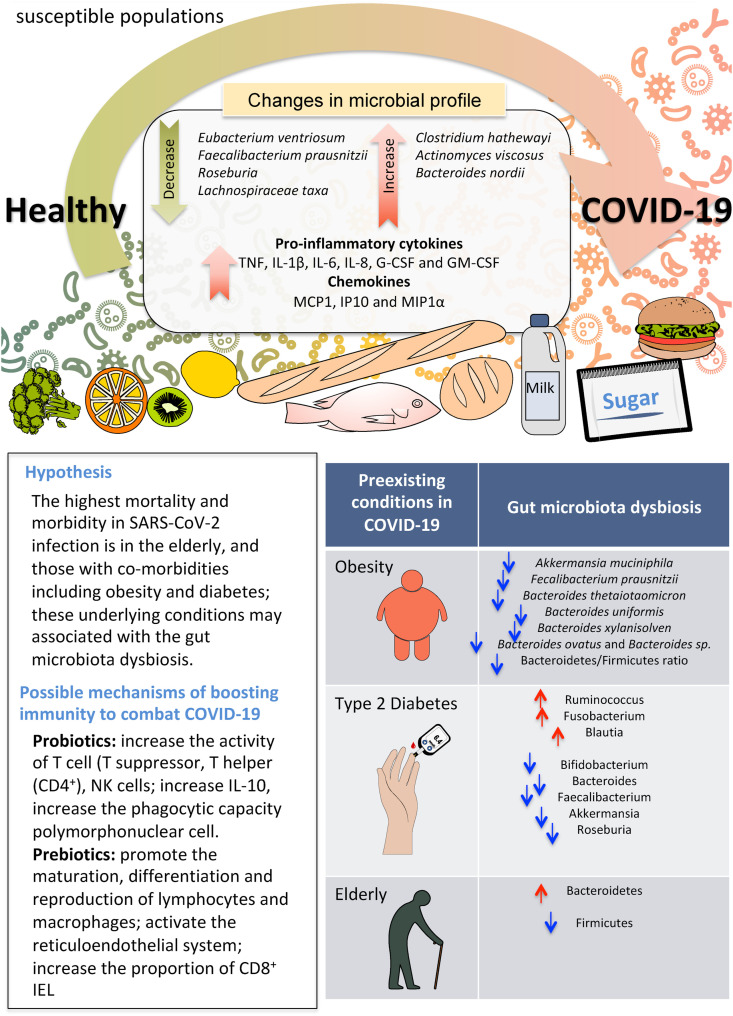
To summarise alterations of gut microbiota in patients with COVID-19 including impact of specific bacteria on disease severity, discuss current knowledge on the role of probiotics, prebiotics and dietary approaches including vitamin D in preventing and reducing disease susceptibility and review clinical studies using probiotics to target coronavirus. A literature review on SARS-CoV-2, COVID-19, gut microbiome and immunity was undertaken and relevant literature was summarised and critically examined.
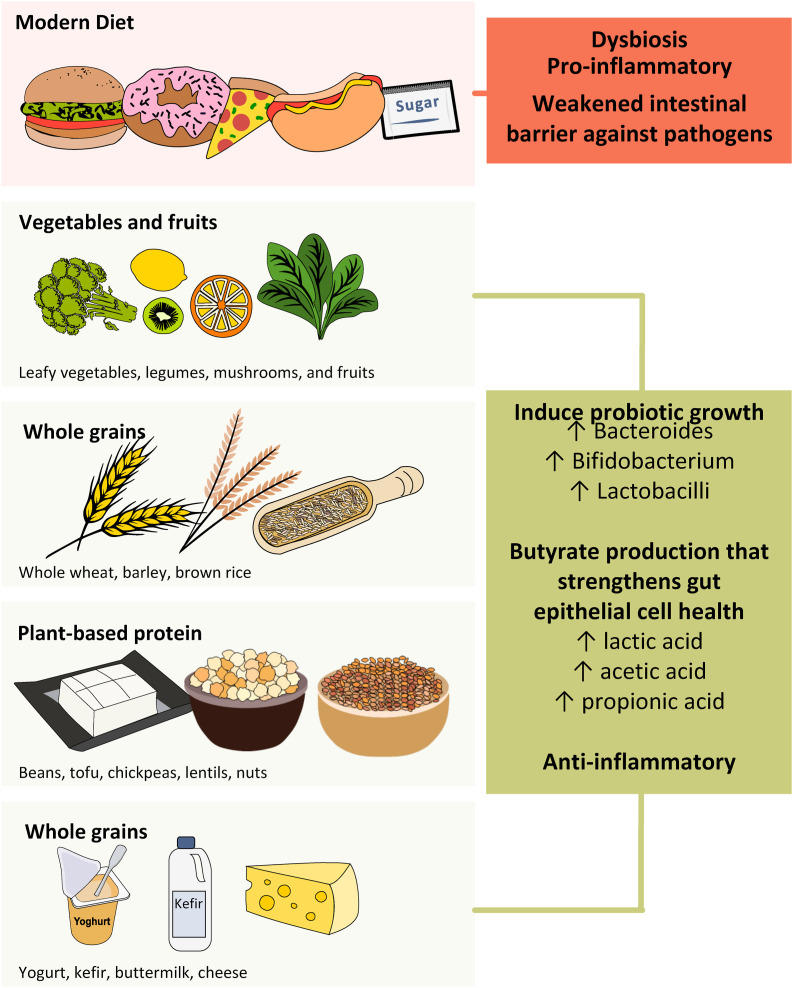
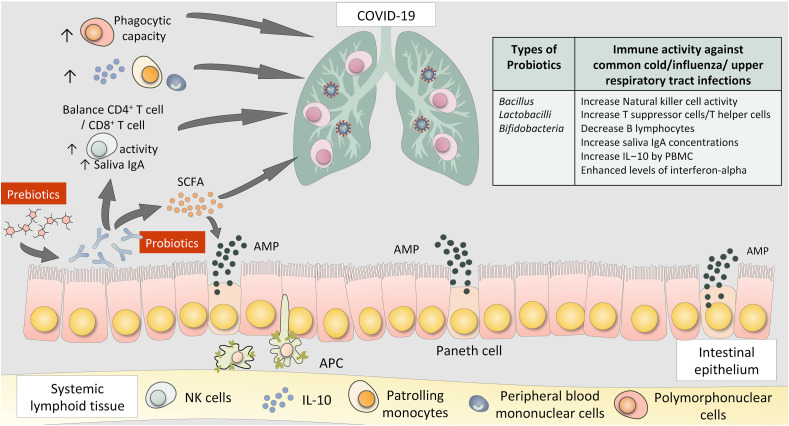
Integrity of gut microbiome was perturbed in SARS-CoV-2 infections and associated with disease severity. Poor prognosis in SARS-CoV-2 infection was observed in subjects with underlying co-morbidities who had increased gut permeability and reduced gut microbiome diversity. Dietary microbes, including probiotics or selected prebiotics of Chinese origin, had anti-viral effects against other forms of coronavirus, and could positively impact host immune functions during SARS-CoV-2 infection. Numerous studies are investigating the role of probiotics in preventing and reducing susceptibility to SARS-CoV-2 infection in healthcare workers, household contacts and affected patients. An approach to strengthen intestinal barrier and lower pro-inflammatory states by adopting a more diversified diet during COVID-19 pandemic.SARS-CoV-2 infection is associated with immune dysfunction and gut microbiota alterations. Delineating mechanisms of probiotics, prebiotics and diet with anti-SARS-CoV-2 immunity present opportunities for discovery of microbial therapeutics to prevent and treat COVID-19.
由严重急性呼吸综合征冠状病毒2(SARS-CoV-2)引起的2019冠状病毒病(COVID-19)患者表现出多种临床表现和严重程度,包括肠道受累。共生肠道细菌可通过促进有益的免疫相互作用来抵御潜在病原体。针对肠道微生物群的干预措施可能对SARS-CoV-2感染具有全身抗病毒作用。
总结COVID-19患者肠道微生物群的变化,包括特定细菌对疾病严重程度的影响,讨论益生菌、益生元以及包括维生素D在内的饮食方法在预防和降低疾病易感性方面的现有知识,并综述使用益生菌针对冠状病毒的临床研究。对SARS-CoV-2、COVID-19、肠道微生物群和免疫进行了文献综述,并对相关文献进行了总结和批判性审查。
SARS-CoV-2感染会扰乱肠道微生物群的完整性,并与疾病严重程度相关。在患有基础合并症且肠道通透性增加和肠道微生物群多样性降低的受试者中,观察到SARS-CoV-2感染的预后较差。饮食微生物,包括益生菌或中国来源的特定益生元,对其他形式的冠状病毒具有抗病毒作用,并可能在SARS-CoV-2感染期间对宿主免疫功能产生积极影响。许多研究正在调查益生菌在预防和降低医护人员、家庭接触者和受影响患者对SARS-CoV-2感染易感性方面的作用。在COVID-(此处原文有误,推测为COVID-19)大流行期间,通过采用更多样化的饮食来加强肠道屏障和降低促炎状态的方法。SARS-CoV-2感染与免疫功能障碍和肠道微生物群改变有关。阐明益生菌、益生元和饮食对SARS-CoV-2免疫的机制,为发现预防和治疗COVID-19的微生物疗法提供了机会。