Torres Nazareth, Yu Runze, Kurtural Sahap Kaan
Department of Viticulture and Enology, University of California, Davis, Davis, CA, United States.
Front Plant Sci. 2021 Jan 14;11:622209. doi: 10.3389/fpls.2020.622209. eCollection 2020.
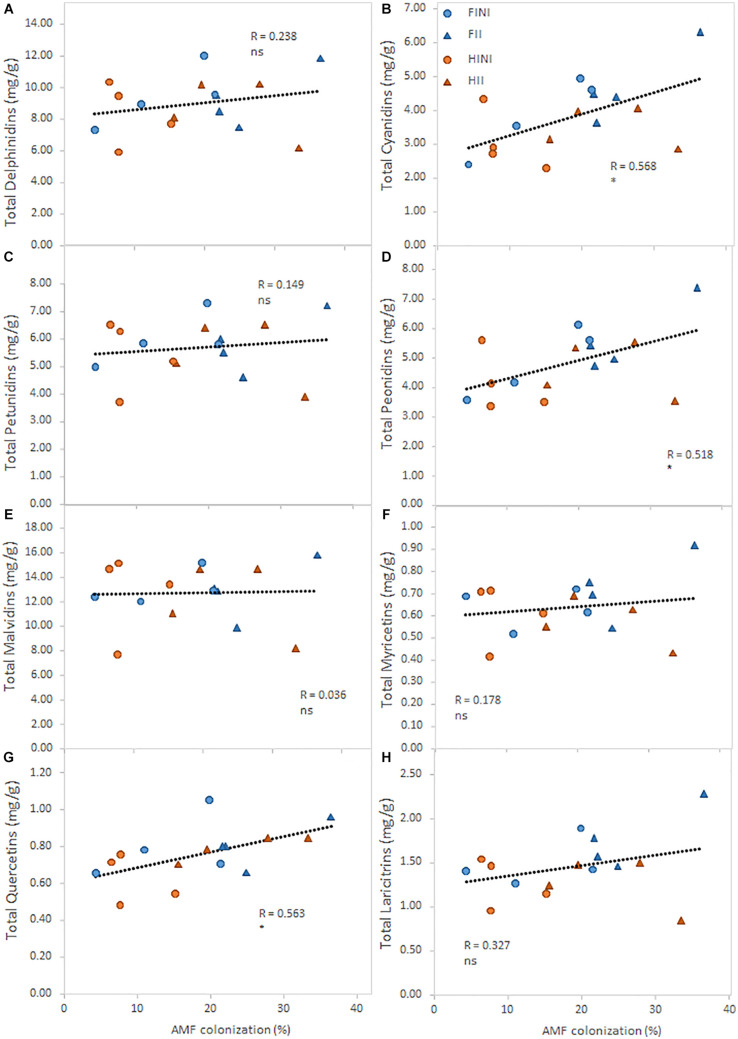
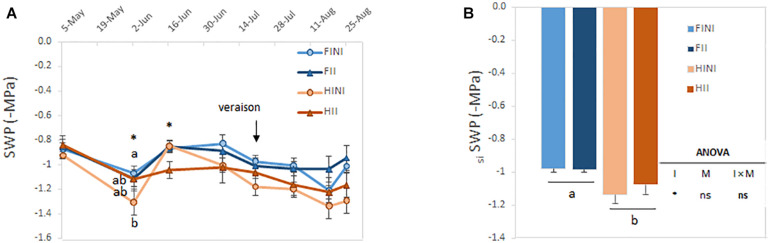
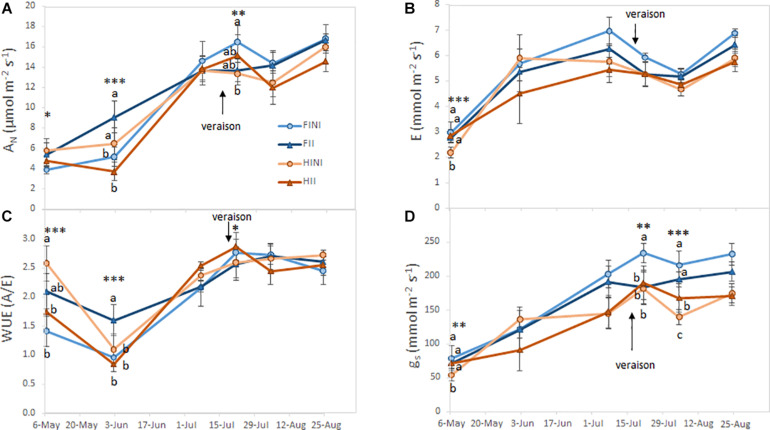
Several factors may affect the success of a replanting vineyard. Given the current environmental conditions, an optimized irrigation schedule would still be one of the most desirable tools to improve crop productivity and fruit quality. On the other hand, the symbiosis of grapevines with arbuscular mycorrhizal fungi (AMF) is a key component of the vineyard production systems improving the vine growth, nutrient uptake, and berry quality. The aim of this study was to characterize the response of Merlot grapevines to AMF inoculation and two different irrigation amounts in their first productive year. The experiment was conducted on 2-year Merlot grapevines inoculated with AMF (I) or not-inoculated (NI) and subjected to two irrigation amounts, full irrigated (FI), where the amount of water was enough to maintain expansive growth and half irrigated (HI) where plants received the half of the amount of water of FI plants. Water status, gas exchange parameters, growth, mineral content, berry composition, and mycorrhizal colonization were monitored through the season. AMF inoculation improved the grapevine vegetative growth, water status, and photosynthetic activity, especially when vines were subjected to HI irrigation; however, no effect was observed on the leaf mineral content, must pH, total soluble solids, or total acidity. The main effects were observed on the flavonoid composition of berry skins at harvest. Irrigation amounts and mycorrhizal inoculation modified cyanidin and peonidin derivatives whereas flavonol composition was mainly affected by irrigation treatments. A strong relationship between the mycorrhizal colonization rate of roots and total quercetins, cyanidins, and peonidins was found. Findings support the use of a mycorrhizal inoculum and a better water management in a hyper-arid growing season; however, these results may be affected by edaphoclimatic characteristics and living microbiota in vineyard soils, which should be taken into account before making the decision of inoculating the vineyard.
有几个因素可能会影响重新种植葡萄园的成功。鉴于当前的环境条件,优化的灌溉计划仍将是提高作物产量和果实品质最理想的工具之一。另一方面,葡萄与丛枝菌根真菌(AMF)的共生是葡萄园生产系统的关键组成部分,可改善葡萄生长、养分吸收和浆果品质。本研究的目的是在梅洛葡萄的第一个生产年份,表征其对AMF接种和两种不同灌溉量的响应。该实验在接种AMF(I)或未接种(NI)的2年生梅洛葡萄上进行,并设置了两种灌溉量,即充分灌溉(FI),水量足以维持旺盛生长,以及半灌溉(HI),植株接受的水量为FI植株的一半。在整个生长季节监测水分状况、气体交换参数、生长、矿物质含量、浆果成分和菌根定殖情况。AMF接种改善了葡萄的营养生长、水分状况和光合活性,尤其是当葡萄藤进行HI灌溉时;然而,对叶片矿物质含量、葡萄汁pH值、总可溶性固形物或总酸度没有影响。收获时主要观察到对浆果表皮类黄酮成分的影响。灌溉量和菌根接种改变了花青素和芍药色素衍生物,而黄酮醇成分主要受灌溉处理的影响。发现根系菌根定殖率与总槲皮素、花青素和芍药色素之间存在很强的相关性。研究结果支持在超干旱生长季节使用菌根接种剂和更好的水分管理;然而,这些结果可能会受到葡萄园土壤的土壤气候特征和活微生物群的影响,在决定是否对葡萄园进行接种之前应予以考虑。