Simpson Rachel, Cooper David M L, Swanston Treena, Coulthard Ian, Varney Tamara L
Department of Archaeology and Anthropology, University of Saskatchewan, Saskatoon, SK Canada.
Present Address: Department of Anthropology, University of Alberta, Edmonton, AB Canada.
Archaeol Anthropol Sci. 2021;13(1):24. doi: 10.1007/s12520-020-01262-4. Epub 2021 Jan 15.
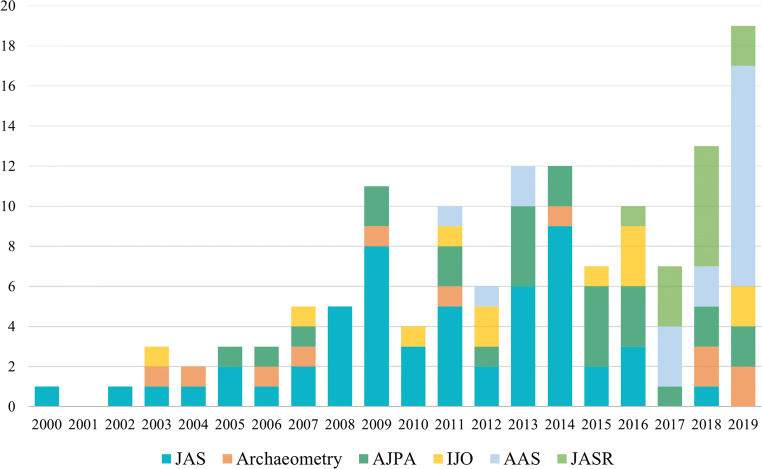
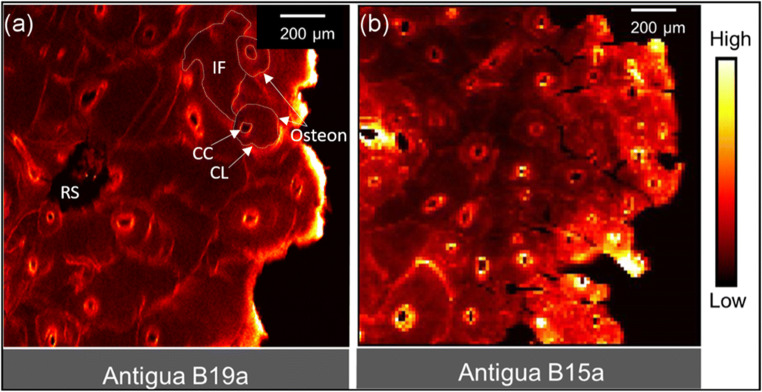
Given their strong affinity for the skeleton, trace elements are often stored in bones and teeth long term. Diet, geography, health, disease, social status, activity, and occupation are some factors which may cause differential exposure to, and uptake of, trace elements, theoretically introducing variability in their concentrations and/or ratios in the skeleton. Trace element analysis of bioarchaeological remains has the potential, therefore, to provide rich insights into past human lifeways. This review provides a historical overview of bioarchaeological trace element analysis and comments on the current state of the discipline by highlighting approaches with growing momentum. Popularity for the discipline surged following preliminary studies in the 1960s to 1970s that demonstrated the utility of strontium (Sr) as a dietary indicator. During the 1980s, Sr/Ca ratio and multi-element studies were commonplace in bioarchaeology, linking trace elements with dietary phenomena. Interest in using trace elements for bioarchaeological inferences waned following a period of critiques in the late 1980s to 1990s that argued the discipline failed to account for diagenesis, simplified complex element uptake and regulation processes, and used several unsuitable elements for palaeodietary reconstruction (e.g. those under homeostatic regulation, those without a strong affinity for the skeleton). In the twenty-first century, trace element analyses have been primarily restricted to Sr and lead (Pb) isotope analysis and the study of toxic trace elements, though small pockets of bioarchaeology have continued to analyse multiple elements. Techniques such as micro-sampling, element mapping, and non-traditional stable isotope analysis have provided novel insights which hold the promise of helping to overcome limitations faced by the discipline.
The online version contains supplementary material available at 10.1007/s12520-020-01262-4.
鉴于微量元素对骨骼具有很强的亲和力,它们常常长期储存在骨骼和牙齿中。饮食、地理位置、健康状况、疾病、社会地位、活动和职业是可能导致微量元素接触和摄取存在差异的一些因素,理论上会使骨骼中微量元素的浓度和/或比例产生变化。因此,对生物考古遗骸进行微量元素分析有潜力为了解过去人类的生活方式提供丰富的见解。本综述对生物考古微量元素分析进行了历史概述,并通过强调发展势头渐强的方法来评论该学科的当前状况。在20世纪60年代至70年代的初步研究表明锶(Sr)作为饮食指标的效用后,该学科受到了广泛关注。在20世纪80年代,Sr/Ca比值和多元素研究在生物考古学中很常见,将微量元素与饮食现象联系起来。在20世纪80年代末至90年代的一段时间批评之后,利用微量元素进行生物考古推断的兴趣有所减弱,这些批评认为该学科没有考虑成岩作用,简化了复杂的元素摄取和调节过程,并且使用了几种不适用于古饮食重建的元素(例如那些处于稳态调节之下的元素、那些对骨骼没有很强亲和力的元素)。在21世纪,微量元素分析主要限于Sr和铅(Pb)同位素分析以及有毒微量元素的研究,尽管有一小部分生物考古学仍在继续分析多种元素。微采样、元素绘图和非传统稳定同位素分析等技术提供了新的见解,有望帮助克服该学科面临的局限性。
在线版本包含可在10.1007/s12520-020-01262-4获取的补充材料。