Department of Epidemiology, Tulane University School of Public Health and Tropical Medicine, 1440 Canal St, Suite 2000, New Orleans, LA, 70112, USA.
Department of Medicine, Tulane University School of Medicine, New Orleans, LA, USA.
Trials. 2021 Feb 1;22(1):108. doi: 10.1186/s13063-020-05001-x.
Type 2 diabetes mellitus (T2DM) is a major cause of morbidity and mortality globally. Strong evidence supports the importance of diet and other lifestyle factors in preventing T2DM. Among individuals with T2DM, low-carbohydrate diets lead to decreases in hemoglobin A1c (HbA1c). However, research on the effects of low-carbohydrate diets on glycemic outcomes among individuals not currently on glucose-lowering medications who have elevated HbA1c is limited.
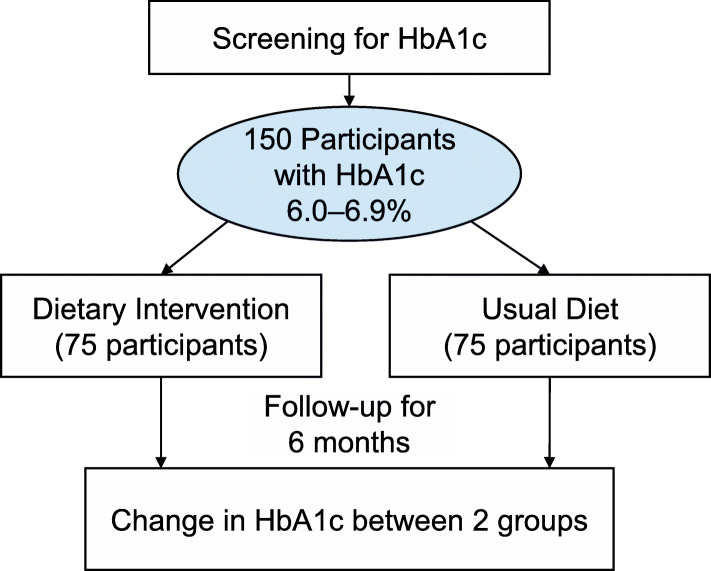
The objective of this randomized controlled trial is to study the effect of a healthy low-carbohydrate diet achieved through behavioral intervention and key food supplementation compared with usual diet on HbA1c and other metabolic risk factors among individuals with HbA1c from 6.0 to 6.9% who are not on glucose-lowering medications. In this parallel trial, 150 participants will be randomized to the intervention or control group for 6 months. The healthy low-carbohydrate diet target is < 40 g of net carbohydrates during the first 3 months and < 40 to 60 net grams for months 3 to 6. This diet is characterized by abundant unsaturated fat and protein, high-fiber foods such as non-starchy vegetables and nuts, and minimal refined carbohydrates. The primary outcome is the difference in HbA1c change from baseline to 6 months in the intervention compared with usual diet group. Secondary outcomes include differences between groups in 6-month changes in fasting glucose, systolic blood pressure, total-to-high-density lipoprotein (HDL) cholesterol ratio, and body weight. Exploratory outcomes include differences in 6-month changes in fasting insulin, homeostasis model assessment of insulin resistance, diastolic blood pressure, waist circumference, and 10-year cardiovascular disease risk. An intention-to-treat analysis will be used.
We expect that the results from this study will lead to new approaches for developing and implementing dietary approaches (other than the most commonly used reduced fat diet) that will substantially reduce risk of cardiometabolic disease among adults with or at high risk of T2DM. The study intervention involves behavioral counseling and promotes consumption of dietary components thought to reduce risk of cardiometabolic disease and has expected applicability in clinical practice.
ClinicalTrials.gov NCT03675360 . Registered on September 18, 2018 (prior to enrolment of the first participant).
2 型糖尿病(T2DM)是全球发病率和死亡率的主要原因。有强有力的证据表明饮食和其他生活方式因素对预防 T2DM 很重要。在患有 T2DM 的人群中,低碳水化合物饮食可降低血红蛋白 A1c(HbA1c)。然而,关于低碳水化合物饮食对尚未服用降血糖药物但 HbA1c 升高的个体的血糖结果的影响的研究是有限的。
本随机对照试验的目的是研究通过行为干预和关键食物补充实现的健康低碳水化合物饮食与常规饮食相比,对 HbA1c 及其他代谢风险因素的影响,纳入的研究对象为未服用降血糖药物但 HbA1c 为 6.0%至 6.9%的个体。在这项平行试验中,将 150 名参与者随机分为干预组或对照组,进行 6 个月的治疗。健康的低碳水化合物饮食目标是在最初的 3 个月内摄入<40 克净碳水化合物,在第 3 至 6 个月内摄入<40 至 60 克净碳水化合物。这种饮食的特点是富含不饱和脂肪和蛋白质、高纤维食物,如非淀粉类蔬菜和坚果,以及最低限度的精制碳水化合物。主要结局是与常规饮食相比,干预组在 6 个月时 HbA1c 从基线的变化差异。次要结局包括两组间 6 个月时空腹血糖、收缩压、总胆固醇与高密度脂蛋白(HDL)胆固醇比值和体重的变化差异。探索性结局包括 6 个月时空腹胰岛素、胰岛素抵抗评估模型(HOMA-IR)、舒张压、腰围和 10 年心血管疾病风险的变化差异。将采用意向治疗分析。
我们预计这项研究的结果将为开发和实施饮食方法(除了最常用的低脂饮食外)提供新的方法,这些方法将大大降低有或有 T2DM 高风险的成年人患心血管疾病的风险。该研究干预涉及行为咨询,并促进了被认为可降低心血管疾病风险的饮食成分的摄入,并且在临床实践中有预期的适用性。
ClinicalTrials.gov NCT03675360。于 2018 年 9 月 18 日注册(在首位参与者入组之前)。