School of Basic Medical Science, Key Laboratory of Combinatorial Biosynthesis and Drug Discovery of Ministry of Education, School of Pharmaceutical Sciences, Wuhan University, Wuhan, China; State Key Laboratory of Proteomics, Beijing Proteome Research Center, National Center for Protein Sciences (Beijing), Research Unit of Proteomics & Research and Development of New Drug of Chinese Academy of Medical Sciences, Beijing Institute of Lifeomics, Beijing, China.
State Key Laboratory of Proteomics, Beijing Proteome Research Center, National Center for Protein Sciences (Beijing), Research Unit of Proteomics & Research and Development of New Drug of Chinese Academy of Medical Sciences, Beijing Institute of Lifeomics, Beijing, China.
J Biol Chem. 2021 Jan-Jun;296:100348. doi: 10.1016/j.jbc.2021.100348. Epub 2021 Jan 29.
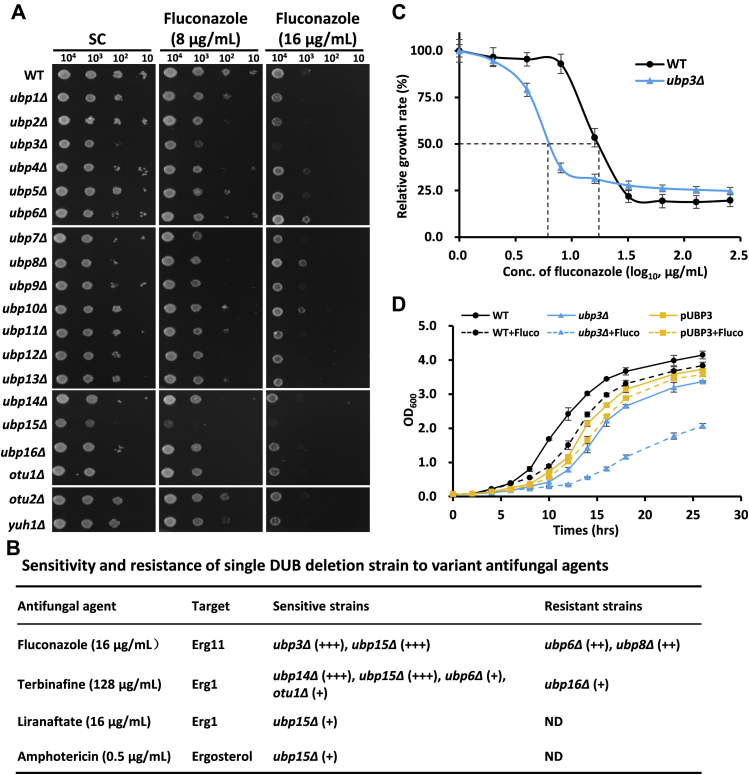
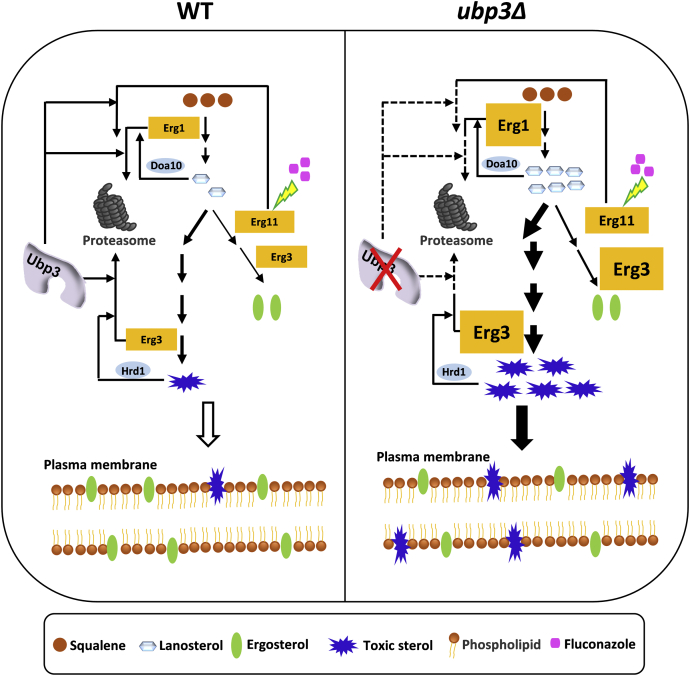
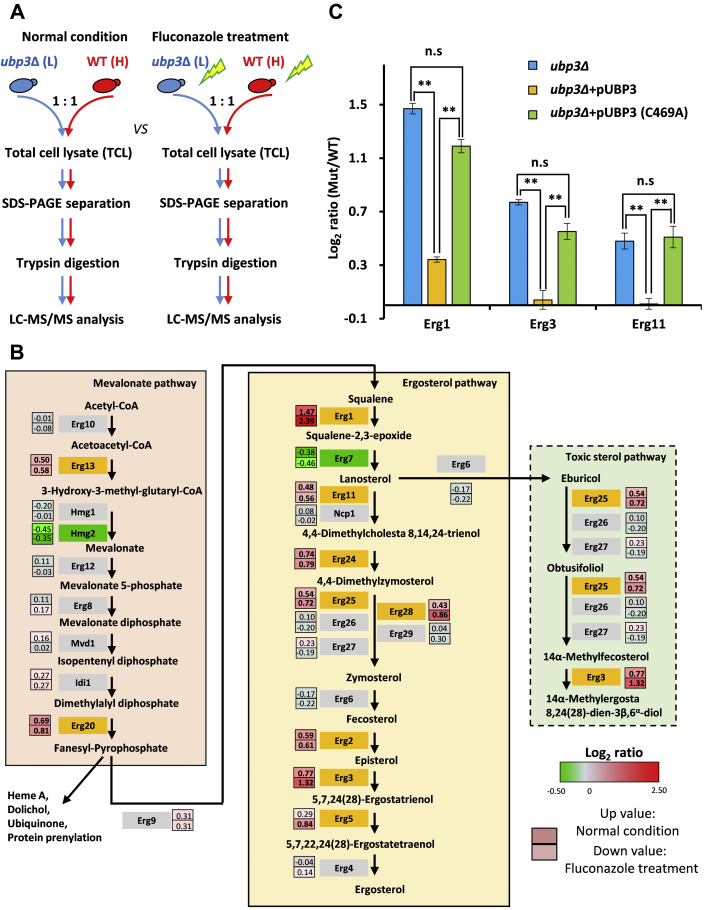
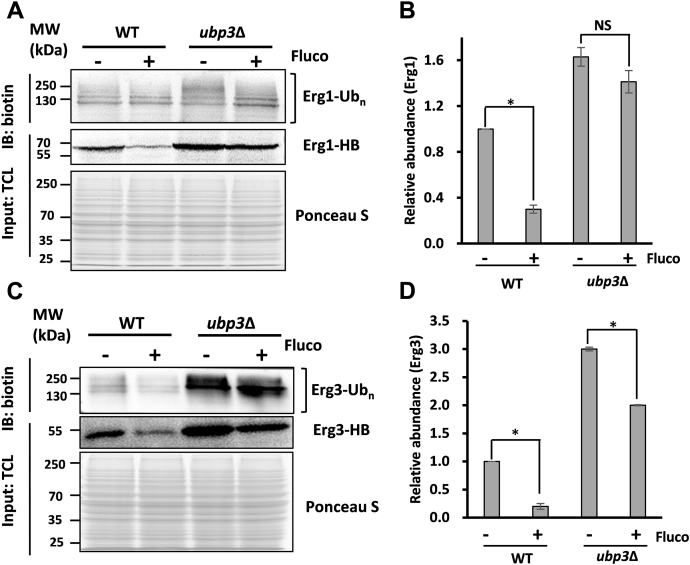
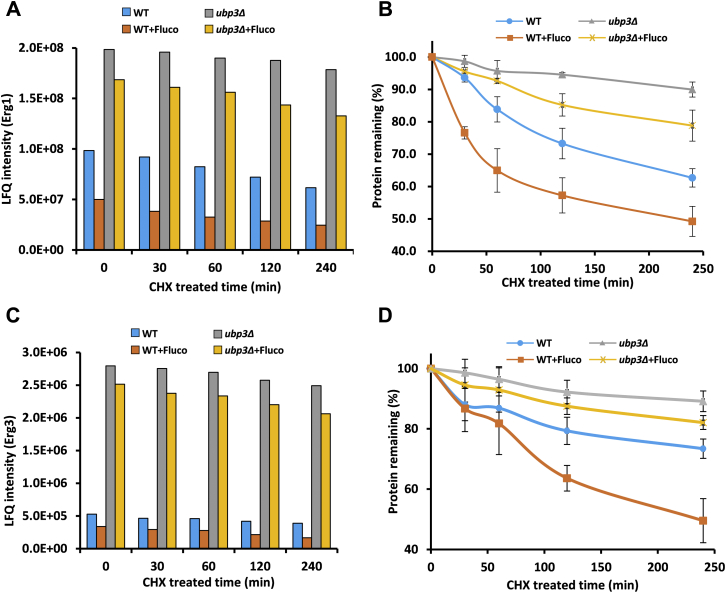
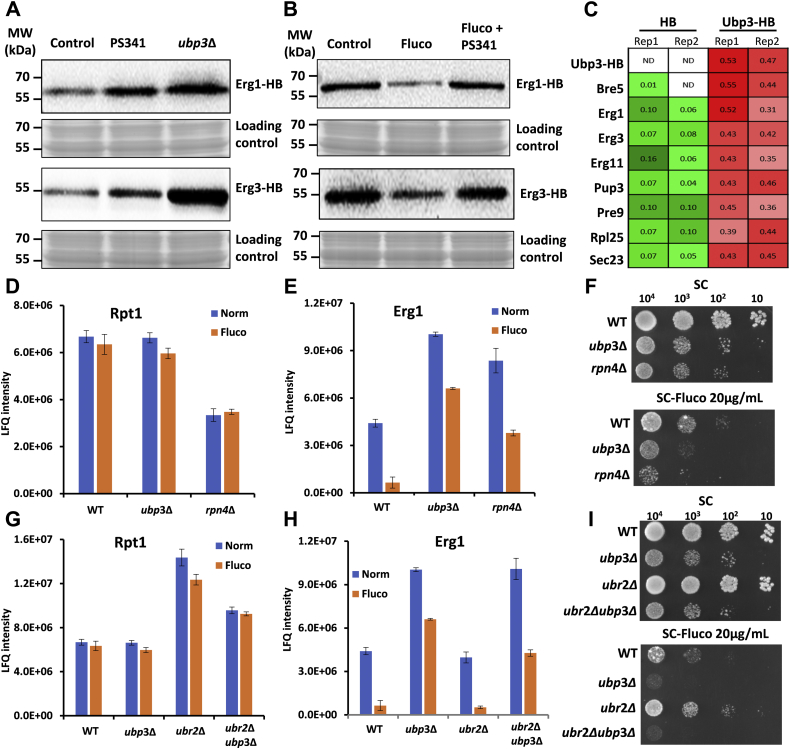
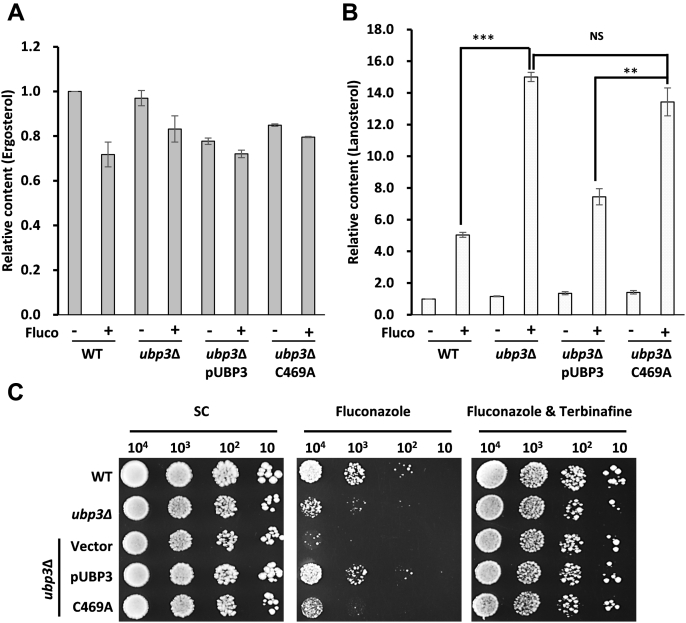
Sterol homeostasis is tightly controlled by molecules that are highly conserved from yeast to humans, the dysregulation of which plays critical roles in the development of antifungal resistance and various cardiovascular diseases. Previous studies have shown that sterol homeostasis is regulated by the ubiquitin-proteasome system. Two E3 ubiquitin ligases, Hrd1 and Doa10, are known to mediate the proteasomal degradation of 3-hydroxy-3-methylglutaryl-CoA reductase Hmg2 and squalene epoxidase Erg1 with accumulation of the toxic sterols in cells, but the deubiquitinases (DUBs) involved are unclear. Here, we screened for DUBs responsible for sterol homeostasis using yeast strains from a DUB-deletion library. The defective growth observed in ubp3-deleted (ubp3Δ) yeast upon fluconazole treatment suggests that lack of Ubp3 disrupts sterol homeostasis. Deep-coverage quantitative proteomics reveals that ergosterol biosynthesis is rerouted into a sterol pathway that generates toxic products in the absence of Ubp3. Further genetic and biochemical analysis indicated that Ubp3 enhances the proteasome's ability to degrade the ergosterol biosynthetic enzymes Erg1 and Erg3. The retardation of ergosterol enzyme degradation in the ubp3Δ strain resulted in the severe accumulation of the intermediate lanosterol and a branched toxic sterol, and ultimately disrupted sterol homeostasis and led to the fluconazole susceptibility. Our findings uncover a role for Ubp3 in sterol homeostasis and highlight its potential as a new antifungal target.
甾醇稳态受到高度保守的分子的严格控制,从酵母到人都是如此,其失调在抗真菌耐药性和各种心血管疾病的发展中起着关键作用。先前的研究表明,甾醇稳态受泛素-蛋白酶体系统调节。两种 E3 泛素连接酶 Hrd1 和 Doa10 被认为介导 3-羟-3-甲基戊二酰辅酶 A 还原酶 Hmg2 和角鲨烯环氧化酶 Erg1 的蛋白酶体降解,导致细胞中有毒甾醇积累,但涉及的去泛素酶(DUBs)尚不清楚。在这里,我们使用来自 DUB 缺失文库的酵母菌株筛选负责甾醇稳态的 DUBs。在氟康唑处理下,ubp3 缺失(ubp3Δ)酵母观察到的生长缺陷表明 Ubp3 的缺乏破坏了甾醇稳态。深度覆盖定量蛋白质组学揭示,在缺乏 Ubp3 的情况下,麦角甾醇生物合成被重新路由到产生有毒产物的甾醇途径中。进一步的遗传和生化分析表明,Ubp3 增强了蛋白酶体降解麦角甾醇生物合成酶 Erg1 和 Erg3 的能力。ubp3Δ 菌株中麦角甾醇酶降解的延迟导致中间羊毛甾醇和分支有毒甾醇的严重积累,最终破坏了甾醇稳态并导致氟康唑敏感性。我们的发现揭示了 Ubp3 在甾醇稳态中的作用,并强调了它作为一种新的抗真菌靶标的潜力。