Guangdong Provincial Key Laboratory of Food Quality and Safety/ Guangdong Laboratory of Lingnan Modern Agriculture, South China Agricultural University, Guangzhou 510642, China.
Guangzhou Institute for Food Control, Guangzhou 510410, China.
J Hazard Mater. 2021 Mar 15;406:124288. doi: 10.1016/j.jhazmat.2020.124288. Epub 2020 Oct 15.
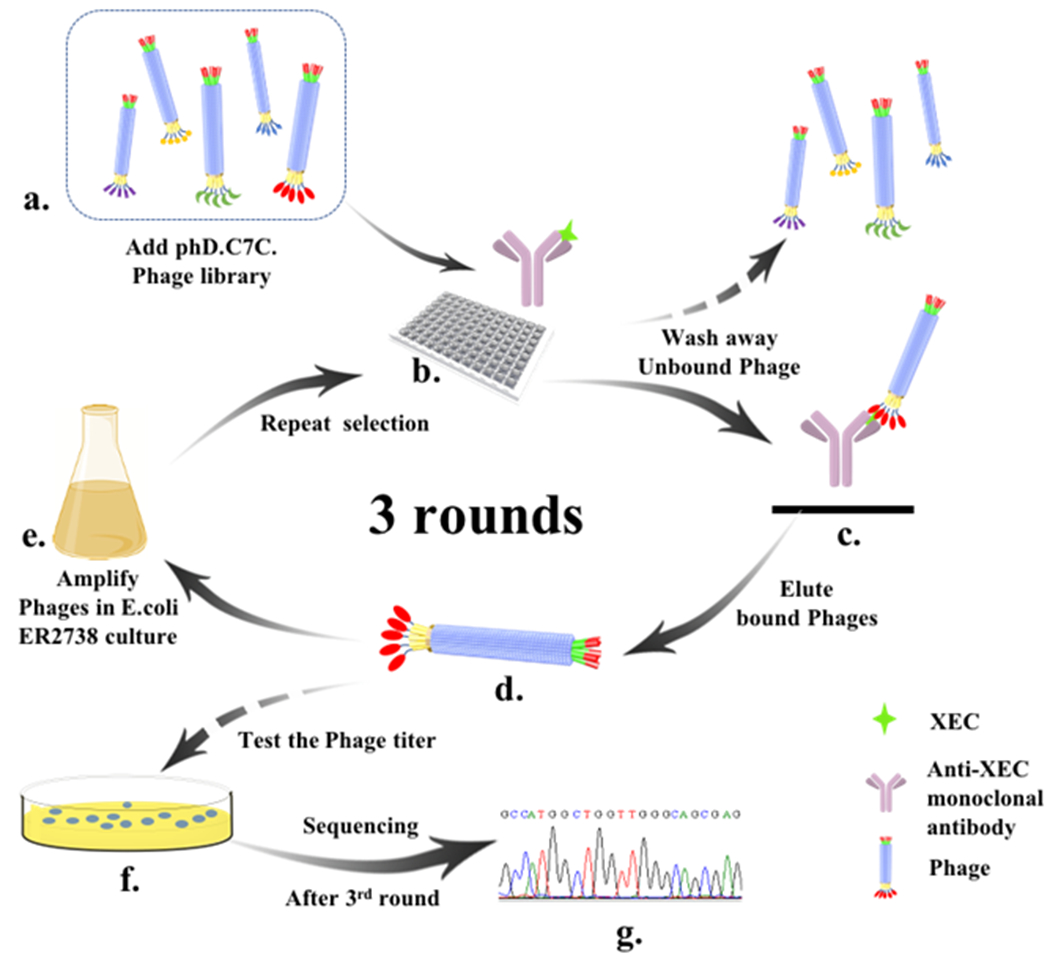
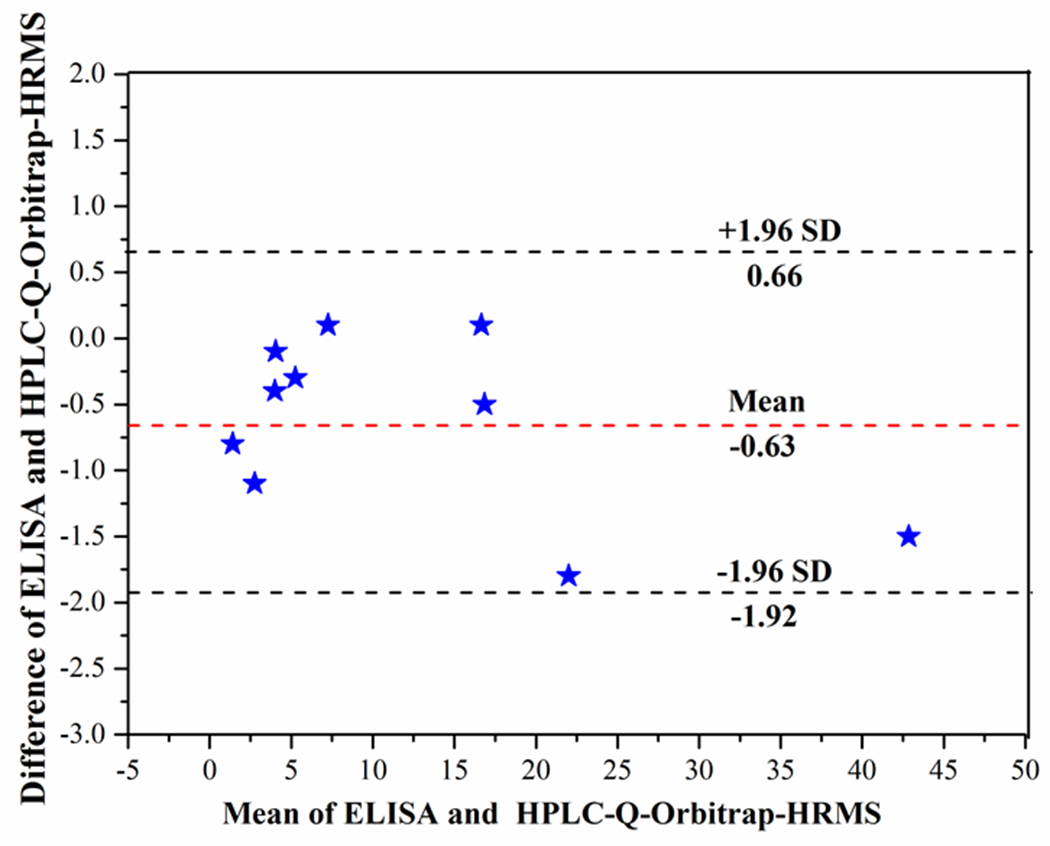
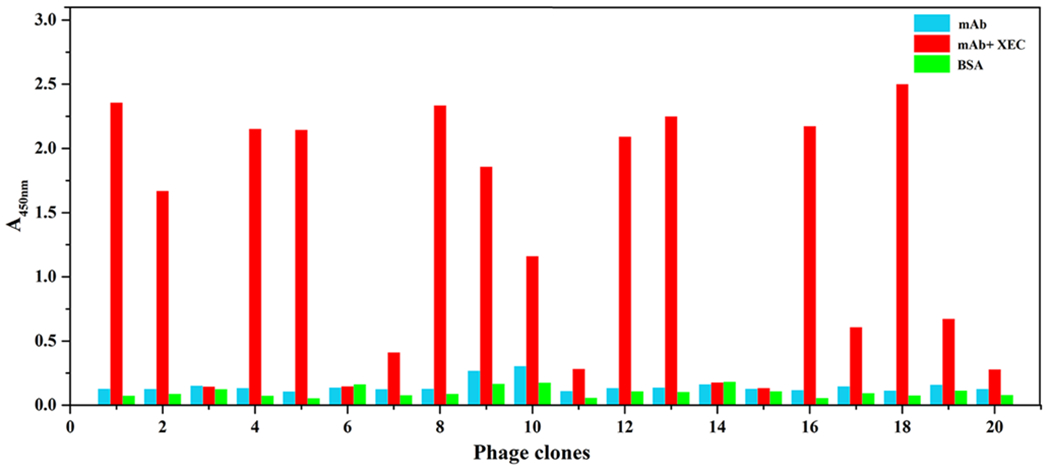
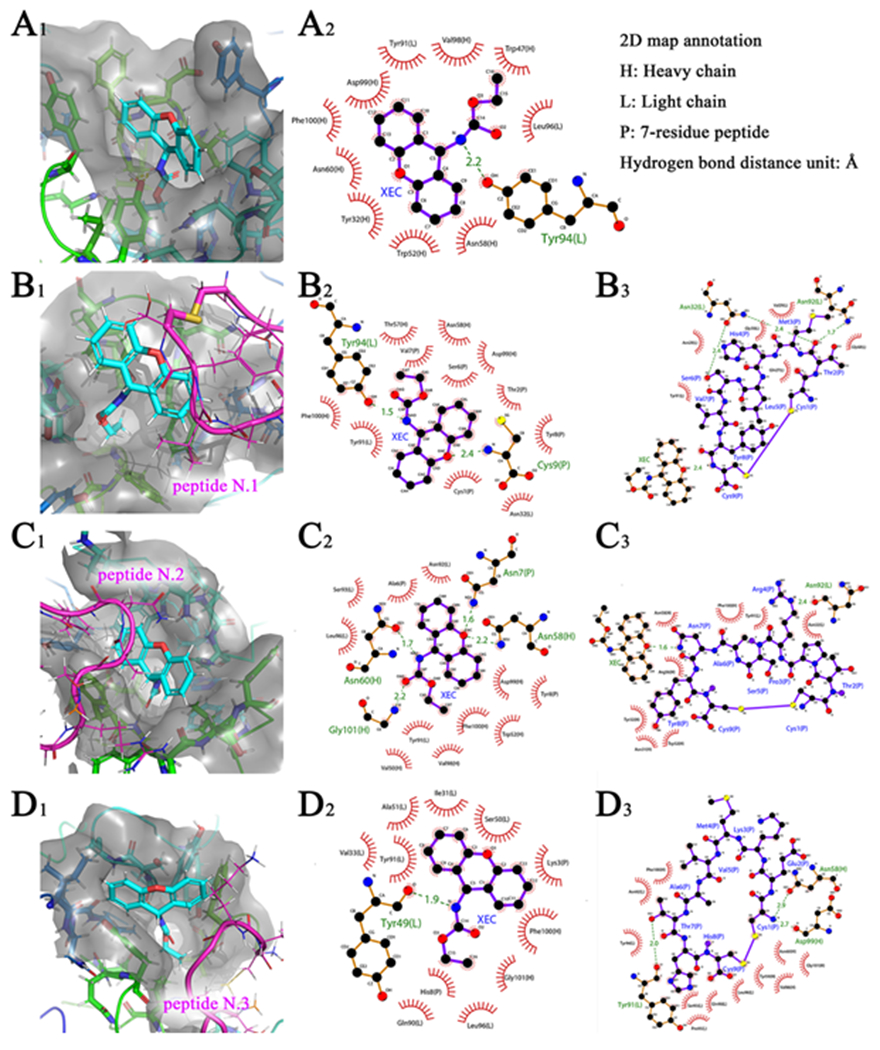
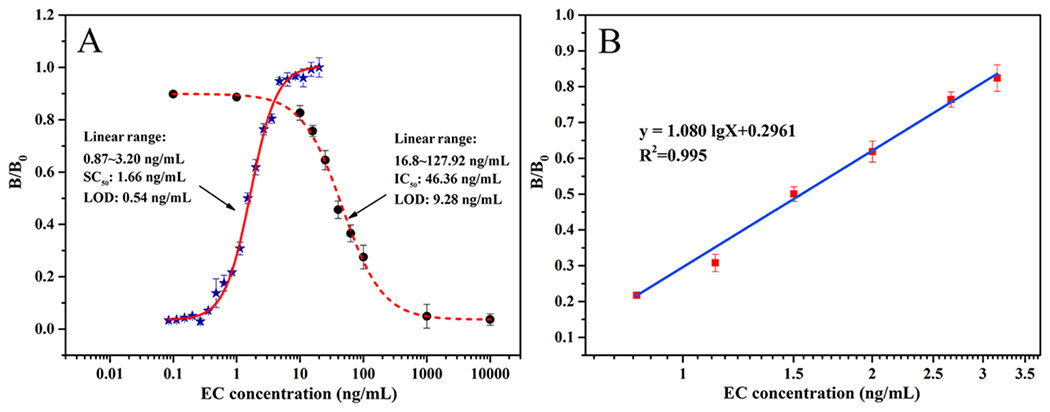
Ethyl carbamate is a group of 2A carcinogen ubiquitously existed in fermented foods. The monitoring of its residues was important for evaluating the potential risk to human beings. Immunoassays with good accuracy and simplicity are great analytical tools for small molecule contaminants. However, it is typically confined in a competitive mode for small molecules with drawback of the sensitivity curbing. In this work, three different phages displayed peptides with capability of identifying the xanthyl ethyl carbamate immunocomplex were isolated from phage library. The binding mechanism of peptides and immunocomplex was studied by computer-assisted simulation. Results indicated that the xanthydrol group of xanthyl ethyl carbamate and the Asn-32 and Asn-92 residues of the antibody light chain were mainly responsible for binding. Simultaneously, a sensitive non-competitive immunoassay for detecting ethyl carbamate in wine samples was developed. The established method exhibited a limit of detection of 5.4 ng/mL and a linear range from 8.7 ng/mL to 32 ng/mL for wine samples. In comparison with the conventional competitive immunoassay, the sensitivity of the proposed non-competitive immunoassay was improved by 17-fold. The results of the immunoassay were validated by a standard ultra-performance liquid chromatography-quadrupole/orbitrap high-resolution mass spectrometry, which illustrated good reliability of the proposed assay.
氨基甲酸乙酯是一种普遍存在于发酵食品中的 2A 类致癌物质。监测其残留量对于评估其对人类的潜在风险非常重要。免疫分析具有良好的准确性和简单性,是用于检测小分子污染物的重要分析工具。然而,它通常局限于小分子的竞争模式,存在灵敏度受限的缺点。在这项工作中,从噬菌体文库中分离出了三种能够识别黄烷乙基氨基甲酸酯免疫复合物的展示肽的噬菌体。通过计算机辅助模拟研究了肽和免疫复合物的结合机制。结果表明,黄烷乙基氨基甲酸酯的黄烷醇基团和抗体轻链的 Asn-32 和 Asn-92 残基主要负责结合。同时,建立了一种用于检测葡萄酒样品中氨基甲酸乙酯的灵敏非竞争免疫分析方法。该方法对葡萄酒样品的检测限为 5.4ng/mL,线性范围为 8.7ng/mL 至 32ng/mL。与传统的竞争免疫分析相比,所提出的非竞争免疫分析的灵敏度提高了 17 倍。通过标准超高效液相色谱-四极杆/轨道阱高分辨率质谱对免疫分析的结果进行了验证,表明该检测方法具有良好的可靠性。