Molecular Biotechnology and Diagnostics, Department of Biochemistry, University of Turku, FIN-20520 Turku, Finland.
Department of Microbiology, School of Life Sciences, Bharathidasan University, Palkalaiperur, Tiruchirappalli 620024, Tamilnadu, India.
Biosensors (Basel). 2019 Jun 18;9(2):79. doi: 10.3390/bios9020079.
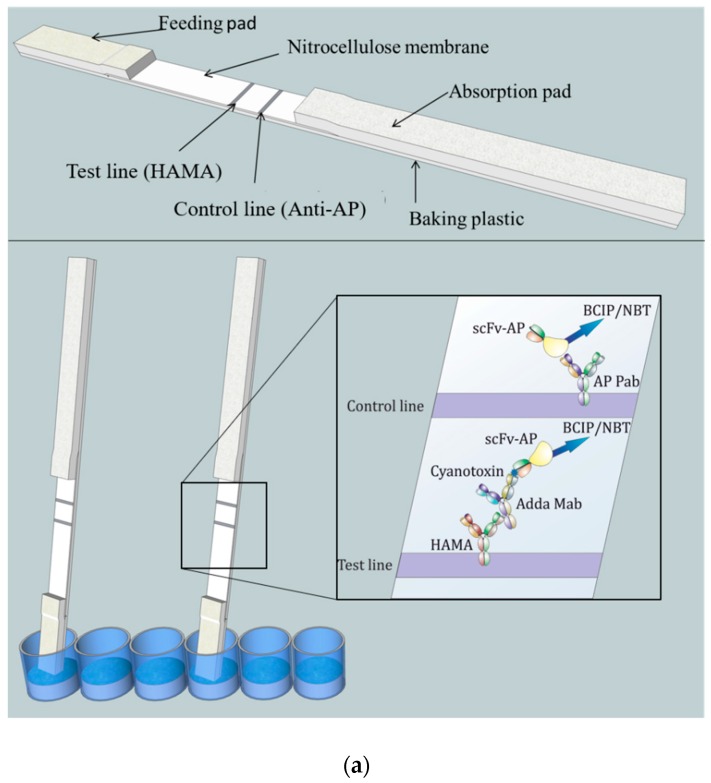
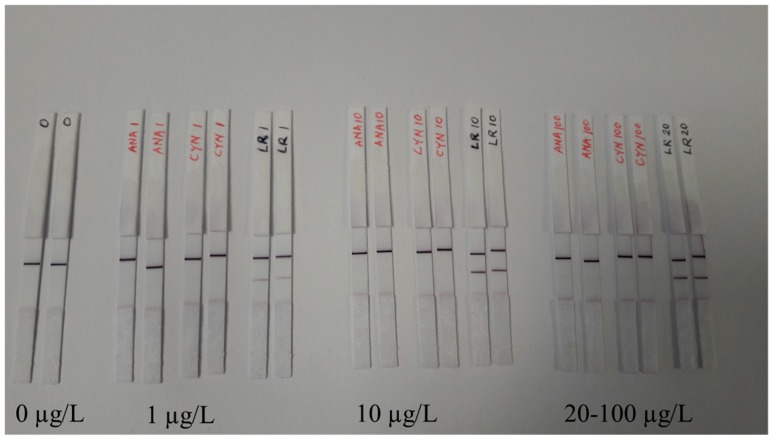
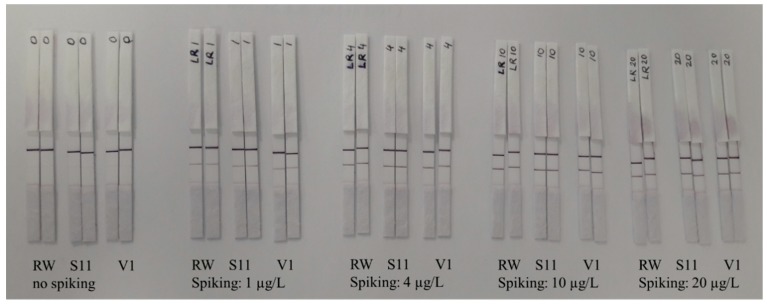
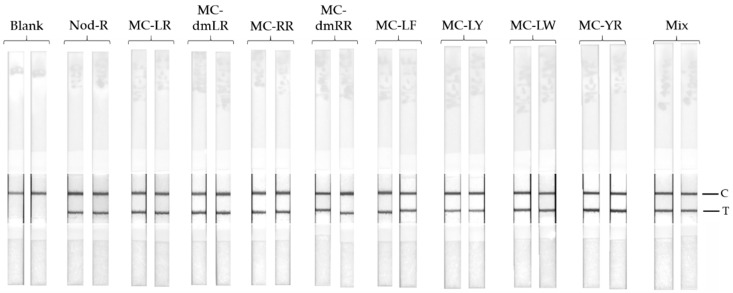
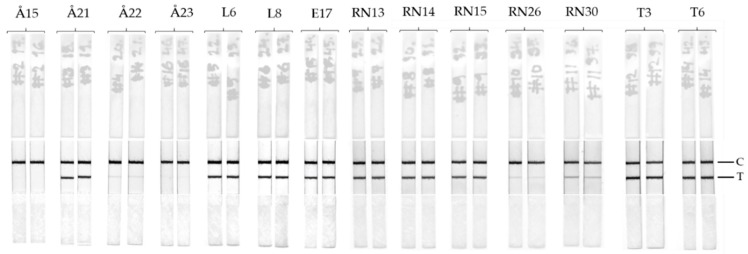
Cyanobacterial blooms cause local and global health issues by contaminating surface waters. Microcystins and nodularins are cyclic cyanobacterial peptide toxins comprising numerous natural variants. Most of them are potent hepatotoxins, tumor promoters, and at least microcystin-LR is possibly carcinogenic. In drinking water, the World Health Organization (WHO) recommended the provisional guideline value of 1 µg/L for microcystin-LR. For water used for recreational activity, the guidance values for microcystin concentration varies mostly between 4-25 µg/L in different countries. Current immunoassays or lateral flow strips for microcystin/nodularin are based on indirect competitive method, which are generally more prone to sample interference and sometimes hard to interpret compared to two-site immunoassays. Simple, sensitive, and easy to interpret user-friendly methods for first line screening of microcystin/nodularin near water sources are needed for assessment of water quality and safety. We describe the development of a two-site sandwich format lateral-flow assay for the rapid detection of microcystins and nodularin-R. A unique antibody fragment capable of broadly recognizing immunocomplexes consisting of a capture antibody bound to microcystins/nodularin-R was used to develop the simple lateral flow immunoassay. The assay can visually detect the major hepatotoxins (microcystin-LR, -dmLR, -RR, -dmRR, -YR, -LY, -LF -LW, and nodularin-R) at and below the concentration of 4 µg/L. The signal is directly proportional to the concentration of the respective toxin, and the use of alkaline phosphatase activity offers a cost efficient alternative by eliminating the need of toxin conjugates or other labeling system. The easy to interpret assay has the potential to serve as a microcystins/nodularin screening tool for those involved in water quality monitoring such as municipal authorities, researchers, as well as general public concerned of bathing water quality.
蓝藻水华通过污染地表水引发局部和全球健康问题。微囊藻毒素和节球藻毒素是由许多天然变体组成的环状蓝藻肽毒素。它们大多数是有效的肝毒素、肿瘤促进剂,至少微囊藻毒素-LR 可能是致癌物质。在饮用水中,世界卫生组织(WHO)建议微囊藻毒素-LR 的暂定指导值为 1μg/L。对于用于娱乐活动的水,不同国家的微囊藻浓度指导值大多在 4-25μg/L 之间。目前用于检测微囊藻毒素/节球藻毒素的免疫分析或横向流动条基于间接竞争法,与双位点免疫分析相比,这种方法通常更容易受到样品干扰,有时也更难解释。需要一种简单、灵敏、易于解释的用户友好型方法,用于在水源附近对微囊藻毒素/节球藻毒素进行一线筛选,以评估水质和安全性。我们描述了一种用于快速检测微囊藻毒素和节球藻毒素-R 的双位点夹心格式横向流动分析的开发。使用一种独特的抗体片段,该片段能够广泛识别由与微囊藻毒素/nodularin-R 结合的捕获抗体组成的免疫复合物,从而开发出这种简单的横向流动免疫分析。该测定法能够在 4μg/L 及以下浓度下肉眼检测到主要的肝毒素(微囊藻毒素-LR、-dmLR、-RR、-dmRR、-YR、-LY、-LF-LW 和节球藻毒素-R)。信号与各自毒素的浓度成正比,并且使用碱性磷酸酶活性通过消除对毒素缀合物或其他标记系统的需求提供了一种具有成本效益的替代方法。该易于解释的测定法有可能成为参与水质监测的人员(如市政当局、研究人员以及关注游泳水质的公众)的微囊藻毒素/节球藻毒素筛选工具。