Department of Biological Sciences, Rutgers University, Newark, NJ 07102, USA.
Int J Mol Sci. 2021 Jan 28;22(3):1273. doi: 10.3390/ijms22031273.
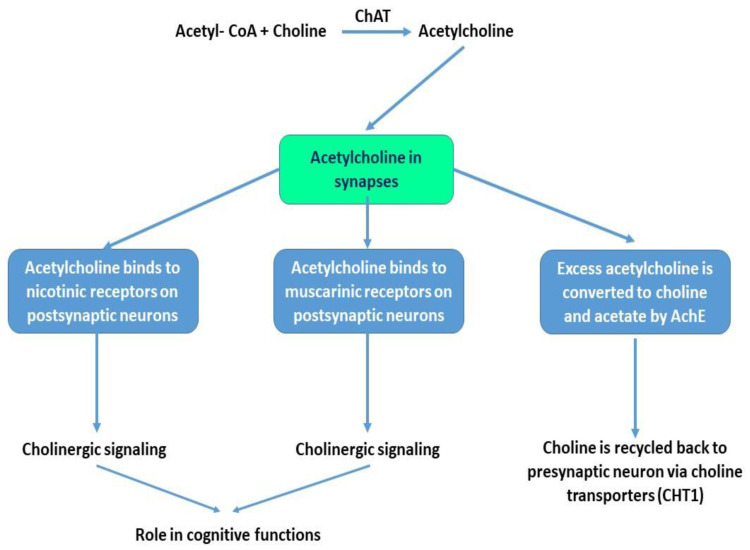
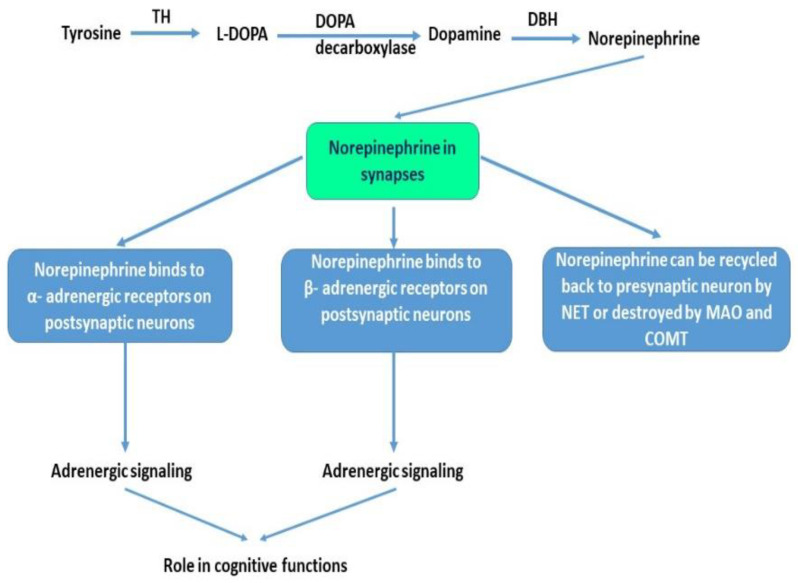
Neurodegenerative diseases are a major public health problem worldwide with a wide spectrum of symptoms and physiological effects. It has been long reported that the dysregulation of the cholinergic system and the adrenergic system are linked to the etiology of Alzheimer's disease. Cholinergic neurons are widely distributed in brain regions that play a role in cognitive functions and normal cholinergic signaling related to learning and memory is dependent on acetylcholine. The Locus Coeruleus norepinephrine (LC-NE) is the main noradrenergic nucleus that projects and supplies norepinephrine to different brain regions. Norepinephrine has been shown to be neuroprotective against neurodegeneration and plays a role in behavior and cognition. Cholinergic and adrenergic signaling are dysregulated in Alzheimer's disease. The degeneration of cholinergic neurons in nucleus basalis of Meynert in the basal forebrain and the degeneration of LC-NE neurons were reported in Alzheimer's disease. The aim of this review is to describe current literature on the role of the cholinergic system and the adrenergic system (LC-NE) in the pathology of Alzheimer's disease and potential therapeutic implications.
神经退行性疾病是全球范围内的一个主要公共卫生问题,具有广泛的症状和生理影响。长期以来,人们一直报告说,胆碱能系统和肾上腺素能系统的失调与阿尔茨海默病的病因有关。胆碱能神经元广泛分布于大脑区域,这些区域在认知功能中发挥作用,与学习和记忆相关的正常胆碱能信号取决于乙酰胆碱。蓝斑去甲肾上腺素(LC-NE)是主要的去甲肾上腺素核,它投射并向不同的大脑区域供应去甲肾上腺素。去甲肾上腺素已被证明对神经退行性变具有神经保护作用,并在行为和认知中发挥作用。胆碱能和肾上腺素能信号在阿尔茨海默病中失调。基底前脑的 Meynert 基底核中的胆碱能神经元和 LC-NE 神经元的退化在阿尔茨海默病中已有报道。本综述的目的是描述当前关于胆碱能系统和肾上腺素能系统(LC-NE)在阿尔茨海默病病理学中的作用以及潜在治疗意义的文献。