Ammar Chiraz, Alminderej Fahad M, El-Ghoul Yassine, Jabli Mahjoub, Shafiquzzaman Md
Department of Fashion Design, College of Design, Qassim University, Al Fayziyyah Buraidah 52383, Saudi Arabia.
Textile Engineering Laboratory, University of Monastir, Monastir 5019, Tunisia.
Polymers (Basel). 2021 Jan 28;13(3):411. doi: 10.3390/polym13030411.
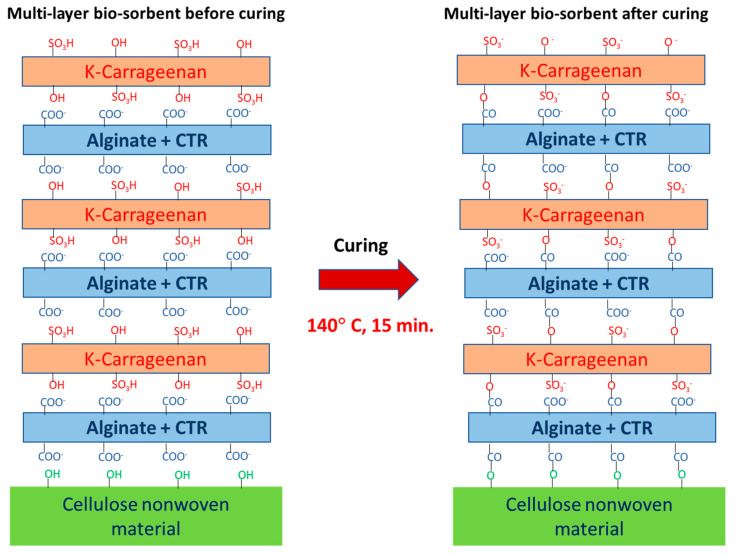
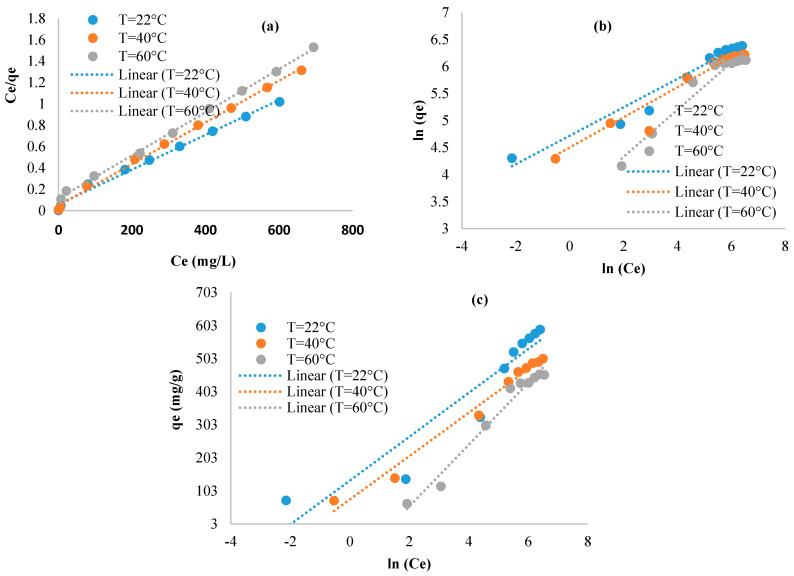
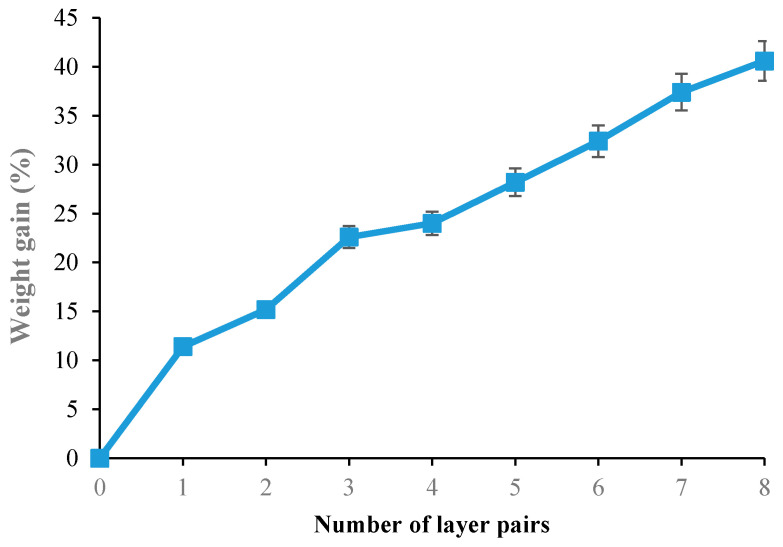
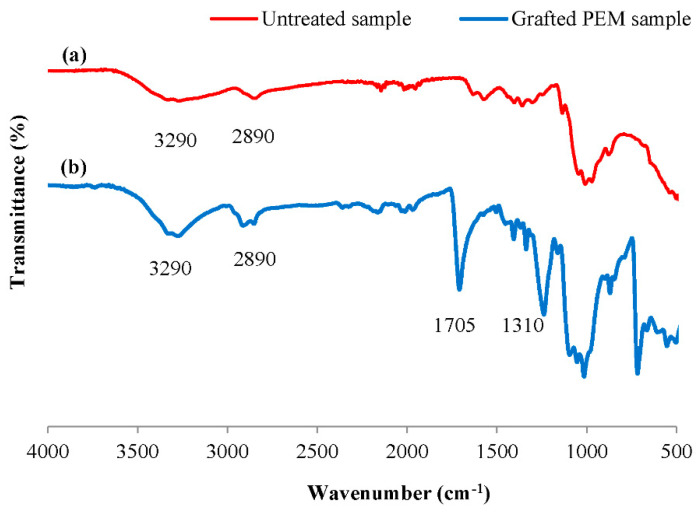
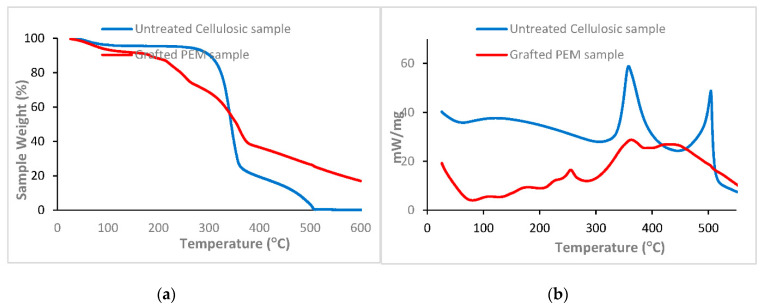
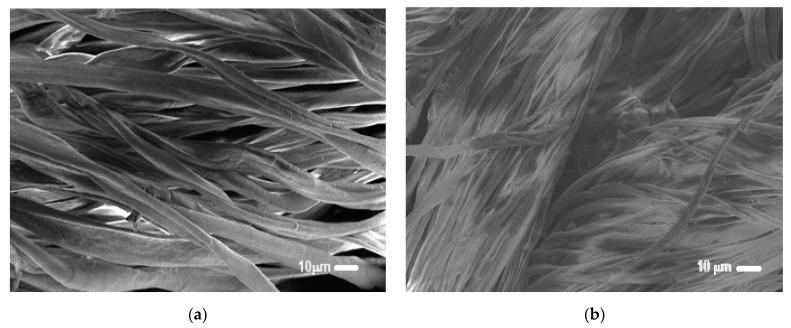
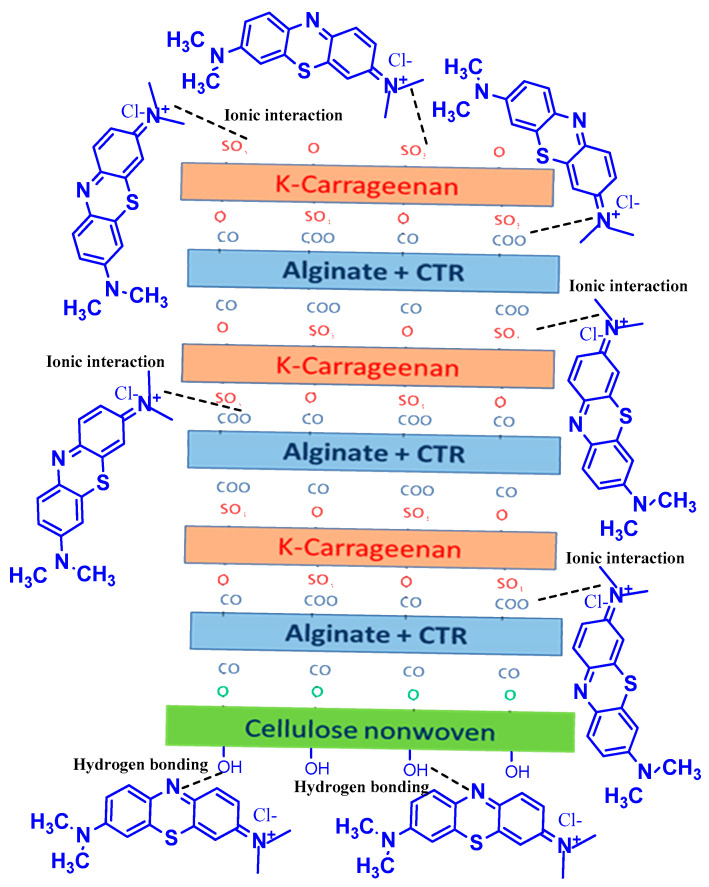
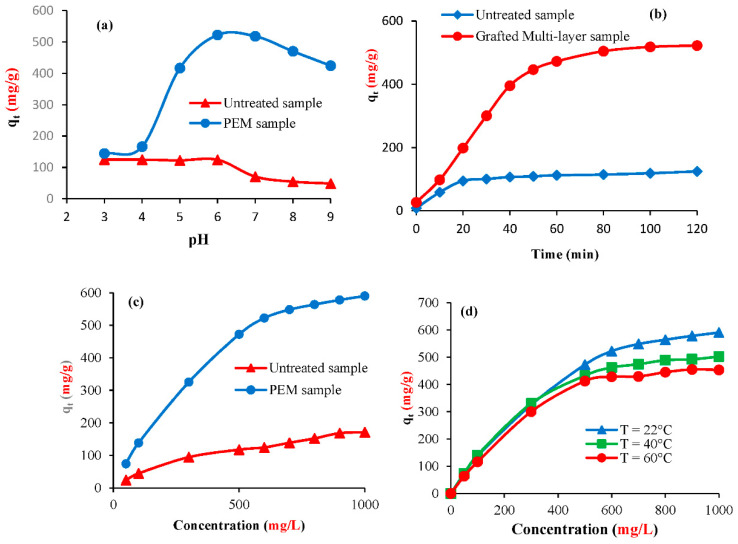
The current study highlights a novel bio-sorbent design based on polyelectrolyte multi-layers (PEM) biopolymeric material. First layer was composed of sodium alginate and the second was constituted of citric acid and k-carrageenan. The PEM system was crosslinked to non-woven cellulosic textile material. Resulting materials were characterized using FT-IR, SEM, and thermal analysis (TGA and DTA). FT-IR analysis confirmed chemical interconnection of PEM bio-sorbent system. SEM features indicated that the microspaces between fibers were filled with layers of functionalizing polymers. PEM exhibited higher surface roughness compared to virgin sample. This modification of the surface morphology confirmed the stability and the effectiveness of the grafting method. Virgin cellulosic sample decomposed at 370 °C. However, PEM samples decomposed at 250 °C and 370 °C, which were attributed to the thermal decomposition of crosslinked sodium alginate and k-carrageenan and cellulose, respectively. The bio-sorbent performances were evaluated under different experimental conditions including pH, time, temperature, and initial dye concentration. The maximum adsorbed amounts of methylene blue are 124.4 mg/g and 522.4 mg/g for the untreated and grafted materials, respectively. The improvement in dye sorption evidenced the grafting of carboxylate and sulfonate groups onto cellulose surface. Adsorption process complied well with pseudo-first-order and Langmuir equations.
当前的研究突出了一种基于聚电解质多层(PEM)生物聚合物材料的新型生物吸附剂设计。第一层由海藻酸钠组成,第二层由柠檬酸和κ-卡拉胶组成。PEM体系与非织造纤维素纺织材料交联。使用傅里叶变换红外光谱(FT-IR)、扫描电子显微镜(SEM)和热分析(热重分析(TGA)和差示热分析(DTA))对所得材料进行表征。FT-IR分析证实了PEM生物吸附剂体系的化学互连。SEM特征表明纤维之间的微空间被功能化聚合物层填充。与原始样品相比,PEM表现出更高的表面粗糙度。这种表面形态的改变证实了接枝方法的稳定性和有效性。原始纤维素样品在370℃分解。然而,PEM样品分别在250℃和370℃分解,这分别归因于交联海藻酸钠和κ-卡拉胶以及纤维素的热分解。在不同的实验条件下,包括pH值、时间、温度和初始染料浓度,对生物吸附剂性能进行了评估。未处理材料和接枝材料对亚甲基蓝的最大吸附量分别为124.4mg/g和522.4mg/g。染料吸附的改善证明了羧基和磺酸根基团接枝到纤维素表面。吸附过程很好地符合准一级动力学和朗缪尔方程。