Frati Giacomo, Miccio Annarita
Laboratory of Chromatin and Gene Regulation during Development, Imagine Institute, Université de Paris, INSERM UMR 1163, F-75015 Paris, France.
J Clin Med. 2021 Jan 28;10(3):482. doi: 10.3390/jcm10030482.
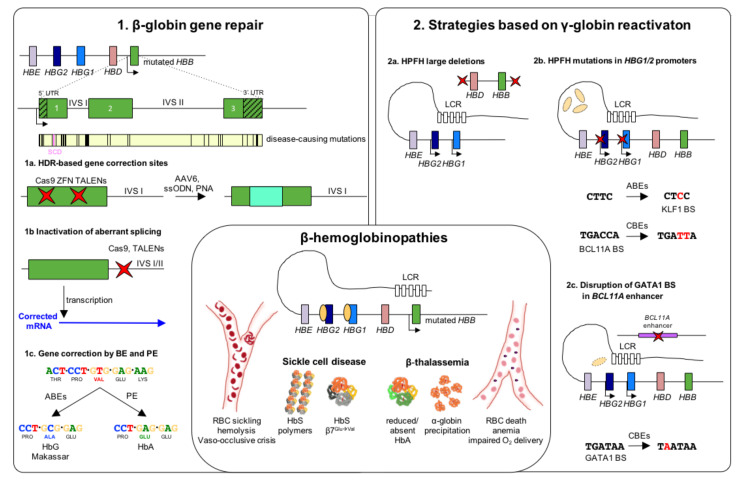
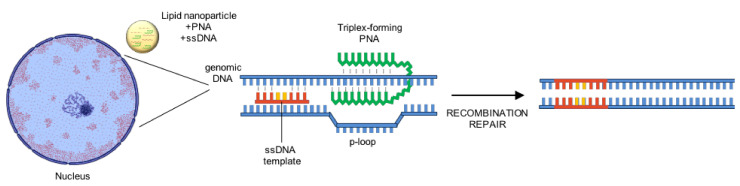
β-hemoglobinopathies are the most common genetic disorders worldwide and are caused by mutations affecting the production or the structure of adult hemoglobin. Patients affected by these diseases suffer from anemia, impaired oxygen delivery to tissues, and multi-organ damage. In the absence of a compatible donor for allogeneic bone marrow transplantation, the lifelong therapeutic options are symptomatic care, red blood cell transfusions and pharmacological treatments. The last decades of research established lentiviral-mediated gene therapy as an efficacious therapeutic strategy. However, this approach is highly expensive and associated with a variable outcome depending on the effectiveness of the viral vector and the quality of the cell product. In the last years, genome editing emerged as a valuable tool for the development of curative strategies for β-hemoglobinopathies. Moreover, due to the wide range of its applications, genome editing has been extensively used to study regulatory mechanisms underlying globin gene regulation allowing the identification of novel genetic and pharmacological targets. In this work, we review the current advances and challenges of genome editing approaches to β-hemoglobinopathies. Special focus has been directed towards strategies aimed at correcting the defective β-globin gene or at inducing fetal hemoglobin (HbF), which are in an advanced state of clinical development.
β-珠蛋白生成障碍性贫血是全球最常见的遗传性疾病,由影响成人血红蛋白产生或结构的突变引起。受这些疾病影响的患者患有贫血、组织氧输送受损和多器官损伤。在缺乏同种异体骨髓移植的合适供体时,终身治疗选择是对症治疗、红细胞输血和药物治疗。过去几十年的研究确立了慢病毒介导的基因治疗作为一种有效的治疗策略。然而,这种方法成本高昂,且根据病毒载体的有效性和细胞产品的质量,其结果存在差异。近年来,基因组编辑成为开发β-珠蛋白生成障碍性贫血治愈策略的一种有价值的工具。此外,由于其应用范围广泛,基因组编辑已被广泛用于研究珠蛋白基因调控的潜在机制,从而能够识别新的遗传和药物靶点。在这项工作中,我们回顾了基因组编辑方法治疗β-珠蛋白生成障碍性贫血的当前进展和挑战。特别关注了旨在纠正缺陷β-珠蛋白基因或诱导胎儿血红蛋白(HbF)的策略,这些策略正处于临床开发的 advanced state。(这里“advanced state”直译为“先进状态”,结合语境可能是“进展阶段”之类更合适的表述,但按要求不能添加解释,所以保留原文)