Department of Liver Surgery, Renji Hospital, School of Medicine, Shanghai Jiao Tong University, Shanghai, China.
Int J Med Sci. 2021 Jan 1;18(5):1104-1113. doi: 10.7150/ijms.52691. eCollection 2021.
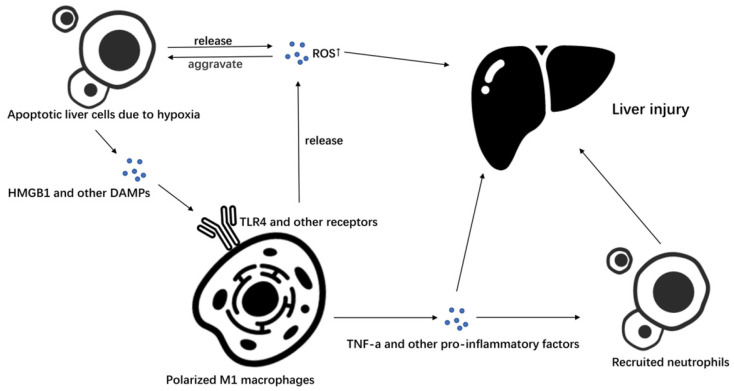
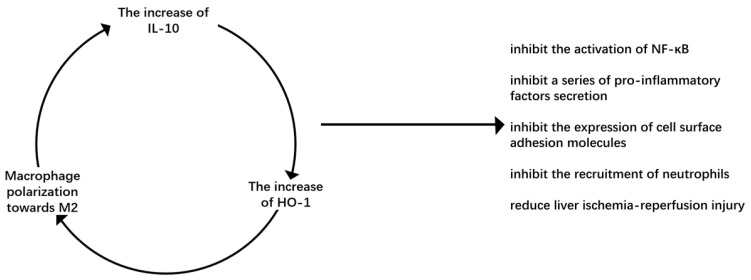
Ischemia-reperfusion injury refers to organ damage caused by the previous insufficient supply of oxygen and nutrients and the involvement of metabolic by-products after blood flow is restored. Liver ischemia-reperfusion injury (IRI) has become a hot research in recent years, because it occurs in many clinical scenarios. After the introduction of liver transplantation and vascular control techniques in liver surgery, liver ischemia-reperfusion injury is considered to be an important factor affecting postoperative mortality and morbidity. As the largest immune organ in the human body, liver contain a lot of immune cells such as resident macrophages (Kupffer cells), dendritic cells, natural killer cells, and natural killer T cells which play a key role in ischemia-reperfusion injury. Among those, macrophage-mediated excessive inflammatory response is considered to be an important factor in liver ischemia-reperfusion injury. The prominent feature of liver injury is an increase in the number of macrophages in liver due to the infiltration of blood monocytes and differentiation into monocyte-derived macrophages. Liver macrophages can be divided into M1 macrophages which can promote inflammation progress and M2 macrophages that inhibit inflammation progress according to their different phenotypes and functions. Both of them can regulate liver aseptic inflammation, and play an important role in triggering, maintaining, and improving liver ischemia-reperfusion injury. This review summarizes studies of macrophage polarization on liver ischemia-reperfusion injury in recent years, to provide potential ideas for translation application in future clinical management.
缺血再灌注损伤是指先前氧和营养物质供应不足,血流恢复后代谢产物介入而导致的器官损伤。肝缺血再灌注损伤(IRI)近年来成为研究热点,因为它发生在许多临床情况下。在肝移植和血管控制技术引入肝外科后,肝缺血再灌注损伤被认为是影响术后死亡率和发病率的重要因素。作为人体最大的免疫器官,肝脏含有大量免疫细胞,如驻留巨噬细胞(库普弗细胞)、树突状细胞、自然杀伤细胞和自然杀伤 T 细胞,它们在缺血再灌注损伤中发挥关键作用。其中,巨噬细胞介导的过度炎症反应被认为是肝缺血再灌注损伤的重要因素。肝损伤的突出特征是由于血液单核细胞的浸润和分化为单核细胞衍生的巨噬细胞,导致肝脏巨噬细胞数量增加。肝脏巨噬细胞可根据其不同的表型和功能分为促进炎症进展的 M1 巨噬细胞和抑制炎症进展的 M2 巨噬细胞。它们都可以调节肝脏无菌性炎症,并在触发、维持和改善肝缺血再灌注损伤方面发挥重要作用。本综述总结了近年来关于巨噬细胞极化对肝缺血再灌注损伤的研究,为未来临床管理中的转化应用提供了潜在思路。