Farooqi Hafiz Muhammad Umer, Kang Bohye, Khalid Muhammad Asad Ullah, Salih Abdul Rahim Chethikkattuveli, Hyun Kinam, Park Sung Hyuk, Huh Dongeun, Choi Kyung Hyun
Department of Mechatronics Engineering, Jeju National University, Jeju-si, Republic of Korea.
Department of Bioengineering, University of Pennsylvania, Philadelphia, USA.
Nano Converg. 2021 Feb 2;8(1):3. doi: 10.1186/s40580-021-00253-y.
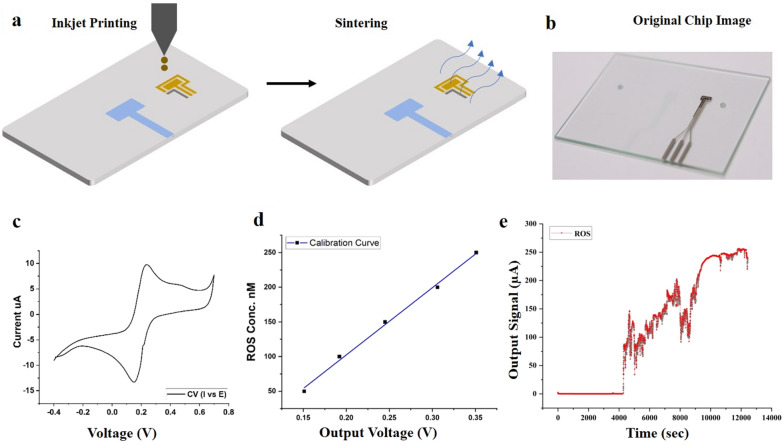
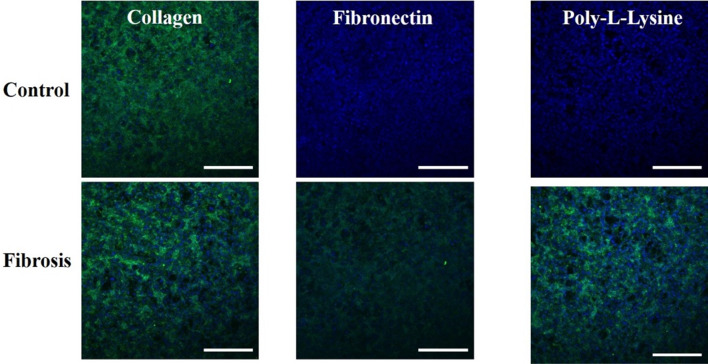
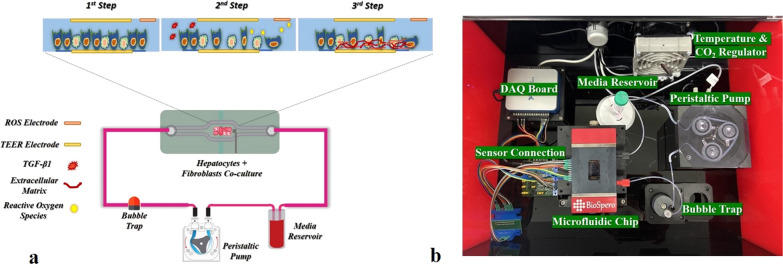
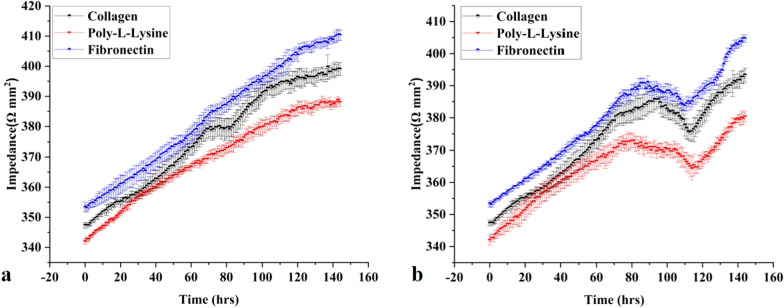
Hepatic fibrosis is a foreshadowing of future adverse events like liver cirrhosis, liver failure, and cancer. Hepatic stellate cell activation is the main event of liver fibrosis, which results in excessive extracellular matrix deposition and hepatic parenchyma's disintegration. Several biochemical and molecular assays have been introduced for in vitro study of the hepatic fibrosis progression. However, they do not forecast real-time events happening to the in vitro models. Trans-epithelial electrical resistance (TEER) is used in cell culture science to measure cell monolayer barrier integrity. Herein, we explored TEER measurement's utility for monitoring fibrosis development in a dynamic cell culture microphysiological system. Immortal HepG2 cells and fibroblasts were co-cultured, and transforming growth factor β1 (TGF-β1) was used as a fibrosis stimulus to create a liver fibrosis-on-chip model. A glass chip-based embedded TEER and reactive oxygen species (ROS) sensors were employed to gauge the effect of TGF-β1 within the microphysiological system, which promotes a positive feedback response in fibrosis development. Furthermore, albumin, Urea, CYP450 measurements, and immunofluorescent microscopy were performed to correlate the following data with embedded sensors responses. We found that chip embedded electrochemical sensors could be used as a potential substitute for conventional end-point assays for studying fibrosis in microphysiological systems.
肝纤维化是肝硬化、肝衰竭和癌症等未来不良事件的先兆。肝星状细胞激活是肝纤维化的主要事件,它会导致细胞外基质过度沉积和肝实质崩解。已经引入了几种生化和分子检测方法用于肝纤维化进展的体外研究。然而,它们无法预测体外模型中发生的实时事件。跨上皮电阻(TEER)在细胞培养科学中用于测量细胞单层屏障的完整性。在此,我们探讨了TEER测量在动态细胞培养微生理系统中监测纤维化发展的效用。将永生化的HepG2细胞和成纤维细胞共培养,并使用转化生长因子β1(TGF-β1)作为纤维化刺激物来创建一个芯片上的肝纤维化模型。采用基于玻璃芯片的嵌入式TEER和活性氧(ROS)传感器来评估TGF-β1在微生理系统中的作用,这在纤维化发展中促进了正反馈反应。此外,还进行了白蛋白、尿素、细胞色素P450测量以及免疫荧光显微镜检查,以将后续数据与嵌入式传感器的响应相关联。我们发现芯片嵌入式电化学传感器可作为传统终点检测方法的潜在替代方法,用于在微生理系统中研究纤维化。