Rörby Emma, Adolfsson Jörgen, Hultin Erik, Gustafsson Thomas, Lotfi Kourosh, Cammenga Jörg, Jönsson Jan-Ingvar
Experimental Hematology Unit, Department of Biomedical and Clinical Sciences, Linköping University, 58185, Linköping, Sweden.
Science for Life Laboratory, National Mass Cytometry Facility, Linköping University, Linköping, Sweden.
Exp Hematol Oncol. 2021 Feb 2;10(1):7. doi: 10.1186/s40164-021-00201-w.
Fms-related tyrosine kinase 3 (FLT3) receptor serves as a prognostic marker and therapeutic target in acute myeloid leukemia (AML). Approximately one-third of AML patients carry mutation in FLT3, associated with unfavourable prognosis and high relapse rate. The multitargeted kinase inhibitor midostaurin (PKC412) in combination with standard chemotherapy (daunorubicin and cytarabine) was recently shown to increase overall survival of AML patients. For that reason, PKC412 has been approved for treatment of AML patients with FLT3-mutation. PKC412 synergizes with standard chemotherapy, but the mechanism involved is not fully understood and the risk of relapse is still highly problematic.
By utilizing the unique nature of mass cytometry for single cell multiparameter analysis, we have explored the proteomic effect and intracellular signaling response in individual leukemic cells with internal tandem duplication of FLT3 (FLT3-ITD) after midostaurin treatment in combination with daunorubicin or cytarabine.
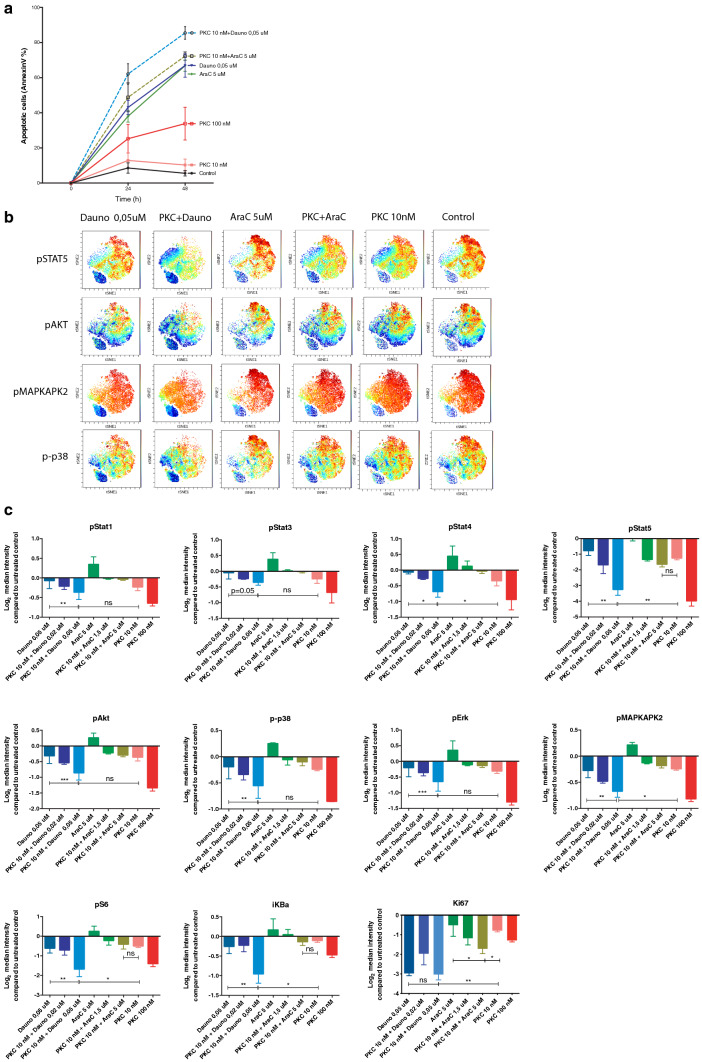
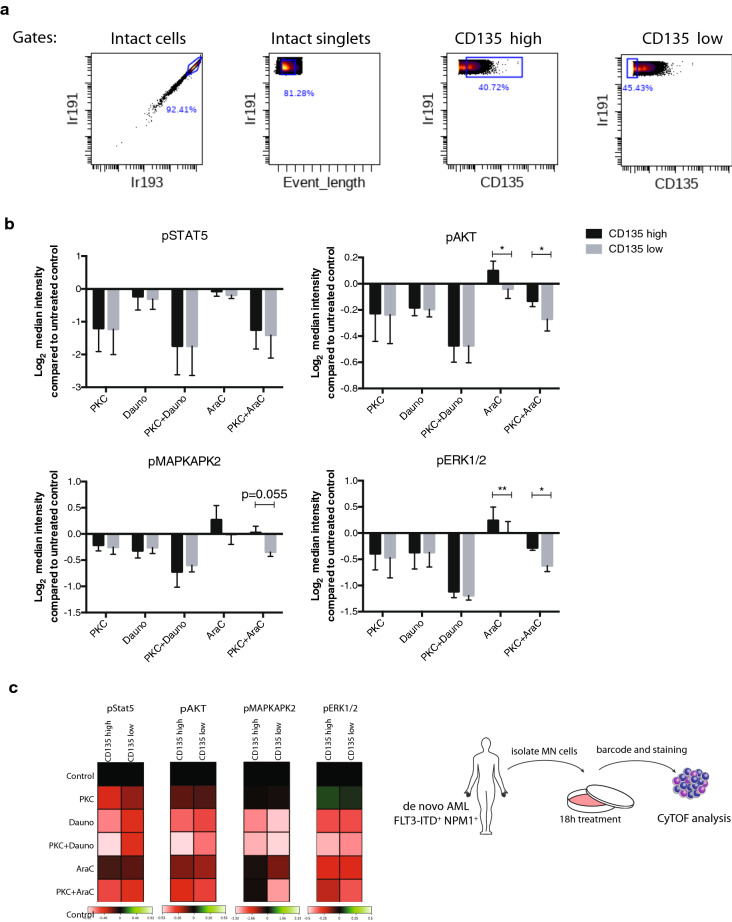
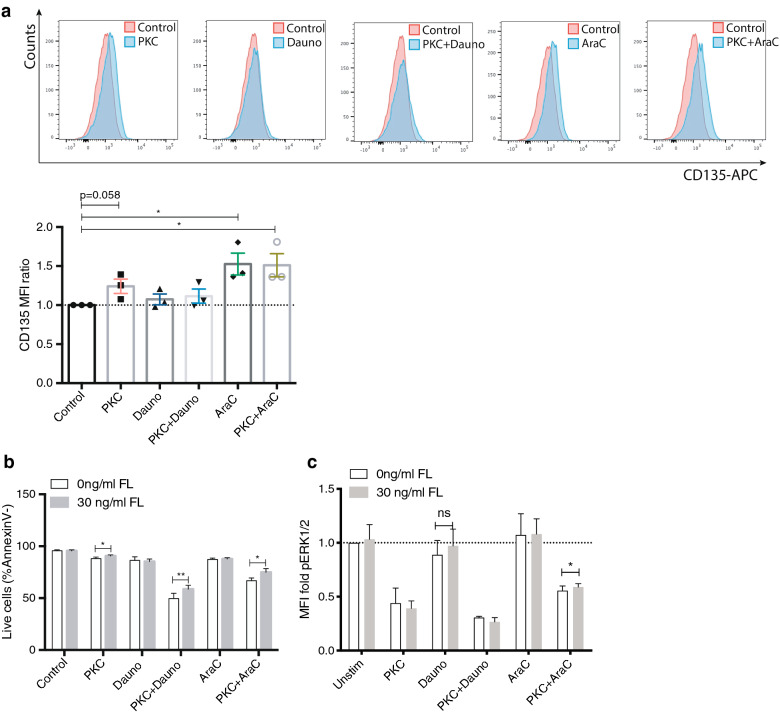
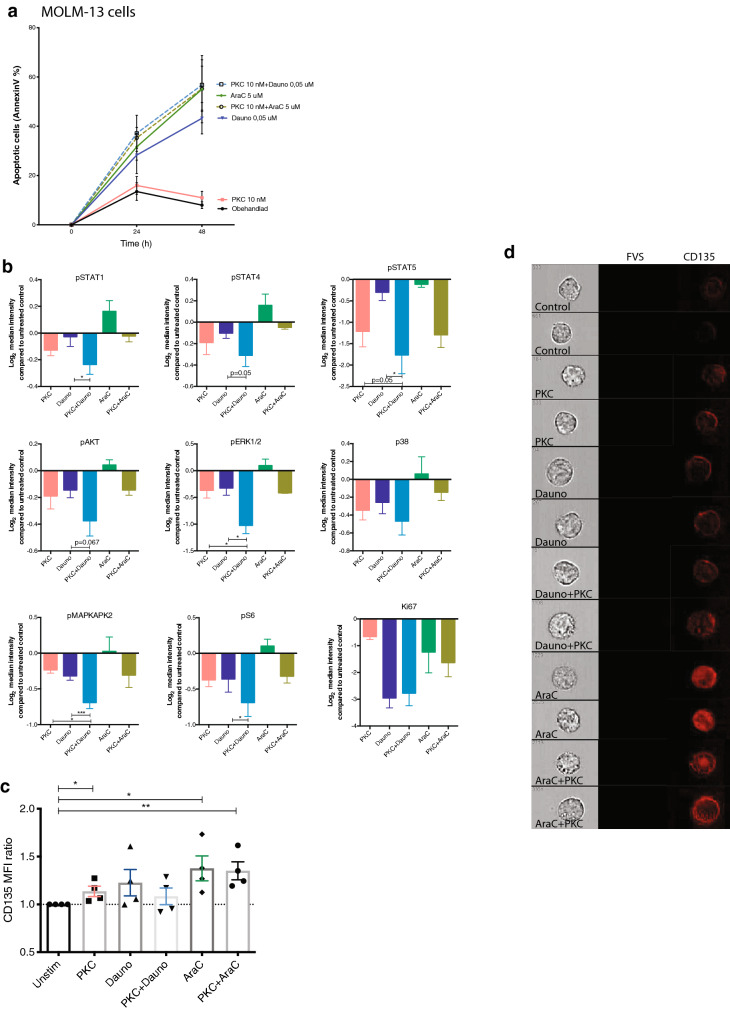
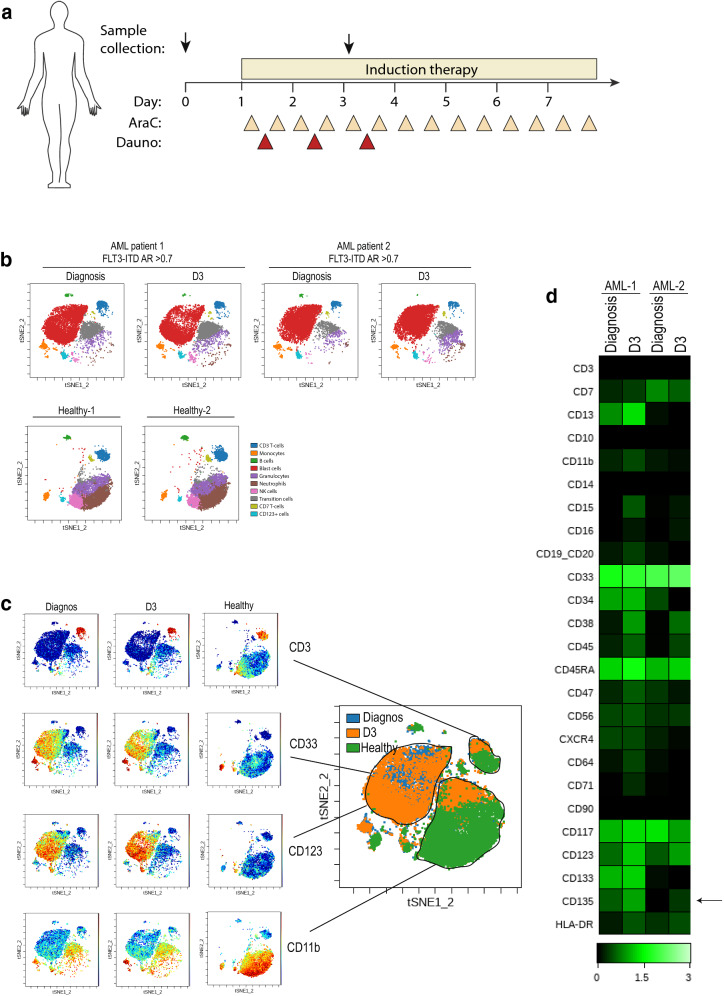
We have identified a synergistic inhibition of intracellular signaling proteins after PKC412 treatment in combination with daunorubicin. In contrast, cytarabine antagonized phosphorylation inhibition of PKC412. Moreover, we found elevated levels of FLT3 surface expression after cytarabine treatment. Interestingly, the surface localization of FLT3 receptor increased in vivo on the blast cell population of two AML patients during day 3 of induction therapy (daunorubicin; once/day from day 1-3 and cytarabine; twice/day from day 1-7). We found FLT3 receptor expression to correlate with intracellular cytarabine (AraC) response. AML cell line cultured with AraC with or without PKC412 had an antagonizing phosphorylation inhibition of pAKT (p = 0.042 and 0.0261, respectively) and pERK1/2 (0.0134 and 0.0096, respectively) in FLT3 compared to FLT3 expressing cell populations.
Our study provides insights into how conventional chemotherapy affects protein phosphorylation of vital signaling proteins in human leukemia cells. The results presented here support further investigation of novel strategies to treat FLT3-mutated AML patients with PKC412 in combination with chemotherapy agents and the potential development of novel treatment strategies.
Fms相关酪氨酸激酶3(FLT3)受体是急性髓性白血病(AML)的一种预后标志物和治疗靶点。大约三分之一的AML患者携带FLT3突变,与不良预后和高复发率相关。多靶点激酶抑制剂米哚妥林(PKC412)与标准化疗(柔红霉素和阿糖胞苷)联合使用最近显示可提高AML患者的总生存率。因此,PKC412已被批准用于治疗FLT3突变的AML患者。PKC412与标准化疗协同作用,但其涉及的机制尚未完全了解,复发风险仍然是一个严重问题。
通过利用质谱流式细胞术进行单细胞多参数分析的独特性质,我们探索了米哚妥林与柔红霉素或阿糖胞苷联合治疗后,具有FLT3内部串联重复(FLT3-ITD)的单个白血病细胞中的蛋白质组学效应和细胞内信号反应。
我们发现PKC412与柔红霉素联合治疗后对细胞内信号蛋白有协同抑制作用。相比之下,阿糖胞苷拮抗PKC412的磷酸化抑制作用。此外,我们发现阿糖胞苷治疗后FLT3表面表达水平升高。有趣的是,在诱导治疗的第3天(柔红霉素,第1 - 3天每天一次;阿糖胞苷,第1 - 7天每天两次),两名AML患者的原始细胞群体中,FLT3受体的表面定位在体内增加。我们发现FLT3受体表达与细胞内阿糖胞苷(AraC)反应相关。与表达FLT3的细胞群体相比,在有或没有PKC412的情况下用AraC培养的AML细胞系在FLT3中对pAKT(分别为p = 0.042和0.0261)和pERK1/2(分别为0.0134和0.0096)具有拮抗的磷酸化抑制作用。
我们的研究深入了解了传统化疗如何影响人类白血病细胞中重要信号蛋白的蛋白质磷酸化。此处呈现的结果支持进一步研究用PKC412与化疗药物联合治疗FLT3突变AML患者的新策略以及新治疗策略的潜在开发。