Department of Clinical Laboratory, The First Affiliated Hospital of Wenzhou Medical University, Wenzhou 325000, China.
Department of Clinical Laboratory, The First Affiliated Hospital of Anhui Medical University, Hefei 230000, China.
Hum Immunol. 2021 Mar;82(3):170-176. doi: 10.1016/j.humimm.2020.12.010. Epub 2020 Dec 26.
Coronavirus disease 2019 (COVID-19) is affecting the whole world and threatening human health. We aim to investigate the immunological characteristics of monocytes in critical patients with COVID-19.
The number and immune status of monocytes were detected by flow cytometry in 32 COVID-19 patients and 18 healthy individuals.
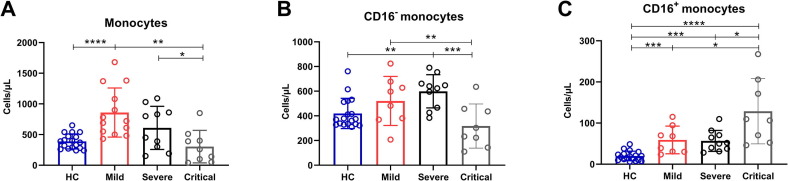
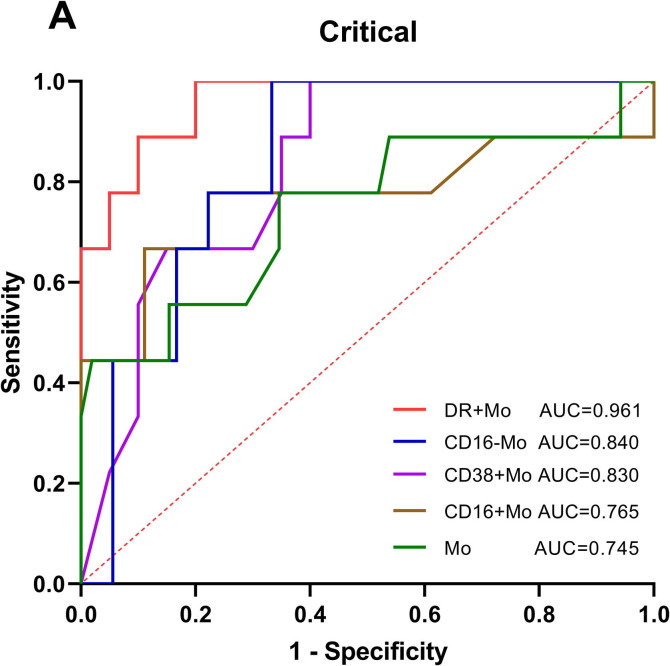
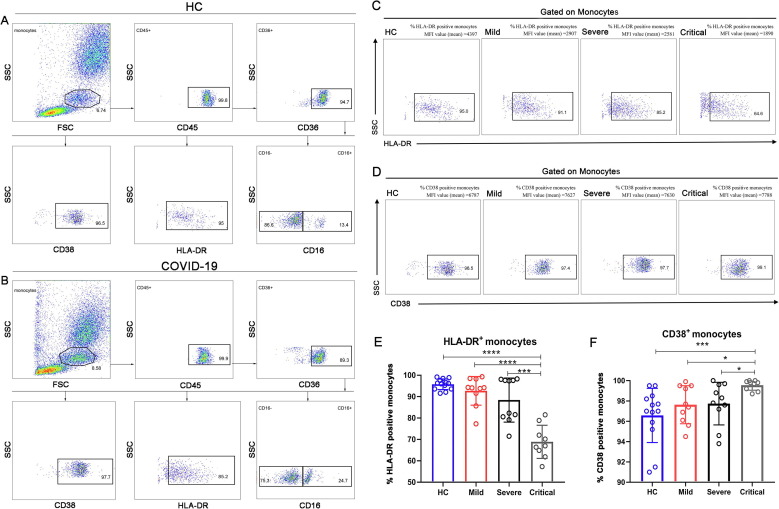
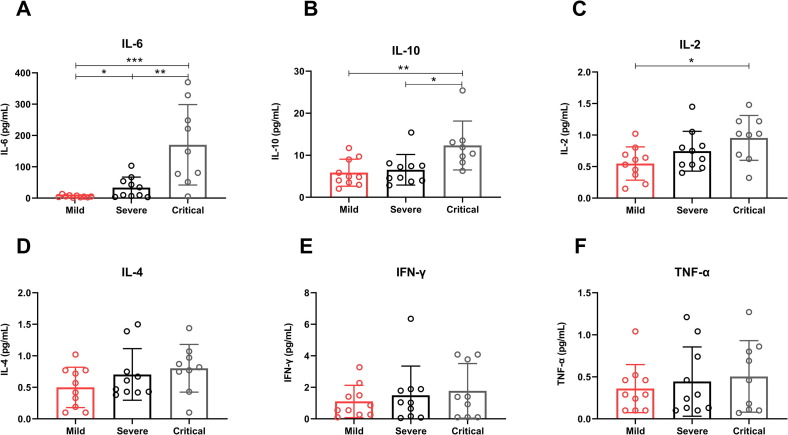
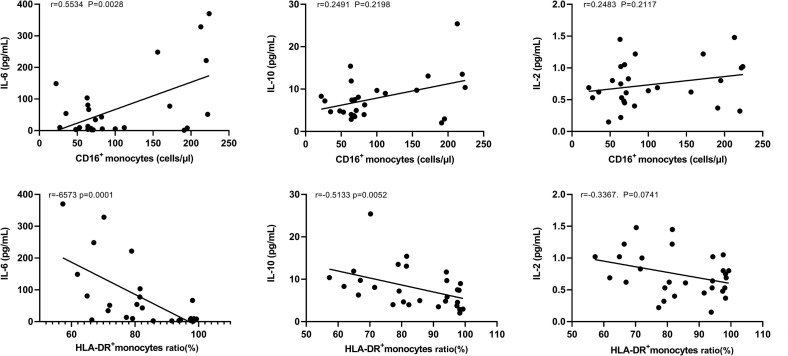
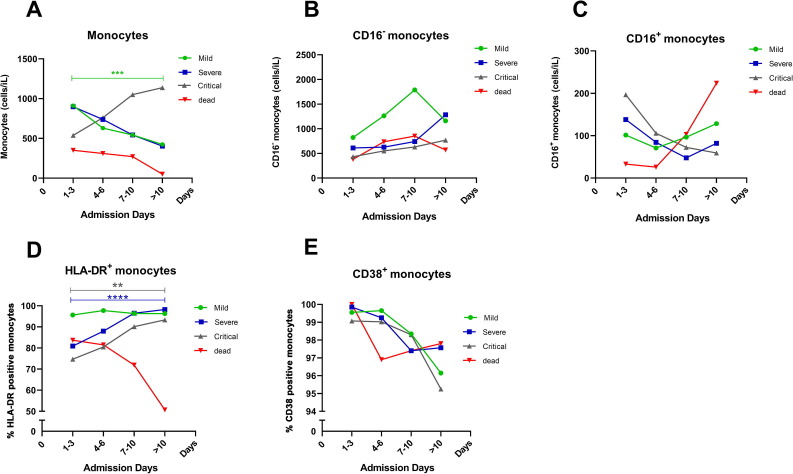
In critical patients with COVID-19, the absolute number of total monocytes and CD16 monocytes was significantly decreased but CD16 pro-inflammatory monocytes was increased compared to healthy controls. Antigen presentation potential of monocytes, as measured by HLA-DR expression, was suppressed, while their inflammatory phenotype (CD38 expression) was enhanced. Cytokine levels showed sustained increases in critical patients. And the levels of IL-6 were positively correlated with CD16 monocytes number. IL-6 and IL-10 levels were negatively correlated with HLA-DR expression of monocytes. During the recovery of COVID-19 patients, the count and immune status of monocyte subsets were restored by degrees. HLA-DR monocytes possessed good sensitivity and specificity for predicting the incidence of critical patients with COVID-19.
In critical patients with COVID-19, decline in number and HLA-DR expression of monocytes might lead to decreased antigen presentation potential and thus immunosuppression, while increased CD16 pro-inflammatory monocytes might mediate hyperinflammation. HLA-DR monocytes might be a meaningful assisted indicator to predict the incidence of critical patients with COVID-19.
2019 年冠状病毒病(COVID-19)正在影响全球,威胁人类健康。我们旨在研究 COVID-19 危重症患者单核细胞的免疫学特征。
通过流式细胞术检测 32 例 COVID-19 患者和 18 名健康个体中单核细胞的数量和免疫状态。
与健康对照组相比,COVID-19 危重症患者总单核细胞和 CD16 单核细胞的绝对数量明显减少,但 CD16 促炎单核细胞增加。单核细胞的抗原呈递能力(通过 HLA-DR 表达来衡量)受到抑制,而其炎症表型(CD38 表达)增强。细胞因子水平在危重症患者中持续升高。并且 IL-6 水平与 CD16 单核细胞数量呈正相关。IL-6 和 IL-10 水平与单核细胞 HLA-DR 表达呈负相关。在 COVID-19 患者的康复过程中,单核细胞亚群的计数和免疫状态逐渐恢复。HLA-DR 单核细胞对预测 COVID-19 危重症患者的发生率具有良好的敏感性和特异性。
在 COVID-19 危重症患者中,单核细胞数量和 HLA-DR 表达的下降可能导致抗原呈递能力降低和免疫抑制,而 CD16 促炎单核细胞的增加可能介导过度炎症。HLA-DR 单核细胞可能是预测 COVID-19 危重症患者发生率的有意义的辅助指标。