Piekarska Joanna
Institute of Psychology, University of Economics and Human Sciences in Warsaw1.
Adv Cogn Psychol. 2020 Sep 19;16(4):309-320. doi: 10.5709/acp-0305-z. eCollection 2020.
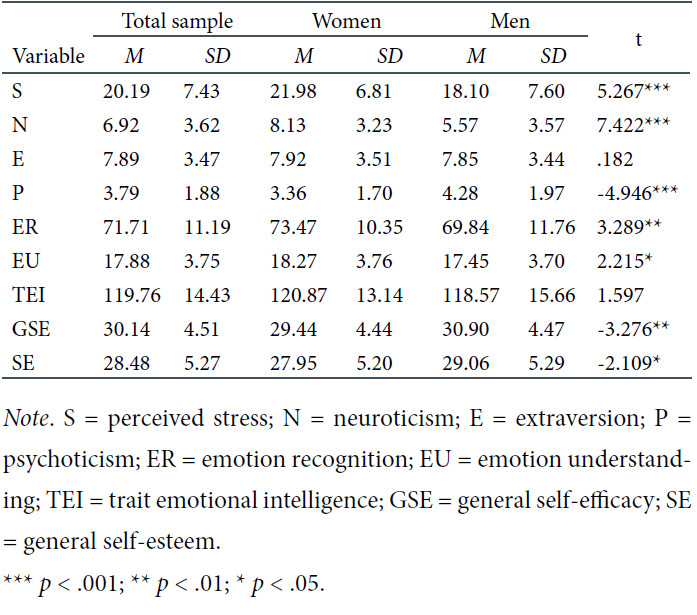
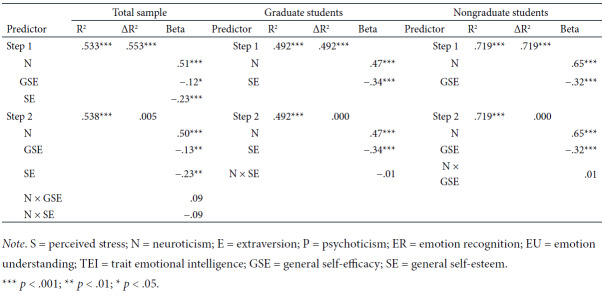
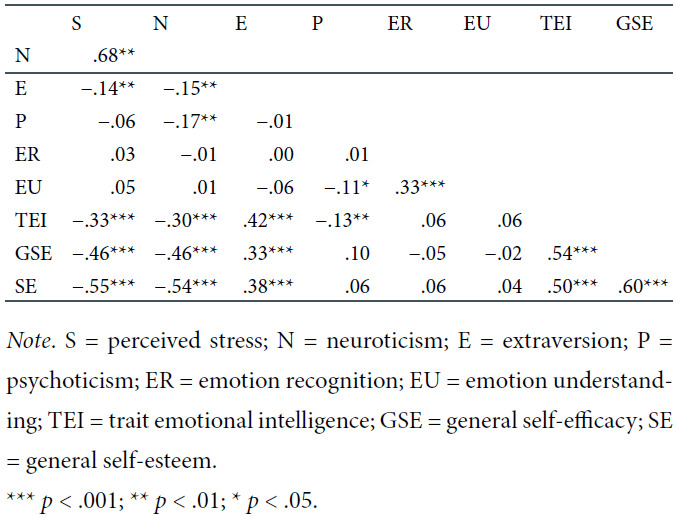
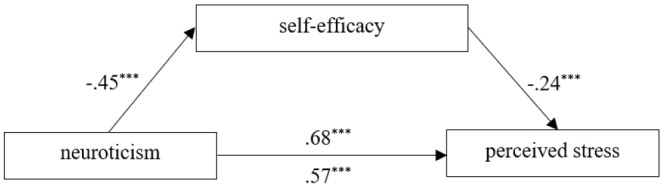
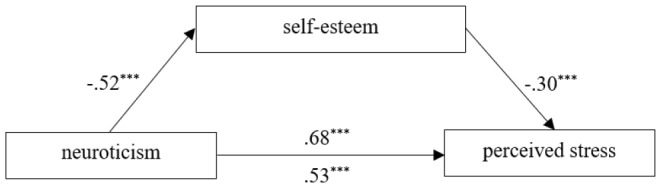
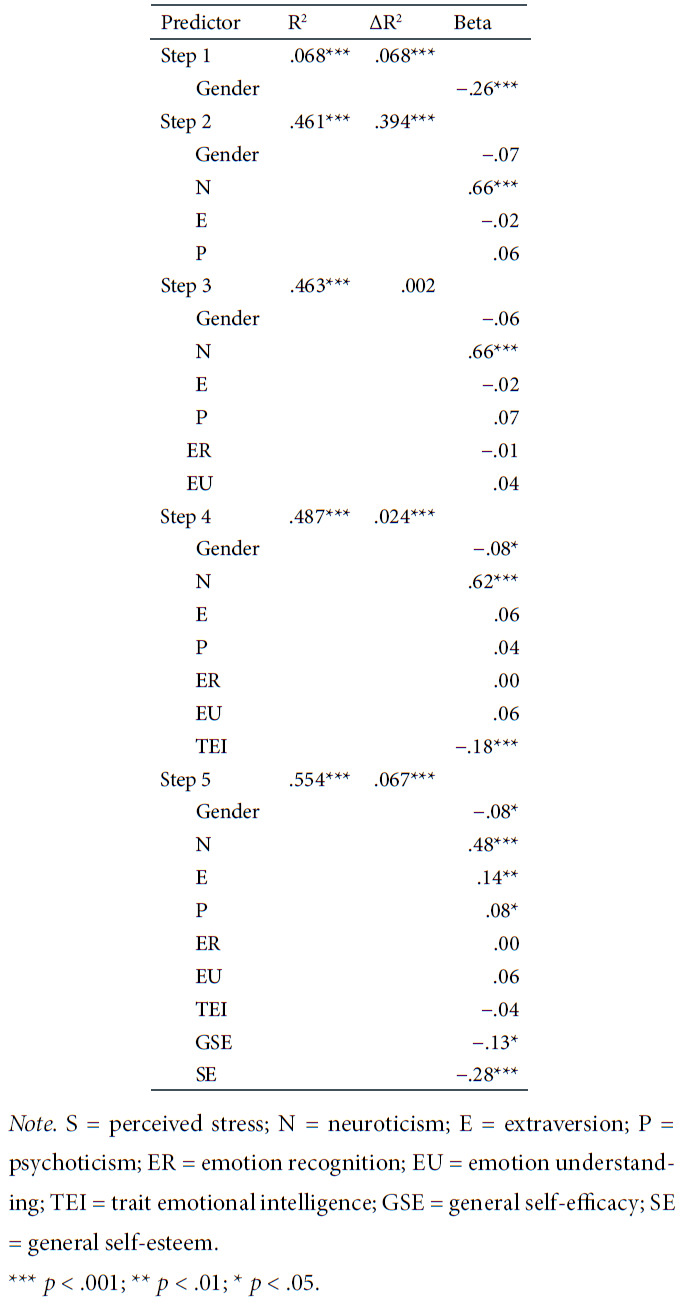
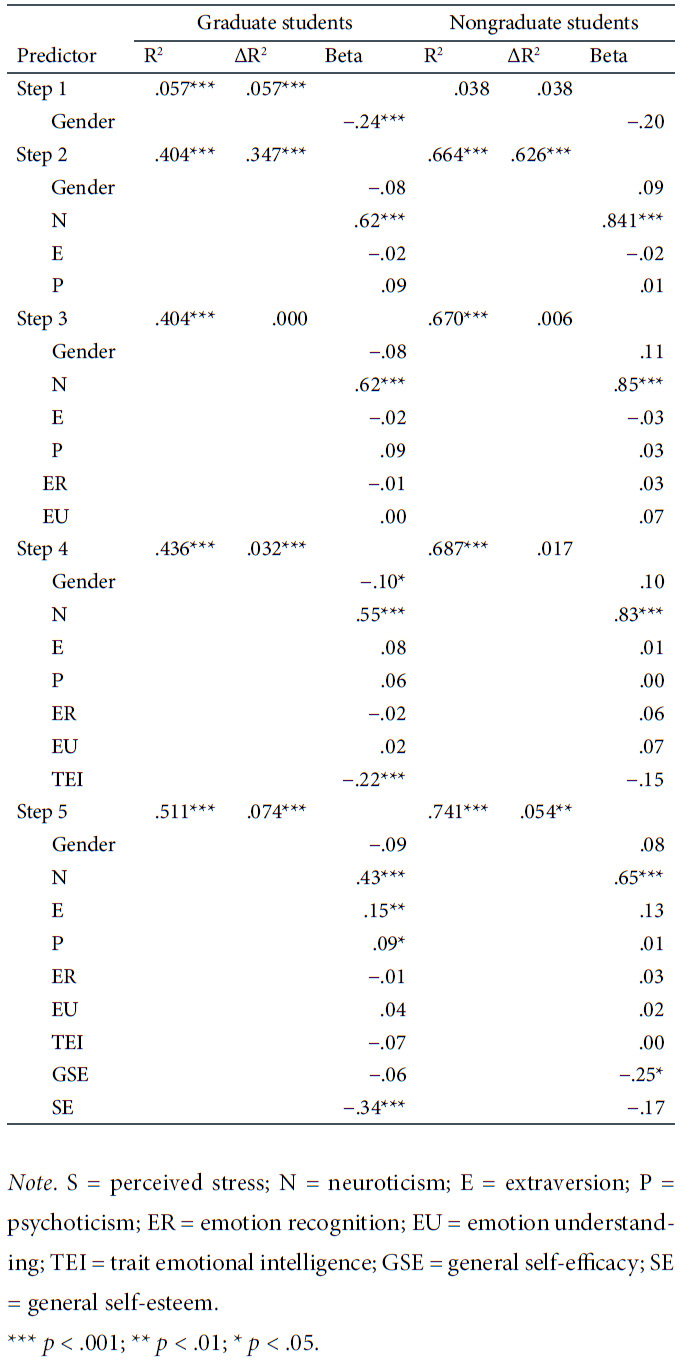
The aim of the current study was to examine the explanatory power of personality traits, emotional abilities, trait emotional intelligence, self-efficacy, and self-esteem in predicting perceived stress in adolescents. The data were collected from 406 high school students, aged 18-22 years ( = 18.47, = 0.64). Perceived stress was assessed with the 10-item Perceived Stress Scale (PSS-10). Personality traits were measured with the Eysenck Personality Short Scale (EPQ-R-S), emotional abilities were assessed with two performance tests, the Emotional Intelligence Scale - Faces (SIE-T), and the Emotion Understanding Test (TRE), and trait emotional intelligence was measured with a selfreport questionnaire (the Schutte Emotional Intelligence Scale, SEIS). The Generalized Self-Efficacy Scale (GSES) and the Rosenberg Self-Esteem Scale (RSES) were also used. Results indicate that the strongest determinant of perceived stress in adolescents was high neuroticism. Perceived stress was also determined by low self-efficacy and self-esteem, as well as high extraversion and psychoticism. Women reported higher perceived stress than men. There also were differences in the determinants of perceived stress between graduate and nongraduate students. The obtained results suggest that the development of high self-esteem and high self-efficacy may contribute to perceptions of lower stress in adolescents and may be especially valuable for neurotic individuals and for women, who are more exposed to stress.
本研究的目的是检验人格特质、情绪能力、特质情绪智力、自我效能感和自尊在预测青少年感知压力方面的解释力。数据收集自406名年龄在18至22岁之间的高中生(平均年龄 = 18.47,标准差 = 0.64)。使用10项感知压力量表(PSS - 10)评估感知压力。用人格特质艾森克人格简式量表(EPQ - R - S)测量人格特质,用两项表现测试——情绪智力量表 - 面孔版(SIE - T)和情绪理解测试(TRE)评估情绪能力,用一份自陈问卷(舒特情绪智力量表,SEIS)测量特质情绪智力。还使用了一般自我效能量表(GSES)和罗森伯格自尊量表(RSES)。结果表明,青少年感知压力的最强决定因素是高神经质。感知压力还由低自我效能感和低自尊以及高外向性和精神质决定。女性报告的感知压力高于男性。研究生和非研究生在感知压力的决定因素方面也存在差异。所得结果表明,高自尊和高自我效能感的发展可能有助于青少年对较低压力的感知,对于更容易受到压力影响的神经质个体和女性可能特别有价值。