Dutch Pituitary Foundation, Nijkerk, The Netherlands.
Department of Medicine, Division of Endocrinology and Centre for Endocrine Tumors Leiden (CETL), Leiden University Medical Centre, Leiden, The Netherlands.
Endocrine. 2021 Mar;71(3):561-568. doi: 10.1007/s12020-021-02618-z. Epub 2021 Feb 3.
European Reference Network on Rare Endocrine Conditions' (Endo-ERN) mission is to reduce and ultimately abolish inequalities in care for patients with rare endocrine conditions in Europe. This study assesses which themes related to rare endocrine conditions are prioritized by patients for clinical research.
A survey was developed, translated into 22 different European languages, and distributed to patients with rare endocrine conditions. Patients were asked to give priority scores to listed prespecified topics: fertility, heritability, tiredness, daily medicine intake, sleep quality, physical discomfort, and ability to work, partake in social life, and sports. They were also asked to suggest further important areas for research in open fields.
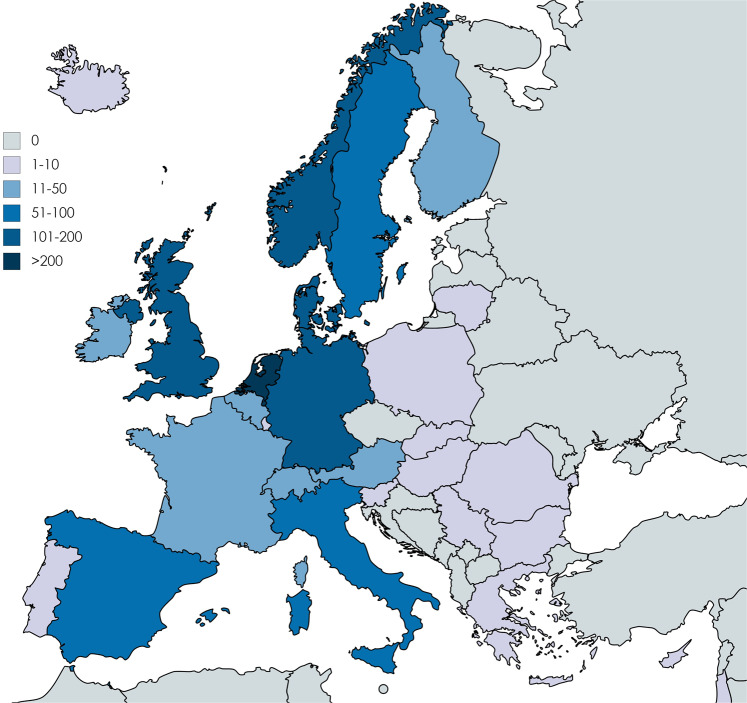
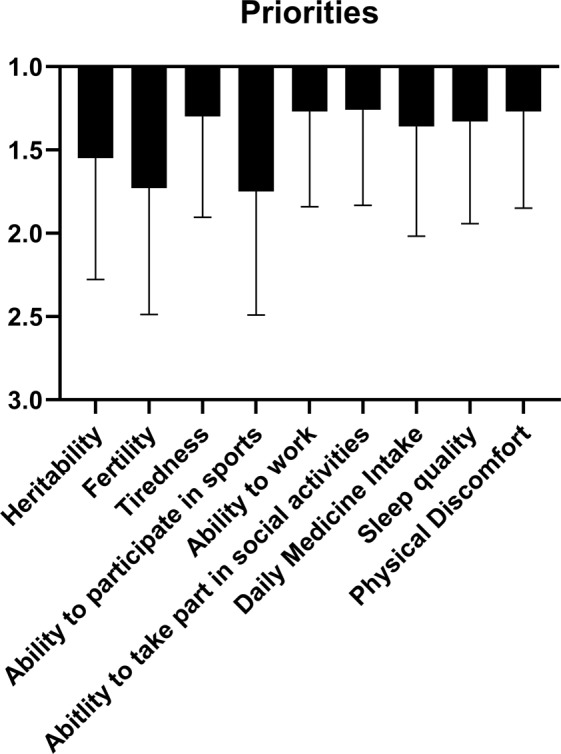
After data cleaning, 1378 survey responses were analyzed. Most responses were received from Northern (47%) and Western Europeans (39%), while Southern (11%) and Eastern Europe (2%) were underrepresented. Respondents were most interested in research concerning ability to participate in social life and work. Patients suggested key areas to work: long-term side effects of medical treatments and quality of life. Some priorities differed between disease groups, both for prespecified and open topics and reflected aspects of patients' individual conditions.
With this large survey, Endo-ERN gained insight into patients' unmet needs in scientific research. Patients prioritized research on ability to work and participation in social activities, though needs differ between the disease groups. Clinical experts should incorporate the results of this survey into the design of future studies on rare endocrine conditions. We aim to utilize these results in designing patient-reported outcome measures for the disease areas covered by Endo-ERN.
欧洲罕见内分泌疾病参考网络(Endo-ERN)的使命是减少并最终消除欧洲罕见内分泌疾病患者在治疗方面的不平等。本研究评估了与罕见内分泌疾病相关的哪些主题是患者优先考虑进行临床研究的。
开发了一项调查,翻译成 22 种不同的欧洲语言,并分发给罕见内分泌疾病患者。患者被要求对列出的预先指定主题进行优先排序:生育能力、遗传性、疲劳、日常药物摄入、睡眠质量、身体不适、工作能力、参与社会生活和运动。他们还被要求在开放领域中提出进一步的重要研究领域。
经过数据清理,分析了 1378 份调查回复。大多数回复来自北欧(47%)和西欧(39%),而南欧(11%)和东欧(2%)的代表性不足。受访者最感兴趣的是参与社会生活和工作的研究。患者提出了关键的研究领域:医疗治疗的长期副作用和生活质量。一些优先级在疾病组之间存在差异,无论是针对预先指定的还是开放的主题,都反映了患者个体状况的方面。
通过这项大型调查,Endo-ERN 了解了患者在科学研究中未满足的需求。患者优先考虑工作和参与社会活动的研究,尽管不同疾病组的需求不同。临床专家应将本调查的结果纳入未来罕见内分泌疾病研究的设计中。我们旨在利用这些结果来设计 Endo-ERN 涵盖的疾病领域的患者报告结局测量。