Mezhenskaya Daria, Isakova-Sivak Irina, Kotomina Tatiana, Matyushenko Victoria, Kim Min-Chul, Bhatnagar Noopur, Kim Ki-Hye, Kang Sang-Moo, Rudenko Larisa
Department of Virology, Institute of Experimental Medicine, 197376 Saint Petersburg, Russia.
Center for Inflammation, Immunity and Infection, Institute for Biomedical Sciences, Georgia State University, Atlanta, GA 30303, USA.
Biomedicines. 2021 Feb 1;9(2):133. doi: 10.3390/biomedicines9020133.
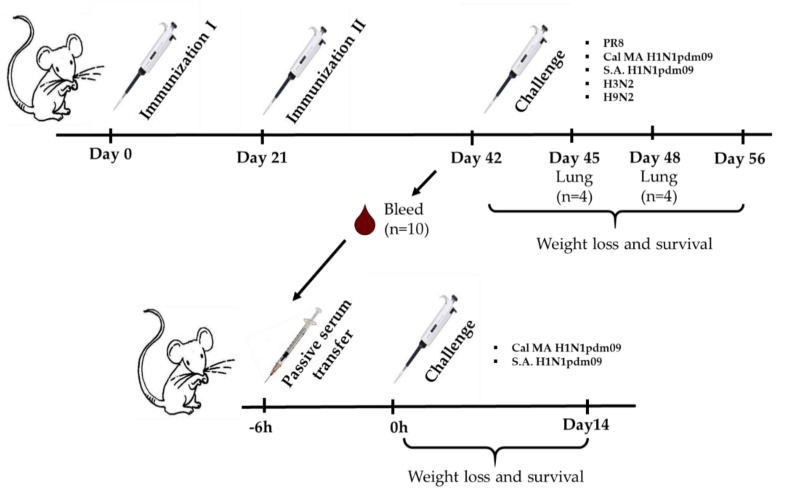
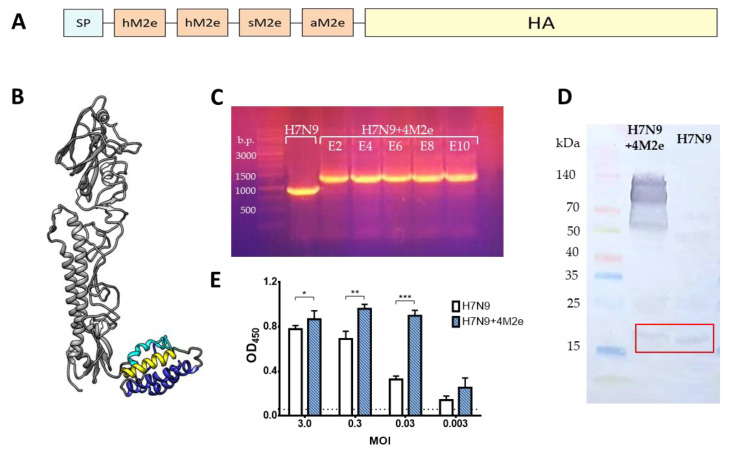
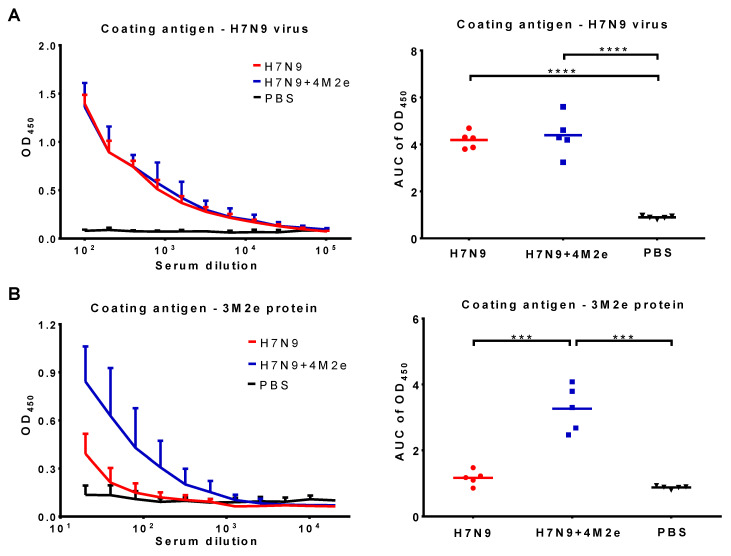
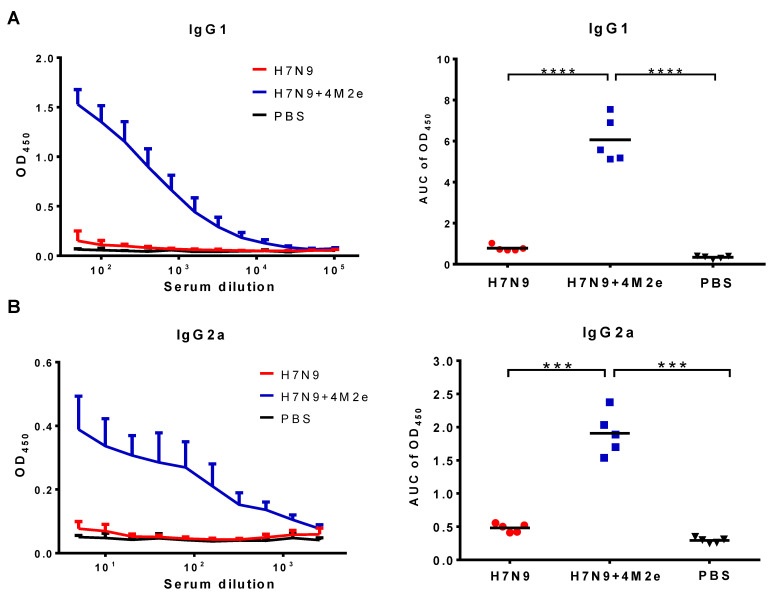
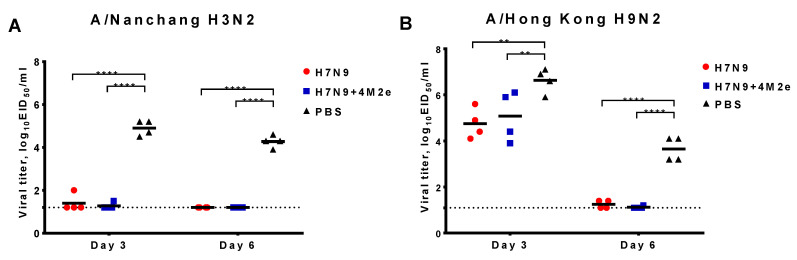
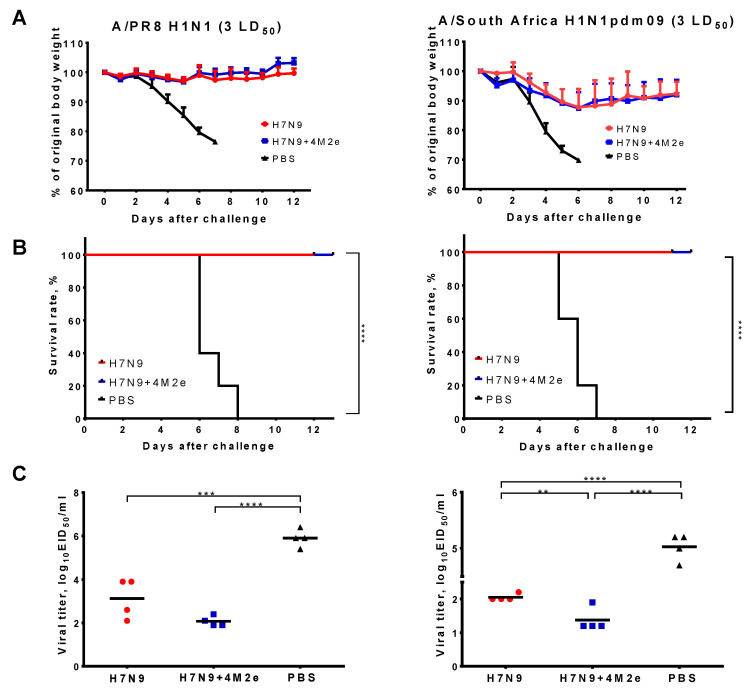
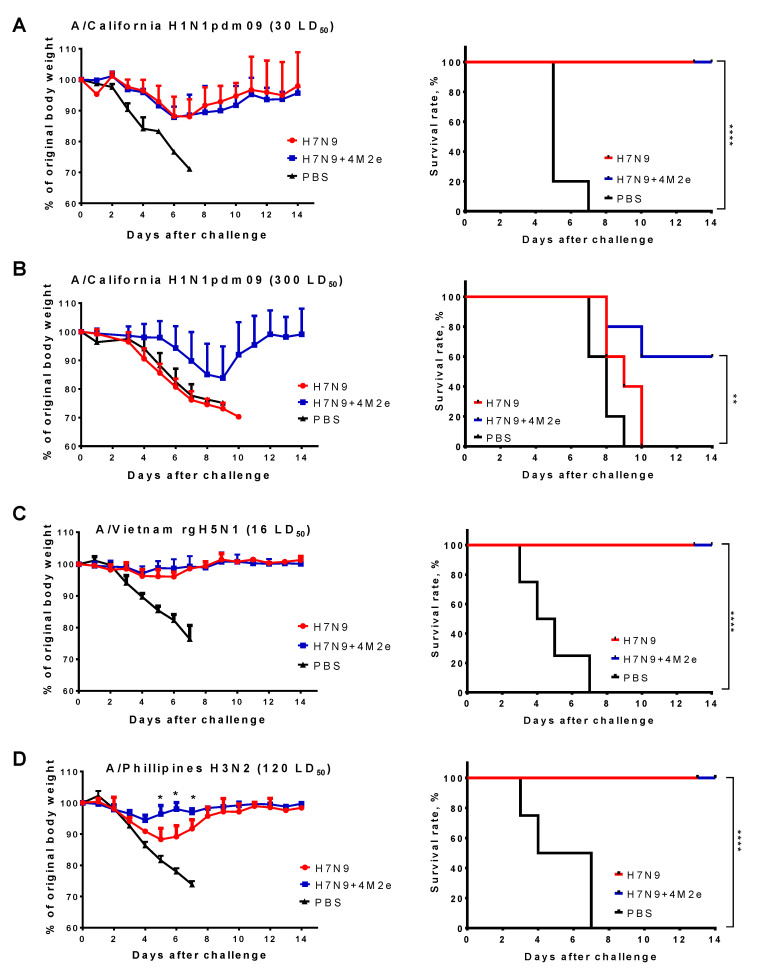
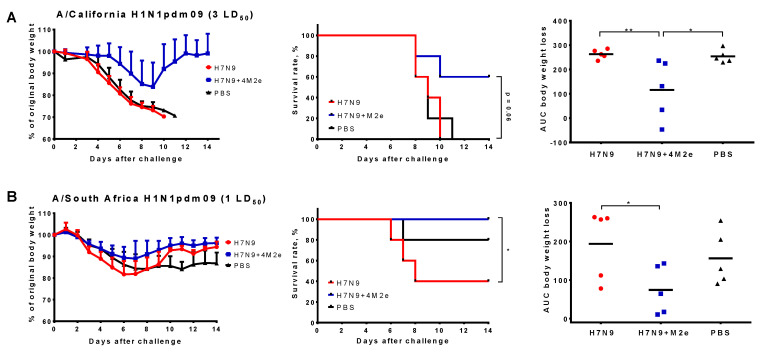
Influenza viruses remain a serious public health problem. Vaccination is the most effective way to prevent the disease; however, seasonal influenza vaccines demonstrate low or no effectiveness against antigenically drifted and newly emerged influenza viruses. Different strategies of eliciting immune responses against conserved parts of various influenza virus proteins are being developed worldwide. We constructed a universal live attenuated influenza vaccine (LAIV) candidate with enhanced breadth of protection by modifying H7N9 LAIV by incorporating four epitopes of M2 protein extracellular part into its hemagglutinin molecule. The new recombinant H7N9+4M2e vaccine induced anti-M2e antibody responses and demonstrated increased protection against heterosubtypic challenge viruses in direct and serum passive protection studies, compared to the classical H7N9 LAIV. The results of our study suggest that the H7N9+4M2e warrants further investigation in pre-clinical and phase 1 clinical trials.
流感病毒仍然是一个严重的公共卫生问题。接种疫苗是预防该疾病的最有效方法;然而,季节性流感疫苗对抗原性漂移和新出现的流感病毒显示出低效力或无效力。全球正在研发针对各种流感病毒蛋白保守部分引发免疫反应的不同策略。我们通过将M2蛋白胞外部分的四个表位整合到血凝素分子中对H7N9减毒活流感疫苗(LAIV)进行改造,构建了一种具有增强保护广度的通用减毒活流感疫苗候选株。与经典的H7N9 LAIV相比,新的重组H7N9+4M2e疫苗诱导了抗M2e抗体反应,并在直接和血清被动保护研究中显示出对异源亚型攻击病毒的保护作用增强。我们的研究结果表明,H7N9+4M2e值得在临床前和1期临床试验中进一步研究。